
Internet-based television has changed how people watch live TV, sports, movies, and series. Instead of depending entirely on traditional cable or satellite connections, IPTV delivers television content through an internet connection.
For viewers in Finland, a good IPTV experience depends on more than simply selecting a service. Internet speed, device compatibility, IPTV player software, connection quality, and correct setup can all affect streaming performance.
Understanding these factors can help you build a more reliable IPTV setup for everyday viewing.
What Is IPTV and How Does It Work?
IPTV stands for Internet Protocol Television. It uses an internet connection to deliver television streams rather than traditional terrestrial, cable, or satellite broadcasting.
An IPTV setup normally involves three main elements:
- An IPTV service or subscription
- A compatible streaming device
- An IPTV player or application
Depending on the service, users may receive access through login credentials, an M3U playlist, Xtream Codes, or another supported configuration method.
Once those details are added to a compatible application, the player connects to the service and organizes the available live channels or on-demand content.
Choose a Device That Fits Your Viewing Habits
One advantage of IPTV is that it can work across several types of devices. The best option depends on where and how you normally watch television.
Smart TVs
Smart TVs are convenient for people who mainly watch from their living room. Many Samsung, LG, Android TV, and Google TV devices support IPTV applications either directly or through their respective app stores.
Using the television itself also reduces the number of additional devices connected to the screen.
However, IPTV app availability can vary between television brands, operating systems, and regions. Checking whether your preferred IPTV player supports your specific TV model before subscribing is worthwhile.
Android TV and Google TV Devices
Android-based streaming devices provide considerable flexibility because users can choose from several media and IPTV applications.
Popular IPTV players often support features such as:
- Channel categories
- Electronic programme guides
- Favorites
- Search functions
- Catch-up features when supported by the provider
- Multiple playlists
The exact features depend on both the player and the IPTV service.
Amazon Fire TV Devices
Fire TV devices are another practical option for turning a compatible television into an internet streaming setup.
Their compact design makes them useful for users who want access to streaming applications without replacing an existing television.
Before installing an IPTV player, check that the application is compatible with the version of Fire OS running on your device.
Smartphones and Tablets
Mobile IPTV applications are useful when you want to watch television away from your main screen.
Android phones, iPhones, tablets, and iPads can support various IPTV players. A stable Wi-Fi connection is normally preferable for longer viewing sessions because high-resolution video can use significant mobile data.
Computers
Windows and macOS computers can also be used for IPTV.
Depending on the subscription format, users may watch through dedicated IPTV software, compatible media players, or other applications supported by their provider.
Computers can also be useful when troubleshooting playlists or testing whether login credentials are working correctly.
Internet Speed Matters
A reliable internet connection is one of the most important parts of an IPTV setup.
Video streaming continuously transfers data while you are watching. Higher resolutions generally require more bandwidth.
As a practical guideline, standard-definition streams require less bandwidth than HD or 4K content. A connection capable of handling normal web browsing may still struggle when several people are simultaneously streaming, gaming, downloading files, or making video calls.
Your advertised broadband speed is also not always the same as the speed reaching the streaming device.
Factors such as Wi-Fi distance, network congestion, router performance, and other connected devices can reduce available bandwidth.
Ethernet Can Improve Stability
Wi-Fi is convenient, but a wired Ethernet connection can provide more consistent performance when the streaming device supports it.
This can be particularly useful when:
- The television is far from the router
- Several devices share the Wi-Fi network
- The signal must travel through multiple walls
- Live streams frequently buffer
- High-resolution content is being watched
If Ethernet is not practical, positioning the router closer to the television or using a suitable mesh Wi-Fi system can improve wireless coverage.
Choosing an IPTV Player
The IPTV service and IPTV player are not necessarily the same thing.
The service provides access to streams, while the player is the software used to organize and display them.
When choosing a player, consider compatibility before advanced features.
A practical IPTV player should ideally provide an interface that makes it easy to:
- Browse channels
- Search content
- Create favorites
- View programme information
- Switch between categories
- Manage playlists or login details
For Android TV and similar platforms, applications such as TiviMate are commonly used for managing IPTV playlists. Other devices may support different players.
The important point is to choose an application compatible with both your device and the login format provided by your IPTV service.
Understand M3U and Xtream Codes
Two terms frequently encountered during IPTV setup are M3U and Xtream Codes.
M3U Playlists
An M3U file or URL contains information that a compatible media player can use to locate streams.
The user normally adds the M3U URL to an IPTV application, after which the application loads the available channels.
Xtream Codes Login
Some IPTV applications allow users to connect using:
- Server URL
- Username
- Password
For many users, this method can be easier to configure because the player automatically organizes information supplied by the service.
Always use the configuration method officially supported by your provider.
Look for Device Compatibility Before Choosing a Service
A suitable IPTV service should match the devices you already own.
For example, users watching primarily on Android TV may prefer a service that clearly supports Android-compatible applications and standard login formats.
People who frequently switch between a television, phone, tablet, and computer should check how the service handles different platforms.
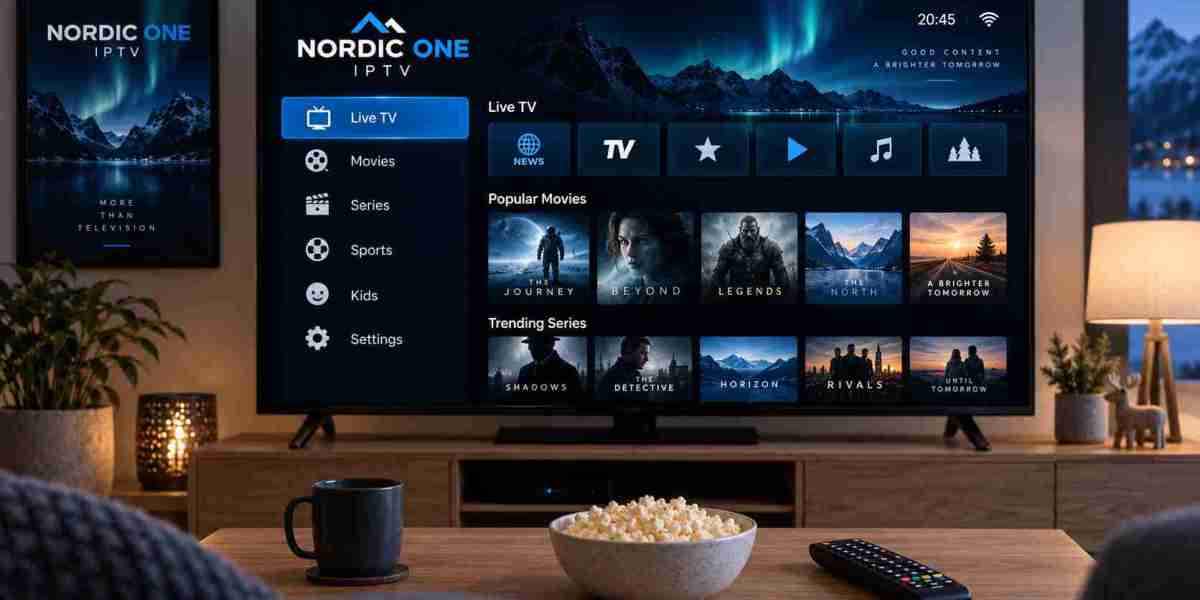
For Finnish and Nordic viewers researching IPTV options, Nordic One IPTV provides information about IPTV streaming, supported devices, setup methods, and viewing options for users in Finland and the wider Nordic region.
Checking installation information before purchasing can prevent compatibility problems later.
Why EPG Support Is Useful
An Electronic Programme Guide, commonly called an EPG, provides information about current and upcoming television programmes.
Instead of browsing channels without context, an EPG can display information such as:
- Programme names
- Starting times
- Upcoming programmes
- Channel schedules
Whether an EPG is available depends on the IPTV service, channel, and application.
A good programme guide becomes especially useful when a playlist contains many channels because it makes navigation considerably easier.
Common Causes of IPTV Buffering
Buffering does not always mean there is a problem with the IPTV application.
Possible causes include:
- Weak Wi-Fi
- Slow internet connection
- Network congestion
- Router problems
- Limited device resources
- Problems with the stream source
- Other devices consuming available bandwidth
Start troubleshooting by checking your internet connection.
Running a speed test on the same device or network can help identify connection problems. Restarting the router and streaming device can also resolve temporary issues.
If possible, test the stream using Ethernet. If performance improves significantly, the Wi-Fi connection may be the main issue.
Keep Your IPTV Application Updated
Streaming applications receive updates for compatibility, stability, security, and interface improvements.
Using an outdated version can occasionally cause login, playback, or navigation problems.
Check the official app store for your device periodically and install updates when available.
The device operating system should also be kept reasonably current, particularly on Smart TVs and streaming boxes.
Avoid Overcomplicating Your Setup
An effective IPTV setup does not require a large number of applications or complicated network equipment.
For most households, the basic combination is straightforward:
A reliable broadband connection, a compatible streaming device, a suitable IPTV player, and correctly configured service credentials.
Additional equipment should only be introduced when it solves a specific problem.
For example, upgrading Wi-Fi equipment makes sense if poor wireless coverage is causing buffering. Buying another streaming box may not help if the actual problem is a slow internet connection.
IPTV Streaming in Finland
Finland has widespread access to modern fixed and mobile broadband networks, making internet television practical for many households.
Still, the quality of the viewing experience depends on the complete setup rather than internet speed alone.
Device performance, home network configuration, application compatibility, and the quality of the streaming source all contribute to the final result.
Users should also make sure that any television content they access is provided with the appropriate rights and permissions for their location.
Final Thoughts
Building a smooth IPTV setup starts with choosing compatible components rather than focusing on a single feature.
Check your internet connection, select a suitable device, use an IPTV player that supports your provider's configuration method, and make sure your home network is stable.
When those elements work together properly, IPTV can provide a flexible way to watch live television and other streaming content across Smart TVs, streaming devices, phones, tablets, and computers.