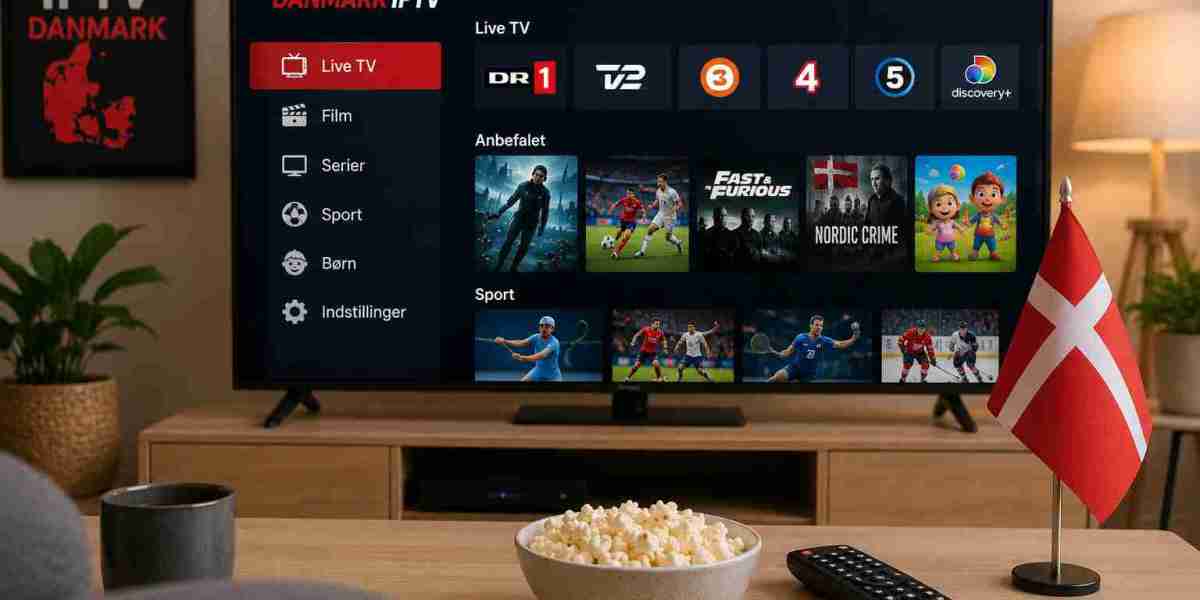

Streaming television over the internet has changed the way many households access live TV, sports, movies, and series. Instead of relying only on traditional cable or satellite connections, IPTV allows compatible devices to receive television content through an internet connection.
For viewers in Denmark, the quality of the experience depends on more than simply choosing a subscription. Internet speed, device compatibility, Wi-Fi performance, IPTV applications, and correct setup can all affect everyday streaming.
Understanding these factors before getting started can help users build a more reliable and convenient IPTV setup.
What Is IPTV and How Does It Work?
IPTV stands for Internet Protocol Television. It is a method of delivering television content using internet protocols rather than traditional broadcast signals.
Depending on the service and subscription, IPTV platforms may provide access to:
- Live television channels
- Sports programming
- Movies
- TV series
- Video on demand
- International television
- Electronic program guides
The IPTV provider supplies access information, while an IPTV player or compatible application is normally used to display the content on the viewer's device.
Because streaming happens through the internet, connection quality becomes one of the most important parts of the viewing experience.
Start With a Stable Internet Connection
A fast connection is useful, but stability is equally important.
Even a connection with a high advertised download speed can experience interruptions when the Wi-Fi signal is weak or several devices are consuming bandwidth simultaneously.
Ethernet Can Improve Stability
Connecting a Smart TV, Android box, or computer directly to the router with an Ethernet cable can provide a more consistent connection than Wi-Fi.
A wired connection may be particularly useful for televisions located close to the router.
Improve Wi-Fi Placement
When Ethernet is not practical, router placement can make a noticeable difference.
Try to position the router:
- In an open area
- Away from thick walls
- Away from large metal objects
- Near the main streaming devices
- In a central location within the home
Modern routers may also provide separate frequency bands. Choosing the appropriate network for the distance between the device and router can help improve streaming reliability.
Choose a Compatible Streaming Device
One advantage of IPTV is that it can work across several types of internet-connected devices when supported by the selected service and application.
Common options include Smart TVs, Android devices, streaming sticks, smartphones, tablets, computers, and dedicated IPTV boxes.
Smart TV
A Smart TV can provide one of the simplest viewing experiences because an additional streaming box may not be necessary.
Users can install a compatible IPTV player from the television's application store when one is available for their TV platform.
Android TV and Android Boxes
Android devices are popular because they support a wide selection of media applications.
An IPTV application can normally be installed through the device's application store, after which the service credentials or playlist details can be entered.
Fire TV Devices
Amazon Fire TV devices are another option for users who want to add streaming capabilities to a television.
The exact setup procedure depends on the IPTV application being used, so following both the application's official instructions and the provider's setup guidance is important.
Computer and Mobile Devices
IPTV can also be viewed through compatible software on Windows, macOS, Android, iPhone, or iPad.
Mobile compatibility can be useful when users want access to their television service without remaining in front of the main household TV.
Understand IPTV Players
An IPTV player is the application responsible for organizing and displaying the stream provided by an IPTV service.
The player and the IPTV subscription are usually separate components.
This distinction matters because installing an IPTV application does not necessarily provide television channels automatically.
Depending on the service, users may receive connection details through formats such as:
- M3U playlists
- Xtream Codes-style credentials
- Portal URLs
- Username and password combinations
The supported login method depends on both the service and the IPTV player.
Look for Clear Setup Information
For beginners, installation guidance can be almost as important as the subscription itself.
Before choosing a provider, check whether instructions are available for the device you intend to use. A service that explains how to configure Smart TVs, mobile devices, streaming boxes, and computers can make installation considerably easier.
Users researching subscription and device options for the Danish market can review DANMARK IPTV as part of their comparison when considering available IPTV setups.
The important step is to confirm that the service works with your preferred device and that you understand how the connection details will be configured before purchasing a longer subscription.
Consider Streaming Quality Carefully
Terms such as HD, Full HD, and 4K are frequently associated with streaming services, but actual viewing quality depends on several factors.
These include:
- The quality of the original stream
- Internet connection stability
- Available bandwidth
- Device performance
- Network congestion
- Display resolution
A 4K television alone does not guarantee that every stream will appear in 4K.
The source itself must be available at that resolution, and both the internet connection and receiving device must be capable of handling it reliably.
Reduce Buffering Before Blaming the Service
Buffering can have several causes, so troubleshooting should begin with the local network.
Restart the Network Equipment
Restarting the router and streaming device can clear temporary network or software problems.
Test the Internet Connection
Run a speed test using the same device or network being used for IPTV.
If speeds are significantly lower than expected, investigate the internet connection before changing IPTV settings.
Reduce Other Network Activity
Large downloads, cloud backups, online gaming, and simultaneous video streaming can consume substantial bandwidth.
Temporarily stopping these activities can help determine whether network congestion is responsible for buffering.
Try a Wired Connection
If buffering occurs over Wi-Fi, testing the device with Ethernet is a useful troubleshooting step.
If the stream becomes more stable, the wireless connection is likely contributing to the problem.
Check Channel and Content Requirements
Not every IPTV subscription contains the same programming.
Before subscribing, users should identify what they actually want to watch.
For example, one household may prioritize Danish television and sports, while another may want international channels, films, children's programming, or multilingual content.
Check the provider's current channel information rather than assuming a particular channel or sporting event is included.
Channel availability can change, so current information is more useful than old screenshots, forum discussions, or outdated reviews.
Think About Subscription Length
IPTV services often provide different subscription durations.
Longer plans may appear more economical, but new users should first consider whether they have tested the service on their actual home network and preferred device.
Before committing to a longer period, evaluate:
- Streaming stability
- Picture quality
- Device compatibility
- Application usability
- Channel organization
- Setup difficulty
- Customer support options
Testing the complete setup helps users make a more informed decision.
Do Not Ignore Security and Legality
Internet-based television services should be evaluated with the same care as other online subscriptions.
Users should understand who is providing the service, how payments are handled, and whether the content they access is distributed with appropriate authorization.
Laws and licensing arrangements can vary between countries and services. Users in Denmark should rely on current Danish rules and authoritative legal information if they have questions about whether a specific service or source is permitted.
Avoid assuming that every IPTV service is automatically legal or illegal simply because it uses IPTV technology. IPTV itself is a delivery technology. The legality of particular content depends on licensing and distribution rights.
Create a Simple IPTV Setup
A reliable IPTV setup does not need to be complicated.
For many households, the basic process is:
- Choose a compatible device.
- Make sure the internet connection is stable.
- Select an appropriate IPTV player.
- Obtain access details from the chosen provider.
- Configure the application correctly.
- Test live channels and video content.
- Adjust the network if buffering occurs.
Once these elements are working together, IPTV can provide a flexible way to access television content across different screens.
Final Thoughts
Choosing IPTV in Denmark involves more than comparing subscription prices. Device compatibility, internet stability, application support, content preferences, and clear installation instructions all influence the final streaming experience.
Start by deciding which device you want to use and what type of programming matters most. Then evaluate providers based on transparent information, compatibility, setup options, and the quality of the experience on your own network.
Taking the time to build the right setup from the beginning can reduce technical problems and make everyday streaming much easier to manage.