
GST is an important part of running a business in India. Whether you are a small shop owner, freelancer, startup, manufacturer, trader, or service provider, understanding your GST responsibilities can help you avoid unnecessary problems.
Many business owners use the terms GST planning and GST filing as if they mean the same thing. They are actually different.
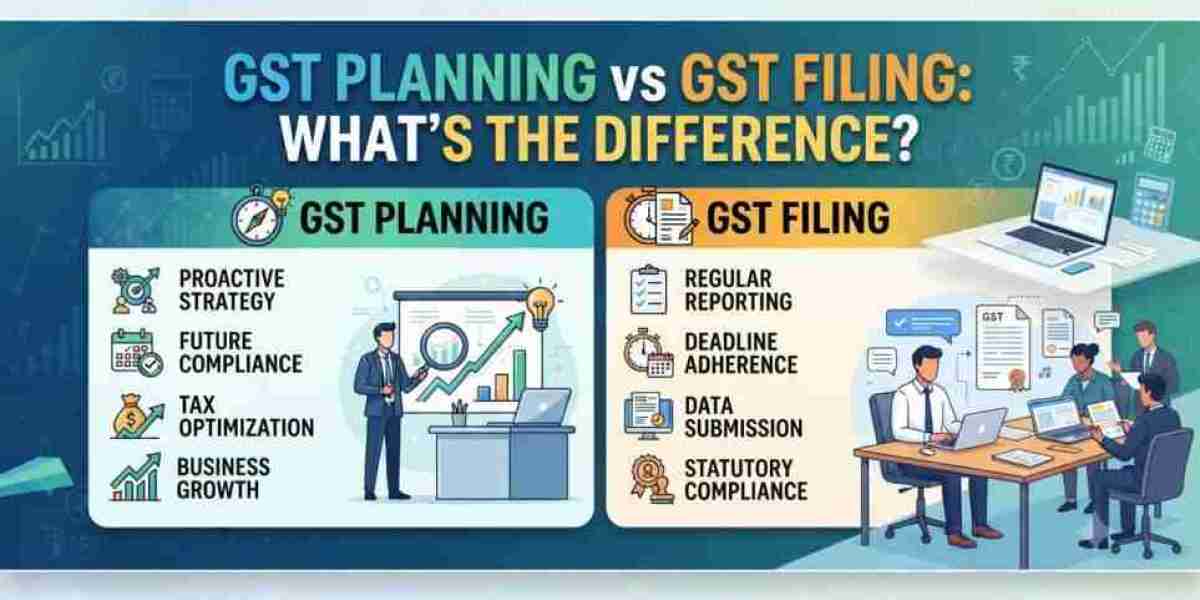
GST planning is about deciding how to manage your GST properly before transactions and filing deadlines arrive. GST filing is the actual process of submitting GST returns and reporting your business transactions to the government.
In simple words, GST planning is about preparing in advance, while GST filing is about reporting your GST information.
This article explains the difference between GST planning and GST filing, why both matter, and how businesses can manage their GST responsibilities better.
What Is GST Planning?
GST planning means making proper decisions about GST before you make business transactions or file your returns.
It includes understanding your GST responsibilities, keeping proper invoices, checking input tax credit, maintaining records, planning purchases, and ensuring that your business follows GST rules.
For example, suppose a business purchases goods worth ₹5 lakh plus GST. Before making the purchase, the business may need to check whether the invoice is correct and whether the GST paid can be claimed as input tax credit.
This type of preparation is part of GST planning.
GST planning can help businesses:
Keep proper GST records
Avoid mistakes in invoices
Track input tax credit
Plan purchases and sales properly
Keep tax payments in mind
Avoid last-minute filing problems
Reduce the risk of notices caused by incorrect information
GST planning does not mean avoiding tax. It means managing your business transactions properly while following the GST rules.
What Is GST Filing?
GST filing is the process of submitting GST returns to the government through the GST system.
A registered business has to report details such as sales, purchases, taxable transactions, tax collected, and eligible input tax credit, depending on the return applicable to the business.
For example, a business may have collected GST from customers during a tax period. That information needs to be reported through the applicable GST return, and the required tax amount must be paid within the applicable due date.
Businesses can use GST Return Filing Online services to manage their return filing process with professional assistance.
GST filing generally involves:
Collecting sales and purchase information
Checking invoices
Reviewing GST amounts
Checking eligible input tax credit
Preparing the applicable GST return
Filing the return online
Paying the required GST liability
Keeping records of the filed return
GST Planning vs GST Filing: Key Difference
The easiest way to understand the difference is:
GST Planning | GST Filing |
Happens before and during business activities | Happens during the applicable filing period |
Focuses on proper GST management | Focuses on reporting GST information |
Helps prepare records and documents | Uses those records to file returns |
Helps identify possible GST issues early | Reports actual business transactions |
Can help manage input tax credit properly | Reports eligible input tax credit |
Is an ongoing business activity | Is performed according to applicable filing requirements |
So, GST planning and GST filing are connected, but they are not the same thing.
Good planning can make GST filing easier and reduce the chances of mistakes.
Why Is GST Planning Important?
GST can become difficult when a business does not maintain its records properly.
For example, imagine a business that waits until the filing deadline to collect all invoices. It may find missing purchase bills, incorrect GSTINs, mismatched amounts, or unclear payment records.
This can make filing stressful and may increase the chance of errors.
With proper GST planning, a business can review its records regularly instead of trying to complete everything at the last minute.
1. Better Record Keeping
Businesses deal with many invoices every month. Keeping them organised makes it easier to check sales, purchases, and GST amounts.
2. Better Input Tax Credit Management
Input tax credit can be important for many GST-registered businesses. Proper records and invoice checks can help businesses identify eligible credit and avoid claiming credit incorrectly.
3. Fewer Filing Mistakes
When records are checked regularly, errors can be identified before the return is filed.
4. Better Cash Flow Management
Businesses need to consider their GST liability while managing cash flow. Knowing the expected tax liability can help with financial planning.
5. Easier Compliance
GST compliance is not only about filing a return. Businesses also need to maintain invoices and other records and follow the applicable rules.
Planning helps keep these activities organised.
Why Is GST Filing Important?
GST filing is a legal compliance responsibility for businesses that are required to file GST returns.
Even when a business has low transactions during a particular period, it should check whether a return is required and what type of return applies to it.
Incorrect or delayed filing may create compliance problems, interest, late fees, or other consequences depending on the situation.
This is why businesses should keep track of their applicable GST filing requirements and due dates.
How GST Planning Helps With GST Return Filing Online
Many businesses now use online platforms and professional services for GST Return Filing Online.
However, online filing does not remove the need for proper preparation.
Before filing, a business should have its relevant records ready. This may include:
Sales invoices
Purchase invoices
Credit and debit notes
GST payment records
Input tax credit details
Export or import information, where applicable
Details of applicable GST transactions
Once these details are checked, the return can be prepared and filed through the appropriate process.
In simple terms:
GST Planning → Record Keeping → Checking → GST Return Preparation → GST Filing
This makes the overall process more organised.
Is GST Registration Part of GST Planning?
Yes, GST registration can be one of the first steps in GST compliance planning when a business becomes liable for registration or chooses registration where permitted.
Businesses should first understand whether GST registration is applicable to them based on their business activities and the relevant rules.
If registration is required, businesses can apply through the GST system.
Professional assistance for Online GST Registration can help businesses understand the documents and information required for the application.
However, GST registration is only the beginning. After registration, the business may have ongoing GST compliance responsibilities.
GST Planning Is Not Tax Avoidance
This is an important point.
Some people misunderstand tax planning as a way to reduce or avoid taxes illegally.
GST planning should always be based on the applicable law and proper business records.
For example, maintaining valid invoices, checking eligible input tax credit, selecting the correct GST treatment, and keeping records properly are normal compliance activities.
A business should never create false invoices, hide sales, claim ineligible credit, or provide incorrect information simply to reduce its tax liability.
GST Planning and Other Tax Compliance
GST is only one part of business tax compliance.
Businesses may also have responsibilities related to income tax and TDS.
For example, a business may need Income Tax Return Filing Services for filing its income tax return. Similarly, businesses that deduct tax at source may need TDS Return Filing Online services to manage their TDS reporting requirements.
These activities are different from GST filing, but they are all part of maintaining proper tax compliance.
GST vs Income Tax vs TDS
GST:
GST mainly relates to the supply of goods and services and the applicable indirect tax requirements.
Income Tax:
Income tax is based on taxable income and the applicable provisions of income-tax law.
TDS:
TDS involves deducting tax from certain payments and depositing and reporting the deducted amount as required.
A business should therefore maintain separate records and follow the requirements applicable to each tax.
Common GST Planning Mistakes Businesses Should Avoid
Waiting Until the Filing Date
One of the most common mistakes is collecting all information just before filing.
Regular record checking is better than last-minute work.
Not Checking Invoices
A small mistake in an invoice can create problems later. Businesses should check important invoice details regularly.
Ignoring Input Tax Credit Records
Businesses should keep proper purchase records and review input tax credit according to the applicable rules.
Mixing Personal and Business Expenses
Keeping business transactions separate from personal expenses can make accounting and tax compliance easier.
Not Tracking GST Payments
Businesses should keep track of their GST liabilities and payments instead of waiting until the last date.
Treating Filing as the Only Compliance Activity
GST compliance is more than submitting a return. Record keeping, invoicing, payments, and other applicable requirements also matter.
A Simple GST Planning Checklist
A business can follow a basic monthly checklist:
Check sales invoices
Check purchase invoices
Review GST charged on sales
Check eligible input tax credit
Identify credit/debit notes
Review unusual transactions
Check GST payment requirements
Keep documents organised
Review return information before filing
Track applicable filing deadlines
This simple approach can make GST compliance much easier.
When Should a Business Take Professional GST Help?
Professional help can be useful when a business has:
A large number of monthly transactions
Multiple types of supplies
Inter-state transactions
Input tax credit concerns
E-commerce sales
Export or import transactions
GST notices
Difficulty maintaining records
Multiple tax compliance requirements
A professional can help review the available information and guide the business according to the applicable rules.
How Corpbiz Can Help With Tax Compliance
Corpbiz provides professional assistance for businesses dealing with different tax and compliance requirements.
Businesses can seek assistance for Online GST Registration, GST compliance and GST Return Filing Online. Depending on their requirements, they can also take support for Income Tax Return Filing Services and TDS Return Filing Online.
The main benefit of taking professional assistance is that businesses can focus more on their daily operations while keeping their compliance work organised.
However, businesses should always provide accurate information and maintain proper records. Professional assistance does not replace the responsibility of the taxpayer to provide correct information.
GST Planning vs GST Filing: An Easy Example
Consider a small business that sells electrical products.
During the month, the business makes several sales and purchases.
GST planning would include keeping sales and purchase invoices organised, checking GST details, reviewing eligible input tax credit, and estimating the GST liability.
At the end of the applicable tax period, the business uses these records to prepare and submit the required GST return.
That final submission is GST filing.
So:
Planning = Preparing and managing
Filing = Reporting and submitting
Both are important, but they serve different purposes.
Final Thoughts
GST planning and GST filing are two different parts of GST compliance.
GST planning is a continuous process that helps a business maintain proper records, understand its responsibilities, manage invoices, review input tax credit, and prepare for filing.
GST filing is the actual submission of the required GST return and payment of applicable tax.
Businesses should not wait until the filing deadline to start checking their GST records. Regular planning can make GST Return Filing Online easier and can help identify errors before they become bigger problems.
Whether you are starting a business and need Online GST Registration, managing GST returns, looking for Income Tax Return Filing Services, or handling TDS Return Filing Online, keeping your records organised is one of the most important steps toward better tax compliance.
Frequently Asked Questions
1. What is GST planning?
GST planning means preparing and managing your business transactions, invoices, records, input tax credit, and GST liabilities in line with applicable GST rules.
2. What is GST filing?
GST filing is the process of submitting the applicable GST return and reporting relevant business transactions and tax information to the government.
3. Is GST planning the same as GST filing?
No. GST planning is about preparing and managing GST-related activities, while GST filing is the actual process of submitting the applicable GST return.
4. Why is GST planning important?
GST planning helps businesses maintain proper records, review invoices, manage eligible input tax credit, prepare for tax payments, and reduce the chances of filing errors.
5. Can I complete GST Return Filing Online?
Yes. GST returns can be filed online through the applicable GST system. Businesses can also seek professional assistance for GST Return Filing Online.
6. What is required for Online GST Registration?
The documents and information required can vary depending on the type of taxpayer and business. Generally, business and identity details, address information, and supporting documents may be required.
7. Does GST planning help with income tax compliance?
GST and income tax are different tax systems, but maintaining accurate business records can help with overall tax compliance, including Income Tax Return Filing Services.
8. What is TDS Return Filing Online?
TDS Return Filing Online refers to submitting the required TDS statements electronically after deducting and depositing TDS as applicable.
9. Can a small business take professional GST assistance?
Yes. Small businesses can seek professional help for GST registration, return filing, record review, and other applicable GST compliance requirements.
10. What is the biggest difference between GST planning and GST filing?
The simplest difference is that GST planning happens before and throughout the compliance process, while GST filing is the actual submission of the required GST return.
About the Author
Atul Shukla is a professional compliance and business advisory writer associated with Corpbiz Advisors. His content focuses on GST, taxation, business compliance, legal requirements, and practical guidance for Indian businesses and entrepreneurs. He aims to explain complex compliance topics in simple language so that business owners can make better-informed decisions.