
The case for powering the boring part
Sanding a full wall by hand is the job nobody on a crew volunteers for. It is slow, it wrecks your shoulders, and the finish drifts as you tire. This is exactly where sanding machines earn their keep, not on small patches, but on the large flat runs where hand work loses to fatigue. The real question is whether your jobs are big enough to justify one.
What a drywall sander changes
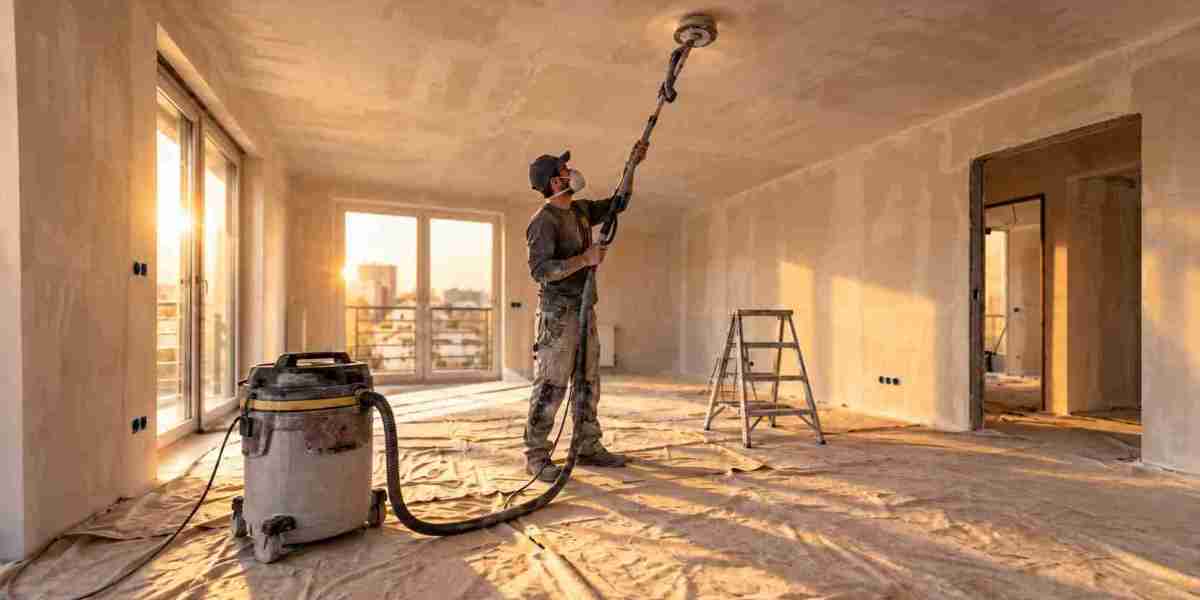
A drywall sander puts a powered disc on a long reach pole, so one person can flatten ceilings and high walls from the floor. The YURI YR-DWS1070 at 950W and 180mm, or the DAYURI DA-DWS5068 at 1200W, take a two-hour ceiling down to a fraction of that, with a more even finish because the pressure stays consistent. For painters doing whole flats and offices, the time saved on a single project can cover the machine.
Where the plaster machine fits
Finishing is only half the wall. The YURI YR-WPM1059 wall plaster machine at 4800W spreads plaster far faster than a hand trowel across big surfaces, which matters on new construction and large renovations. It is a different job from sanding, but it lives in the same goal: getting a flat wall with less labour and fewer passes.
The catch nobody mentions in the showroom
Here is the honest downside. Powered sanding machines make dust, a lot of it, and fine gypsum dust is a real respiratory hazard, not just a mess. A drywall sander without dust extraction turns a room into a cloud. Budget for a vacuum hookup and proper masks, or the time you save on sanding you lose on cleanup and, worse, on your lungs. Any seller who skips this is not doing you a favour.
Reach, weight and the ceiling problem
The long pole that saves your back also adds weight overhead. Running a drywall sander on a ceiling is easier than hand-sanding, but it is not effortless, and an hour of it is still work. Motor power and plate size decide how fast you cut; a 1200W head clears filler quicker than a 950W one. How tiring a full day feels depends on the operator and the layout, which is something no spec sheet can tell you honestly. Like other power tools used overhead, technique matters as much as the rating.
Dust extraction that actually works
A drywall sander without extraction is a dust bomb, so the vacuum is not an add-on, it is part of the tool. Pair the sander with a wet-and-dry vacuum through the extraction port, use a fine-dust bag or filter, and empty it before it clogs, because a full bag kills suction and lets dust escape.
Fine gypsum dust is light enough to hang in the air for a long time after you stop, which is why a good filter matters as much as the sander itself. Skimping on extraction to save a little undoes the whole reason you bought a powered sander.
Grit and disc grades, in the right order
Sanding is a sequence, not a single pass. Start with a coarser grit to knock down ridges and filler high spots, then move to a finer grit for the finish coat before paint. Jumping straight to fine grit on rough filler just clogs the disc and wastes time.
Mesh sanding discs clear dust better than solid paper on drywall, and they tend to last longer on gypsum, though how much longer depends on how heavy-handed the operator is. That is one of those things that varies enough person to person that I would not quote a fixed disc count.
What finishing a whole flat looks like
On a full apartment repaint, the difference a powered sander makes is obvious by the second room. Hand-sanding ceilings across a flat is a two-day job that leaves shoulders wrecked and the finish uneven where the sander tired. With a YR-DWS1070 on the pole and a vacuum running, the same ceilings come down in hours, flatter, because the pressure stays constant whether it is the first wall or the tenth. That consistency, more than raw speed, is what clients notice when the paint goes on.
Edges, corners and the spots a big sander misses
A drywall sander is built for open walls and ceilings, and it is honestly poor at the very edges and internal corners, where the round head cannot reach. This is the limitation people discover on their first job and wish someone had mentioned in the showroom. The answer is not a bigger machine, it is accepting that a powered sander handles most of the area fast, and the corners and edges still need a smaller detail sander or a hand block. Plan the job that way and it flows: machine the big surfaces first, then walk the room finishing edges by hand while the dust settles. Trying to force the big head into a corner just damages the finish and gouges the next wall, which then needs filling and sanding again, so you lose the time you were trying to save. Knowing what a tool is not for is as useful as knowing what it is for, and on wall finishing this is the gap that catches most first-time buyers. Budget a little hand-finishing into every powered-sanding job and the machine still earns its keep many times over.
It will not fix bad prep
One honest caution before you buy: a powered sander speeds up finishing, it does not rescue bad preparation. If the filler is applied poorly or the wall was never made flat, a drywall sander just exposes the flaws faster and more evenly. The machine rewards good prep and punishes sloppy work, so the crews who get the most from it are the ones who fill and set the wall properly first. Think of it as an accelerator for good technique, not a substitute for it. Bought with that expectation, it is one of the best time-savers on a finishing job; bought as a shortcut around careful prep, it disappoints.
Is a sanding machine worth it for your job size?
The verdict on sanding machines is about scale. For a painter doing one bathroom a week, hand sanding still wins on setup and dust. For crews finishing whole floors, apartments or commercial spaces, a powered sander pays back fast in labour and consistency. Somewhere between those two your own break-even sits, and it usually arrives sooner than people expect.
Bought for the right scale, sanding machines turn wall finishing from the slowest task on site into one of the quickest, as long as you plan for the dust. Weigh your job sizes honestly before you buy. The Yuri Smart Engineering range carries YURI and DAYURI drywall sanders and the wall plaster machine, matched to how much wall you actually cover.