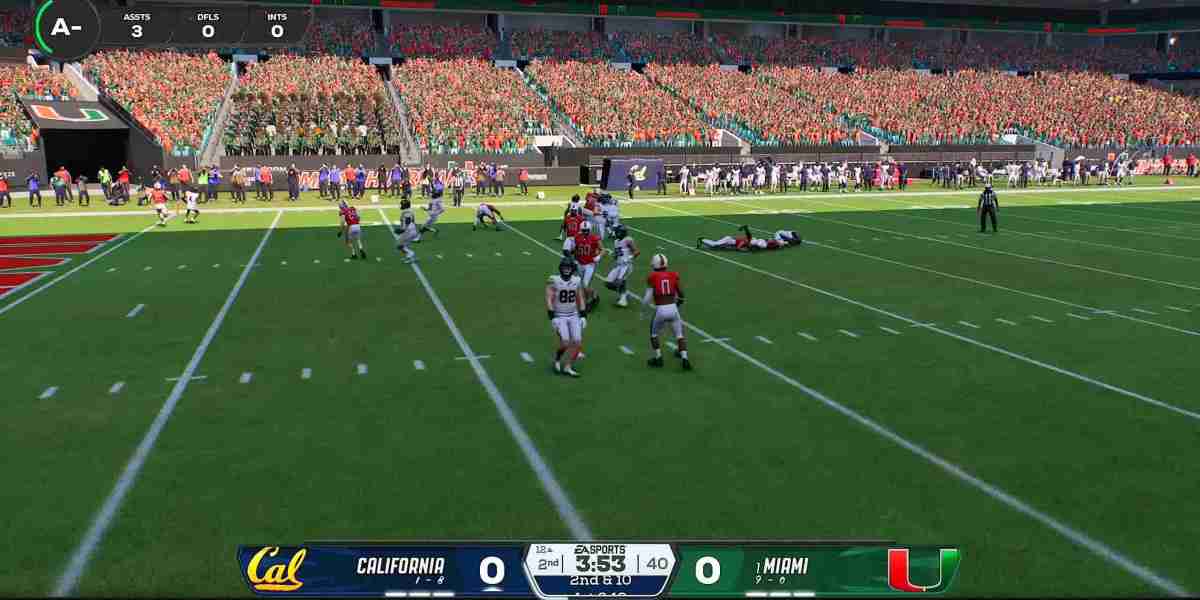

Building a championship roster is difficult. Keeping that roster together may be even harder.
EA SPORTS College Football 27 introduces an aggressive Player Attrition Engine that turns roster management into a long-term strategic challenge. Instead of assuming that talented athletes will remain at a school simply because the team is successful, the game recognizes that players have individual expectations and can become dissatisfied with their roles.
That change has major consequences for Dynasty Mode.
The central feature is a visible Happiness Meter. Player happiness is influenced by several factors, including depth-chart positioning, individual statistics, playing time, and the team's overall record.
This means that every player has a relationship with the program.
A highly rated sophomore sitting behind an established starter may eventually become unhappy. Even if the team is winning, that player could believe they deserve more opportunities. When the transfer window opens, another program could benefit from the talent you developed.
Suddenly, roster management becomes a problem of retention.
The system also changes how coaches approach individual games. Consider a fourth-quarter blowout. With the result effectively decided, a traditional sports-game strategy might be to leave the starters on the field and continue producing impressive statistics.
College Football 27 Coins creates a reason to think differently.
Putting backup players into the game gives them valuable experience and can improve their satisfaction. It may also protect starters from unnecessary injury risk while helping the coaching staff evaluate younger talent.
However, there is always a trade-off.
If the game is still important for the program's record, removing starters too early could allow an opponent to mount a comeback. If the athletic director demands dominant victories, excessive substitutions might also conflict with institutional expectations.
This is where College Football 27's systems begin to overlap.
The coach isn't making isolated decisions. Every decision affects multiple areas of the program.
Playing time influences happiness. Happiness affects retention. Retention affects roster depth. Roster depth affects recruiting needs. Recruiting affects the budget. The budget affects NIL spending. And all of those factors influence the athletic director's expectations.
That interconnected design is one of the game's defining strengths.
The transfer portal becomes particularly important because player attrition can create unexpected vacancies. A program that appeared stacked in September could enter the offseason with significant holes because several dissatisfied athletes chose to leave.
Coaches therefore have to monitor more than overall team rating.
Depth charts become living documents. A backup receiver may need additional snaps. A promising linebacker might require a larger role. A young quarterback could need carefully planned opportunities to prevent frustration.
The challenge becomes even greater when recruiting highly rated players.
Signing elite prospects is exciting, but a roster filled with talented players can produce competition for playing time. If too many athletes occupy the same position group, dissatisfaction can increase.
This creates an unusual paradox: recruiting success can eventually become a roster-management problem.
A coach might initially celebrate landing several five-star prospects at the same position. Two seasons later, however, only one can start. If the others don't receive enough opportunities, they may look elsewhere.
That forces players to think about roster construction beyond star ratings.
A balanced recruiting strategy may ultimately be more valuable than simply collecting the highest-rated prospects. Coaches need to consider positional depth, player development, expected departures, and the amount of playing time available.
For players researching College Football 27 Coins, these systems also demonstrate why virtual resources should be viewed as part of a broader strategy. Those searching for CFB 27 Coins sale may be focused on maximizing available resources, but no amount of currency automatically solves a poorly constructed roster.
The real challenge is decision-making.
The game's attrition mechanics also make success feel more fragile. Winning can increase happiness, but victory alone doesn't guarantee loyalty. A player may still leave if their individual role doesn't match their expectations.
This is an important distinction because it prevents Dynasty Mode from becoming a simple progression system where better teams automatically become more dominant every season.
Instead, success creates new responsibilities.
As the program improves, recruiting becomes more competitive. Expectations increase. Talented players expect to contribute. Rival programs become more aggressive in the transfer market.
Maintaining a dynasty therefore requires constant attention.
The coach must know which players are satisfied, which athletes are approaching a potential transfer decision, and where future playing opportunities will emerge. The best roster isn't necessarily the one with the highest overall rating. It is the one whose players have enough opportunity to remain committed.
College Football 27's Player Attrition Engine makes the roster feel alive. Players aren't simply statistics stored on a screen. They are moving parts in an evolving organization.
For anyone who enjoys long-term franchise management, that may be one of the game's most rewarding additions. The ultimate challenge isn't merely building a great team.
It's convincing that team to stay together.