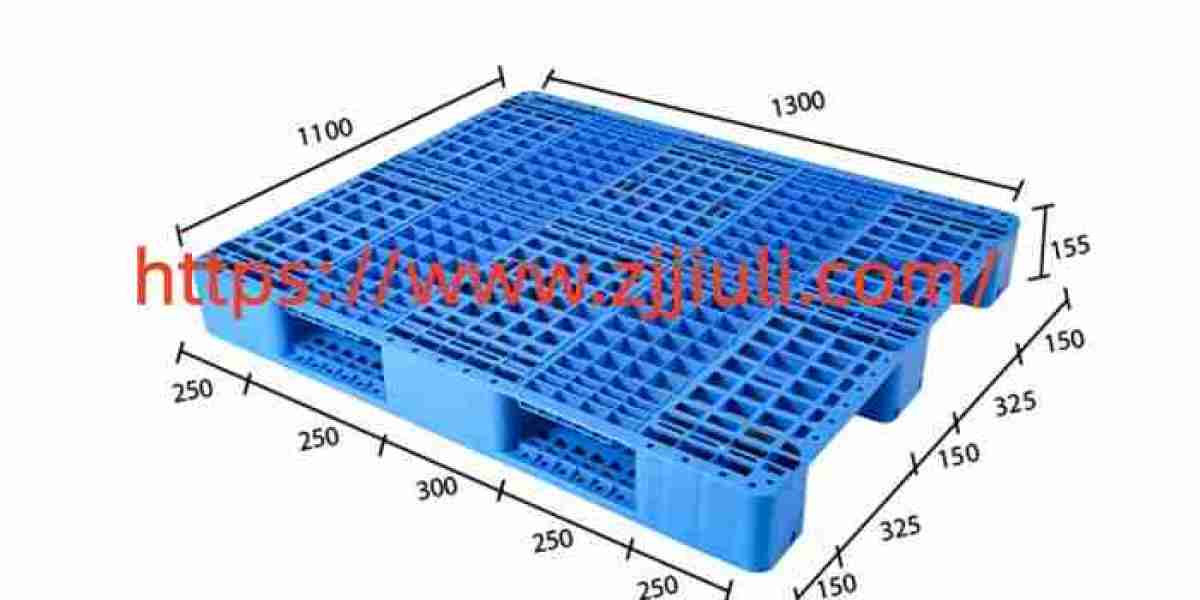

Industrial Plastic Pallets serve as essential platforms in facilities that move substantial product volumes every shift. Selecting units capable of supporting heavy loads requires careful attention to several practical factors that influence long term reliability and operational flow.
Material composition stands at the center of performance. High density resin formulations provide the base strength needed to resist cracking under repeated pressure. The density and molecular structure determine how well the surface holds shape when stacked or moved by powered equipment. Buyers often request data sheets that list the specific resin grade and any added stabilizers that protect against ultraviolet exposure or chemical contact common in processing areas.
Structural design follows closely behind. Reinforced edges internal rib patterns and solid runners distribute force evenly across the entire footprint. A well planned layout prevents localized stress points that could lead to deformation after hundreds of trips. Four way entry options allow forklifts and pallet jacks to approach from any side which speeds loading and reduces the chance of impact damage during tight maneuvers in crowded aisles.
Load ratings must match actual working conditions. Static ratings indicate how much weight the unit can hold when resting on the floor or in a rack. Dynamic ratings cover movement by forklift while rack ratings apply when the unit spans beams without full bottom support. Matching these numbers to real daily maximums plus a reasonable safety margin keeps both product and people secure. Operators should also note the difference between evenly distributed loads and concentrated ones since the latter places greater demand on the center sections.
Compatibility with existing equipment forms another important check. Deck height entry opening dimensions and overall length and width need to align with conveyor widths rack beam spacing and automated guided vehicle sensors. Mismatches create bottlenecks or force manual adjustments that slow throughput. Measuring current systems before ordering prevents costly trial and error after delivery.
Environmental resistance rounds out the list. Units that face cold storage require formulations that remain impact resistant at low temperatures. Those exposed to wash down procedures benefit from smooth non porous surfaces that clean quickly and do not absorb moisture. Outdoor yards call for ultraviolet stabilizers that limit surface degradation over seasons of sun exposure.
Service life under frequent handling also deserves review. The number of expected cycles before replacement depends on operator care load consistency and the presence of sharp edges on product packaging. Facilities that track trip counts and inspect regularly often extend usable periods by addressing minor wear early.
Zhiguangplastic supplies a range of options designed around these considerations. Teams can review detailed specifications and request samples that reflect the exact conditions of their facilities.
When evaluating options it helps to create a simple checklist that covers material data design features capacity numbers equipment fit and environmental needs. Walking through each item with the supplier clarifies which configuration supports the daily reality of heavy product movement. Clear communication about maximum weights typical stack heights and handling frequency leads to units that integrate smoothly and deliver steady performance across many operational cycles.
Visit https://www.zjjiuli.com/product/ to review current models and request further details on configurations suited to intensive warehouse activity.