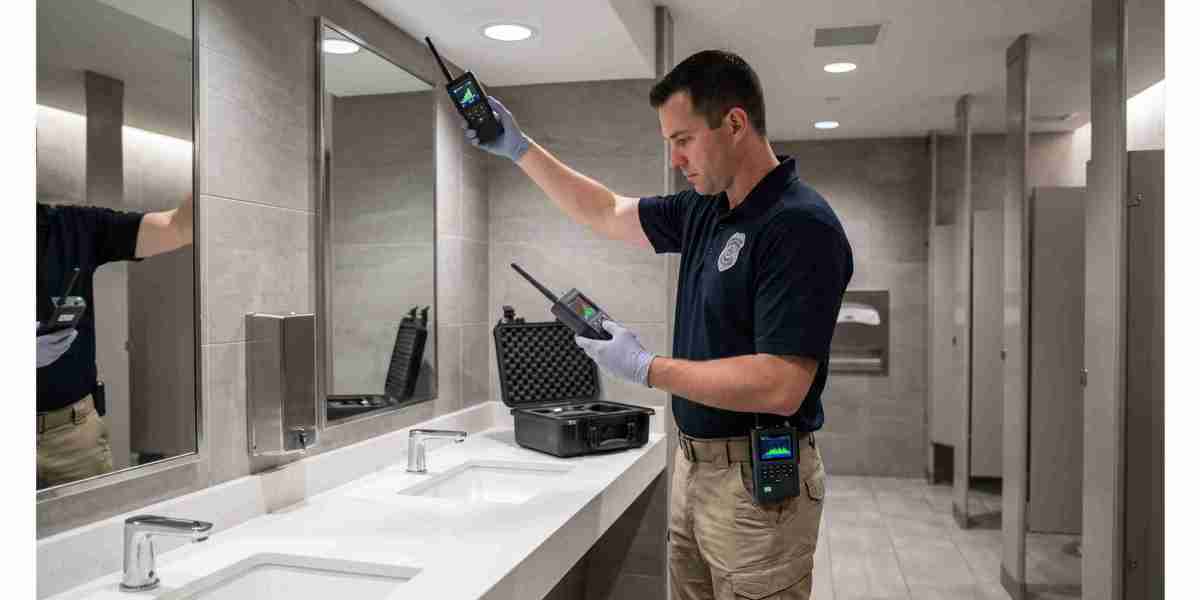

Privacy can be difficult to maintain in public and commercial environments, especially when people use spaces where they naturally expect a high level of privacy. Restroom bug sweeps can provide an additional layer of protection by helping identify potential hidden surveillance devices or unauthorized monitoring equipment. Businesses, property managers, hotels, and security professionals may use professional inspection services when there is a reasonable concern about privacy violations.
A restroom is one of the most sensitive areas in any building. People expect conversations, personal activities, and private moments to remain confidential. Unfortunately, unauthorized recording equipment can sometimes be concealed in everyday objects or fixtures. A professional security assessment can help determine whether suspicious electronic devices are present and whether further investigation is necessary.
Why Restroom Privacy Matters
Restrooms are designed to provide personal privacy. Unlike many other areas of a business or public facility, people generally have a strong expectation that they are not being recorded or monitored.
A privacy concern can arise in various environments, including:
- Office buildings
- Hotels and resorts
- Restaurants and entertainment venues
- Gyms and fitness centers
- Shopping malls
- Educational institutions
- Healthcare facilities
- Rental properties
- Public facilities
Even when a surveillance concern turns out to be unfounded, taking it seriously can be important. Employees, customers, visitors, and guests may lose trust if they believe their privacy is not being protected.
For organizations, privacy protection is also connected to reputation and responsible security management. A suspected incident should be investigated professionally rather than dismissed without evidence.
What Is a Restroom Bug Sweep?
A bug sweep is a technical security inspection designed to identify potential electronic surveillance threats. Depending on the situation, an assessment may involve checking an environment for signs of unauthorized listening, recording, tracking, or other monitoring technology.
Restroom bug sweeps focus specifically on sensitive restroom environments where unauthorized surveillance would represent a serious privacy concern.
A professional inspection may consider potential threats associated with:
- Hidden cameras
- Unauthorized microphones
- Wireless transmission equipment
- Suspicious electronic devices
- Unusual wiring or electrical modifications
- Devices that may transmit or store recorded information
The exact inspection process depends on the property, suspected threat, and equipment available to the security professional.
Why Hidden Surveillance Can Be Difficult to Identify
One of the biggest challenges associated with unauthorized surveillance is concealment. Modern electronic devices can be extremely small and may be integrated into objects that appear ordinary.
A suspicious device could potentially be placed near:
- Lighting fixtures
- Ventilation areas
- Electrical outlets
- Ceiling fixtures
- Decorative objects
- Shelving
- Mirrors
- Other permanent or removable fixtures
However, an unusual object does not automatically mean that it contains surveillance equipment. Many legitimate electrical and building components can look suspicious to someone who is unfamiliar with them.
That is why professional assessment is generally more reliable than relying exclusively on visual inspection.
How Professional Bug Sweeps Can Support Privacy Protection
Professional restroom bug sweeps are intended to provide a systematic approach to identifying potential electronic surveillance threats.
A qualified security professional may use specialized detection equipment and physical inspection techniques to assess the environment.
Depending on the scope of the inspection, the process may include:
Physical Inspection
The physical environment can be examined for unusual modifications, unfamiliar objects, damaged fixtures, or other signs that something may have been added without authorization.
Physical inspection remains important because electronic detection equipment does not necessarily identify every possible threat.
Electronic Detection
Specialized technical equipment may be used to identify certain types of electronic signals or devices. The equipment and methodology used will depend on the suspected threat.
Not every surveillance device continuously transmits a signal. Some devices may store information locally, which means electronic signal detection alone may not be sufficient.
Environmental Assessment
The surrounding environment can also be reviewed to understand normal electronic activity. Commercial buildings may contain legitimate wireless equipment, networking devices, smart systems, and other technology.
Those legitimate signals can sometimes create false positives. Professional interpretation is therefore important when technical equipment is being used.
Documentation
If suspicious equipment or evidence is identified, the findings can be documented appropriately. Documentation can help property owners, security teams, or legal professionals determine what should happen next.
Who May Need a Restroom Bug Sweep?
Not every restroom requires a technical security inspection. However, certain circumstances may justify professional evaluation.
Businesses and organizations may consider an inspection when:
- A suspicious device has been discovered.
- There has been an unexplained privacy incident.
- Someone reports seeing an unfamiliar camera or electronic device.
- A facility has experienced unauthorized access.
- A sensitive security investigation is underway.
- Management wants to verify the privacy of a high-risk environment.
- A previous security incident has raised concerns about surveillance.
Hotels, corporate facilities, entertainment venues, and other businesses may also consider periodic security assessments as part of a broader privacy and risk-management strategy.
Restroom Bug Sweeps for Businesses
Businesses have a responsibility to create an environment where employees and customers can reasonably expect their privacy to be respected.
A suspected surveillance incident can quickly become a reputational problem. Customers may stop visiting a business, employees may become uncomfortable, and management may face difficult questions.
A proactive approach can help organizations establish stronger security procedures.
Businesses can complement technical inspections with policies such as:
- Restricting unauthorized access to sensitive areas
- Controlling who can perform maintenance
- Documenting repairs and renovations
- Training employees to report suspicious equipment
- Reviewing physical security procedures
- Investigating privacy complaints promptly
- Maintaining clear incident-response procedures
Security should not depend on one inspection. It should be treated as an ongoing process.
Why Professional Experience Matters
Detecting potential surveillance technology is not simply about finding something that looks unusual.
Modern buildings contain many legitimate electronic systems. Wireless networks, Bluetooth devices, smart lighting, sensors, security equipment, and other technologies can produce signals that may appear unusual to an inexperienced person.
Professional experience can help distinguish legitimate technology from potential security concerns.
When restroom bug sweeps are performed by qualified professionals, the inspection can be approached systematically rather than based on assumptions or fear.
The findings can then be evaluated in context.
What Should You Do If You Find a Suspicious Device?
If a suspicious electronic device is discovered in a restroom, it is important to avoid immediately assuming what it is.
Instead, consider taking the following steps:
- Avoid unnecessarily handling the device.
- Document its location if it is safe to do so.
- Notify the appropriate property or security authority.
- Consider contacting a qualified security professional.
- Preserve potentially relevant evidence.
- Contact law enforcement when circumstances warrant it.
Removing or dismantling a suspicious device could potentially destroy evidence or make it more difficult to determine who installed it.
Professional advice should be sought when there is a genuine concern about unauthorized surveillance.
The Difference Between a Visual Check and a Technical Sweep
A basic visual inspection can be useful, but it has limitations.
Someone may notice an unfamiliar object, loose wiring, or an unusual fixture during a visual check. However, many surveillance technologies are designed to blend into their surroundings.
A technical inspection can add another layer of assessment by examining electronic characteristics that may not be visible to the naked eye.
Neither approach should automatically be considered a guarantee that every possible surveillance device will be discovered. The effectiveness of an inspection depends on the equipment, expertise, environmental conditions, and type of technology involved.
This is why realistic security expectations are important.
Privacy Protection Should Be Part of a Larger Security Strategy
A restroom inspection should not be viewed as an isolated security measure.
Organizations can strengthen privacy protection by combining technical assessments with physical security, employee awareness, access controls, and appropriate incident-response procedures.
A broader security strategy may include:
- Regular facility inspections
- Access-control systems
- Staff security training
- Visitor management
- Maintenance documentation
- Incident reporting procedures
- Periodic technical security assessments
These measures can reduce opportunities for unauthorized activity and make potential security issues easier to identify.
Choosing a Professional Security Inspection Service
If an organization decides to arrange a technical privacy inspection, the service provider should be evaluated carefully.
Look for professionals who can clearly explain:
- What type of inspection will be performed
- Which threats the inspection is designed to identify
- What equipment may be used
- How findings will be documented
- What limitations apply to the inspection
- How confidential information will be handled
- What happens if suspicious equipment is discovered
Experience, professionalism, confidentiality, and transparent communication are important considerations.
A responsible provider should avoid making unrealistic claims. No security inspection should be presented as an absolute guarantee that every conceivable surveillance device will be detected.
Protecting Privacy in Sensitive Environments
Privacy concerns can affect individuals and organizations alike. A hotel guest may want reassurance that their room and surrounding facilities are secure. An employee may want confidence that sensitive areas are being appropriately protected. A business owner may want to demonstrate that reasonable privacy safeguards are in place.
In each situation, a professional and evidence-based approach is preferable to speculation.
Restroom bug sweeps can form part of that approach when there is a legitimate reason to investigate potential electronic surveillance. Combined with strong physical security and responsible facility management, technical inspections can contribute to a more secure environment.
Final Thought
Privacy should never be treated as an afterthought, particularly in environments where people have a strong expectation of confidentiality. Restroom bug sweeps can help organizations and property owners investigate potential surveillance concerns through a structured technical and physical assessment. While no inspection can guarantee that every possible threat will be identified, professional security assessments, clear procedures, employee awareness, and appropriate incident response can significantly strengthen an overall privacy strategy. When a genuine concern exists, obtaining an evaluation from an experienced security professional is a sensible step toward protecting people, property, and trust.