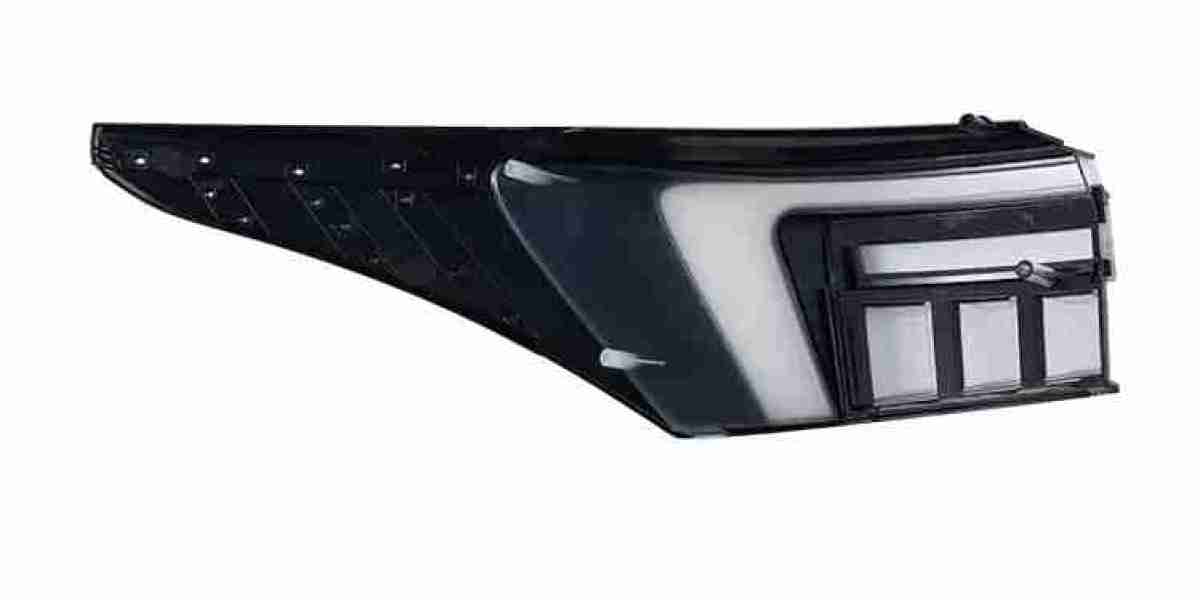

The production of modern vehicle components requires a combination of material knowledge, tooling precision, process control, and quality management. In this environment, Injection Molding Car Parts provides an efficient manufacturing approach for producing complex plastic components with repeatable geometry and controlled surface quality. From interior trim and functional housings to exterior components and lighting-related parts, injection molding supports a wide range of automotive applications.
Material selection is one of the first considerations in automotive plastic manufacturing. Different components operate under different mechanical, thermal, chemical, and environmental conditions. Engineering polymers may be selected according to stiffness, impact resistance, heat behavior, dimensional stability, surface appearance, or compatibility with additional manufacturing processes. The material must also work effectively with the selected mold design and processing conditions.
Mold engineering has a direct influence on the final quality of molded components. Automotive parts frequently contain ribs, bosses, clips, mounting points, curved surfaces, or other integrated structures that increase tooling complexity. Designers therefore need to consider material flow, cooling, shrinkage, ejection, parting lines, and draft angles before machining begins. Early analysis can identify potential filling problems and reduce unnecessary modifications during later production stages.
Computer-aided engineering has become an important part of this development process. Mold flow analysis can help engineers understand how molten polymer may travel through a cavity and identify areas that could experience incomplete filling, weld lines, air entrapment, or uneven pressure distribution. Simulation does not replace practical manufacturing knowledge, but it provides useful information for optimizing gate locations, runner layouts, cooling strategies, and other tooling decisions.
Cooling is another important factor because molded components need controlled temperature conditions during production. Uneven cooling can contribute to warpage, dimensional variation, or internal stress. A well-planned cooling system should therefore match the geometry of the component and support relatively consistent heat removal across critical areas. This becomes particularly important for large or geometrically complex automotive parts where uneven thermal behavior can affect assembly accuracy.
Tool material and surface treatment also influence mold performance. Automotive molds may experience repeated mechanical and thermal cycles, so the selected tool steel must provide suitable wear resistance, toughness, machinability, and dimensional stability. Different areas of a mold may require different surface finishing approaches depending on whether the component needs a textured appearance, smooth optical surface, functional sealing area, or precise assembly interface.
Manufacturing accuracy is closely connected to machining technology. CNC machining can create complex mold cavities and structural features, while electrical discharge machining can be used for areas that are difficult to produce through conventional cutting. Fine polishing and surface treatment may then be applied to critical cavity regions. Careful coordination between these processes helps maintain the intended geometry and surface characteristics.
Ejection design should also be considered during mold development. Automotive plastic components often include deep sections, undercuts, thin walls, or delicate cosmetic surfaces. Poorly positioned ejector components can leave visible marks or create unwanted stress. Engineers need to balance reliable part release with appearance requirements, structural strength, and production efficiency. Proper draft design and controlled ejection forces can make the molding process more stable.
Quality control extends beyond the finished component. Tooling dimensions, electrode accuracy, cavity surfaces, cooling channels, assembly alignment, and mold trials all need appropriate inspection. During sampling, manufacturers can evaluate filling behavior, appearance, dimensional consistency, and assembly performance. Feedback from these stages can then be used to refine the tooling before the mold enters regular production.
Automation can further improve consistency in automotive molding operations. Automated material handling, robotic part removal, vision inspection, and production monitoring can reduce manual variation and support traceable manufacturing processes. Automation is particularly valuable when components require consistent handling or when production involves repetitive operations that could otherwise introduce operator-dependent differences.
Another important consideration is communication between the mold manufacturer, component designer, material supplier, and vehicle-related production team. Design changes introduced late in the process can affect cavity geometry, cooling layout, ejection systems, and machining schedules. Early design-for-manufacturing evaluation helps different teams identify potential conflicts before tooling construction progresses too far.
For manufacturers seeking dependable tooling development and professional engineering support, Taizhou Renxin Mould Co., Ltd. combines mold design, simulation, precision machining, and manufacturing experience for automotive applications, with further information available through https://www.rxmolds.com as part of its approach to Injection Molding Car Parts and related tooling solutions.