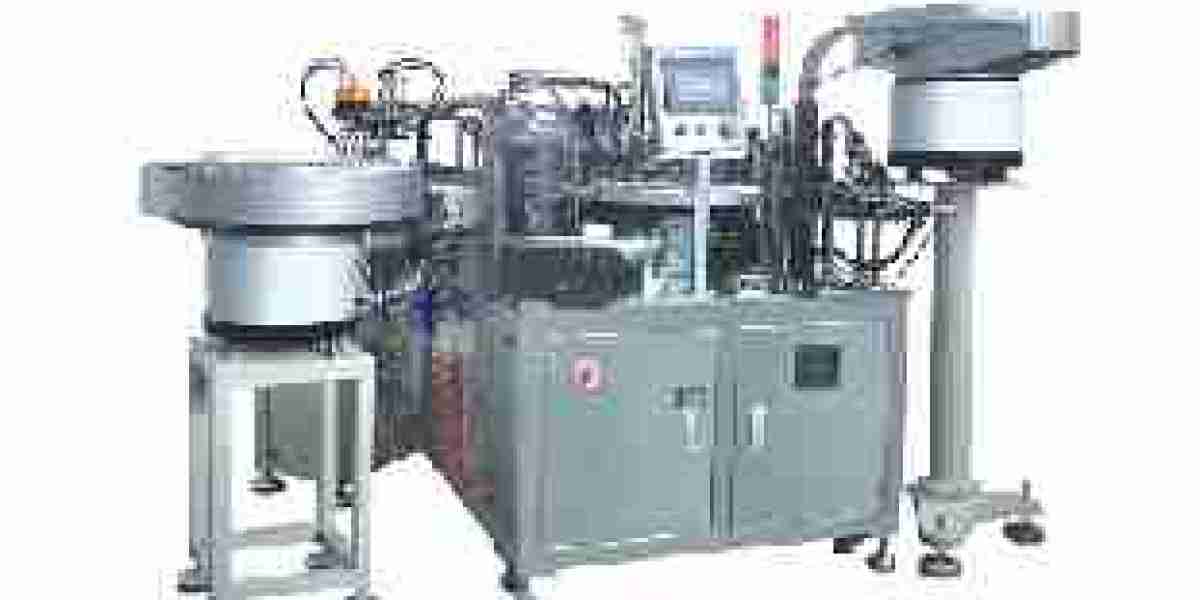

As paper converting businesses respond to growing requirements for consistency and production efficiency, automation is becoming an important part of modern manufacturing strategy. An Automatic Paper Rolling Machine can support this transition by coordinating material movement, rolling operations, process monitoring, and production continuity within a more organized manufacturing environment. Rather than relying heavily on manual intervention, manufacturers can use integrated automation to create a more stable workflow.
Material preparation is one of the most important factors affecting rolling performance. Paper materials may differ in thickness, surface characteristics, flexibility, and intended application. A well-designed automated production process should therefore begin with controlled material feeding and stable positioning. Proper alignment helps reduce unnecessary movement during processing and provides a more predictable foundation for subsequent rolling operations.
Automation also changes how manufacturers manage continuous material movement. In manual production environments, operators may need to monitor several steps simultaneously, creating opportunities for inconsistent handling or interruptions. Automated feeding, guiding, tension management, and rolling coordination can reduce unnecessary manual tasks while helping production equipment maintain a more consistent operating rhythm.
Technology integration is another important consideration. Modern industrial equipment can combine mechanical structures with sensors, programmable controls, and monitoring systems. These technologies allow production processes to respond to changing operating conditions more systematically. When sensors detect material position or process changes, control systems can coordinate equipment actions without requiring constant operator adjustment.
Quality assurance benefits from this level of process coordination. Paper products used in packaging, printing, industrial applications, and other downstream processes often require stable roll formation and predictable material handling. Variations introduced during production can affect later converting operations. Automated systems can help reduce avoidable process variation by maintaining consistent movement and coordinating different production stages according to predefined manufacturing logic.
Machine vision and digital sensing can further strengthen quality management when they are integrated appropriately. Visual inspection technologies can help identify visible material or process abnormalities, while sensors can provide information about equipment status and production conditions. Combining these tools with production records gives manufacturers a clearer understanding of where problems occur and how processes can be improved.
Safety is equally important in automated paper processing. Rolling equipment contains moving mechanical components, and production environments may involve continuous material movement. Automated safety controls, protective structures, emergency stopping functions, and organized operator interfaces can help establish a safer working environment. Reducing unnecessary manual contact with moving components also allows workers to focus more on supervision, maintenance, and process management.
From a workforce perspective, automation does not simply eliminate manual operations. Instead, it changes the skills required on the production floor. Operators increasingly need to understand machine interfaces, process data, maintenance procedures, and quality management principles. This shift supports a more technology-oriented manufacturing workforce and encourages companies to develop systematic production knowledge.
Flexibility should also be considered when selecting or designing automated rolling equipment. Different businesses may process various paper materials or serve different downstream applications. A flexible production concept can make it easier to adjust workflows for changing product requirements without completely restructuring the manufacturing environment. This is particularly valuable for companies that need to balance standard production with customized orders.
Resource efficiency is another area where automation can contribute to manufacturing development. Better material alignment and process coordination may help reduce avoidable waste caused by handling errors or unstable production. More organized equipment operation can also make production planning easier, allowing businesses to understand material consumption and identify opportunities for process optimization.
For manufacturers considering an Automatic Paper Rolling Machine, the most important evaluation should therefore extend beyond the machine itself. Production compatibility, material handling, automation architecture, quality control, safety design, maintenance requirements, and future expansion should all be considered as part of an integrated manufacturing strategy. This broader perspective helps businesses build automation systems that remain useful as production requirements evolve.
AMBE TRADE focuses on practical automation concepts that connect equipment technology with modern manufacturing needs. By combining process control, intelligent production management, quality awareness, and application-oriented engineering, manufacturers can develop more organized paper processing workflows. For businesses exploring suitable automation solutions and related industrial equipment, further information is available at https://www.ambemedi.com/product/.