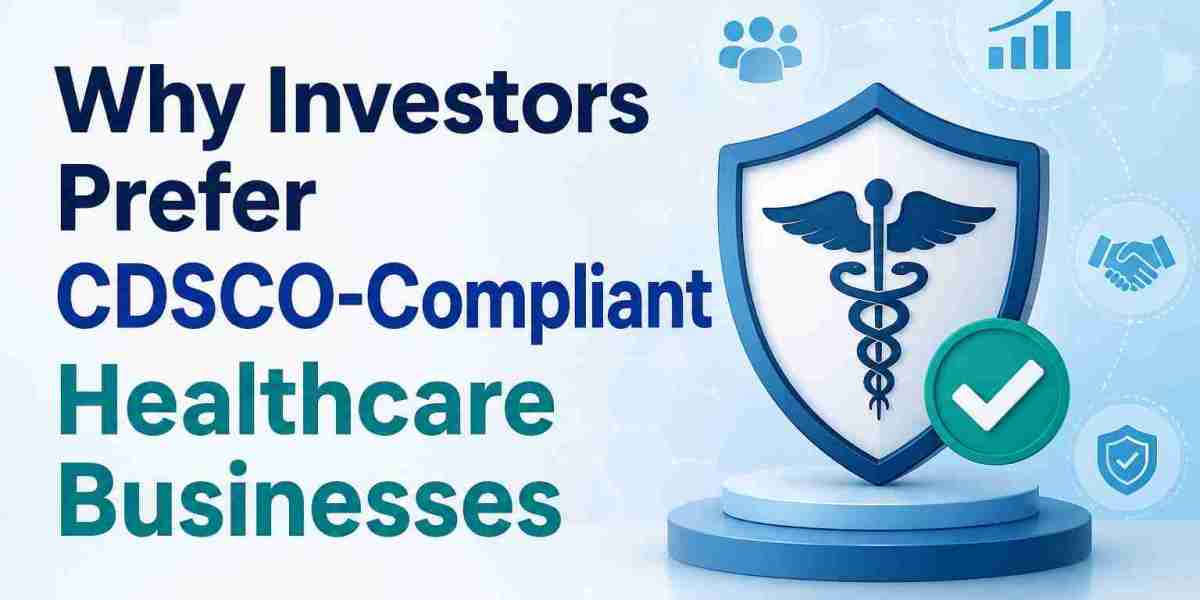

The healthcare industry is one of the fastest-growing sectors in India. From medicines and medical devices to diagnostics and cosmetics, businesses are bringing new products to consumers every year. However, healthcare is also a highly regulated sector because these products can directly affect people's health and safety.
This is why investors often look beyond sales and profits when evaluating a healthcare business. They also want to know whether the business follows the required regulatory standards.
For businesses dealing with regulated drugs, medical devices, and other healthcare products, compliance with the Central Drugs Standard Control Organisation (CDSCO) can become an important part of building a reliable and investment-ready business.
CDSCO is India's national regulatory authority for drugs and medical devices. Its SUGAM portal allows businesses to submit applications for various permissions, registrations, and licences related to regulated products.
But why does this matter to investors?
Let's understand the major reasons.
What Is CDSCO Compliance?
CDSCO compliance means following the applicable laws, rules, standards, registration requirements, and licensing conditions for regulated healthcare products.
Depending on the product and business activity, a company may need approvals relating to:
Drugs
Medical devices
In-vitro diagnostic devices
Imported healthcare products
Cosmetics
Manufacturing
Import and distribution
Clinical trials and other regulated activities
The exact approval depends on the product, its classification, the business activity, and whether the product is manufactured in India or imported.
For example, medical devices are classified into four risk classes—Class A, B, C and D. The regulatory requirements can differ based on the risk classification.
For medical device imports, CDSCO provides an online process for applying for an import licence. Under the current medical device framework, applications for an import licence are made through the SUGAM system in Form MD-14, with the licence issued in Form MD-15.
Why Investors Prefer CDSCO-Compliant Healthcare Businesses
1. Compliance Reduces Regulatory Risk
Investors do not want to put money into a business that may face regulatory action, product restrictions, or delays because of missing approvals.
A healthcare business that has identified its regulatory requirements and obtained the applicable licences gives investors greater confidence.
Proper compliance can help reduce the risk associated with:
Regulatory notices
Product restrictions
Import delays
Licensing problems
Compliance-related business interruptions
Reputation damage
This does not mean that CDSCO approval guarantees business success. However, proper regulatory compliance can make the business more predictable from an investor's point of view.
2. It Builds Trust in the Business
Healthcare is a trust-based industry.
Customers, hospitals, distributors, doctors, and business partners want confidence that healthcare products are being handled according to applicable regulations.
Regulatory compliance shows that the business takes product quality and legal requirements seriously.
For an investor, this can be a positive sign because trust can support customer retention, partnerships, and long-term growth.
3. It Makes the Business More Investment-Ready
When investors conduct due diligence, they may review different parts of a company, including:
Financial records
Business model
Intellectual property
Licences and registrations
Product approvals
Manufacturing arrangements
Supplier agreements
Regulatory compliance
Litigation and regulatory history
If a healthcare business has its regulatory documentation properly organised, the due-diligence process can become easier.
A company that cannot clearly explain how its products are legally manufactured, imported, or sold may create additional concerns for investors.
4. It Supports Business Expansion
Investors generally look for businesses that can grow.
A healthcare company may initially sell products in one market and later expand into new cities, states, product categories, hospitals, distributors, or international markets.
Having a proper regulatory structure from the beginning can make expansion easier to manage.
For example, businesses importing regulated medical devices need to understand the applicable CDSCO registration and import licensing requirements before bringing those products into India.
The CDSCO's medical device framework provides a specific online process for obtaining import licences.
5. It Helps Attract Institutional and Strategic Investors
Small businesses may initially receive funding from founders, friends, family, or individual investors.
As the company grows, it may seek funding from:
Venture capital firms
Private equity investors
Strategic investors
Healthcare companies
Institutional investors
These investors normally conduct deeper due diligence.
Regulatory compliance becomes particularly important for businesses operating in industries where government approvals are essential for commercial operations.
A company with a clear compliance structure can present a stronger investment case.
6. It Protects the Company's Reputation
Reputation can be extremely valuable in healthcare.
A regulatory issue involving a healthcare product can affect customers, distributors, business partners, and investors.
On the other hand, maintaining proper licences, registrations, documentation, and quality processes can help a business build a reputation for responsible operations.
Investors are generally more comfortable with businesses that have systems in place to identify and manage compliance risks.
CDSCO Registration Online: What Businesses Should Know
Businesses can use the CDSCO's SUGAM portal for several regulatory applications.
The official CDSCO portal provides online application and status-tracking facilities for various permissions and approvals.
The exact process depends on the product and the activity involved.
For example, the portal provides separate processes for areas such as:
Import and registration
Medical devices
Cosmetics
Drugs
Clinical trials
Other regulatory permissions
Therefore, businesses should first identify the correct regulatory category instead of assuming that every healthcare product requires the same CDSCO approval.
CDSCO Medical Device Import License
Medical device importers need to pay close attention to regulatory requirements.
CDSCO states that medical devices are regulated according to their risk classification. The classification ranges from Class A, which represents low risk, to Class D, which represents high risk.
For regulated medical device imports, an applicant can apply through the SUGAM online portal for an import licence. CDSCO identifies Form MD-14 as the application form and Form MD-15 as the import licence.
This is important for investors because a medical device business that wants to scale its import operations needs to understand its regulatory responsibilities from the beginning.
Older CDSCO guidance also highlights the importance of registering applicable medical devices and manufacturing sites for regulated imports.
CDSCO Medical Device Registration
CDSCO medical device registration is an important compliance area for businesses dealing with regulated medical devices in India.
The requirements depend on factors such as:
Type of medical device
Risk classification
Manufacturer
Manufacturing location
Import or manufacturing activity
Intended use
Applicable regulatory pathway
Businesses should not treat medical device registration as a one-size-fits-all process.
For investors, having a clear regulatory roadmap can show that the company understands the legal requirements associated with its products.
What About CDSCO Cosmetic Manufacturing License?
The phrase CDSCO cosmetic manufacturing license is commonly searched by businesses, but there is an important distinction.
In India, the manufacture of cosmetics is regulated through inspection and licensing by State Licensing Authorities, while the import of cosmetics is regulated through registration by the Central Licensing Authority.
Therefore, a business manufacturing cosmetics in India should identify the applicable state-level manufacturing licence requirements rather than assuming that CDSCO directly issues every cosmetic manufacturing licence.
For imported cosmetics, CDSCO plays a central role in the import registration process. CDSCO also states that imported cosmetics need registration before import and must comply with applicable quality and safety requirements.
This distinction is important during investor due diligence because incorrect or incomplete regulatory information can create unnecessary concerns.
How CDSCO Compliance Can Increase Investor Confidence
A healthcare business can improve investor confidence by maintaining a proper compliance system.
Some important areas include:
Product Documentation
Keep product-related documents organised and updated.
Licence Records
Maintain copies of applicable licences, registrations, permissions, and certificates.
Manufacturing Information
Maintain proper details regarding manufacturing facilities and applicable quality systems.
Import Documentation
Importers should maintain the relevant regulatory and customs documentation.
Renewal and Post-Approval Compliance
Regulatory compliance does not always end after receiving an approval. Businesses should monitor ongoing obligations, amendments, renewals, and regulatory changes.
Internal Compliance Tracking
Create a system to track licence validity, regulatory submissions, product changes, and other important deadlines.
These practices can make regulatory due diligence easier when the company approaches investors.
Why Compliance Matters During Investor Due Diligence
Suppose two healthcare companies have similar revenues and growth rates.
Company A has proper regulatory documentation, valid licences, organised product records, and a clear compliance system.
Company B has strong sales but cannot clearly explain which products require approval, whether its licences are current, or how its imported products meet regulatory requirements.
An investor may consider Company A less risky.
This is because investors are not only buying today's revenue. They are investing in the company's future.
Regulatory uncertainty can affect that future.
CDSCO Compliance Is More Than Getting a Certificate
Businesses sometimes view regulatory compliance as simply obtaining a certificate and displaying it on a website.
That approach can create problems.
Compliance should be treated as an ongoing business function.
Companies should continuously monitor:
Regulatory changes
Product classification
Licence validity
Manufacturing changes
Import requirements
Labelling requirements
Product documentation
Quality and safety requirements
Post-approval obligations
The CDSCO SUGAM portal itself provides online application, document submission, status tracking, and other regulatory functions for applicants.
How Corpbiz Helps Healthcare Businesses
At Corpbiz, we help businesses understand regulatory requirements and prepare their applications and documentation for applicable healthcare registrations and licences.
Our professionals can assist businesses with:
CDSCO registration support
Medical device registration
Medical device import licence support
Healthcare regulatory documentation
Cosmetics regulatory compliance
Application preparation
Documentation review
Regulatory process guidance
Compliance support
The exact approval required depends on the product and business activity. Therefore, businesses should first identify the correct regulatory pathway before applying.
Conclusion
Investors prefer healthcare businesses that demonstrate strong regulatory discipline because compliance can reduce uncertainty and support sustainable growth.
CDSCO compliance can help healthcare businesses build trust, reduce regulatory risks, improve due diligence readiness, and prepare for expansion.
Whether a company deals with medicines, medical devices, diagnostics, or imported cosmetics, understanding the applicable regulatory requirements is an important part of building a strong healthcare business.
Businesses planning CDSCO Registration Online, a CDSCO Medical Device import license, CDSCO Medical device registration, or cosmetics-related regulatory approvals should carefully identify the correct approval before starting the application process.
For healthcare businesses, compliance is not simply a legal requirement. It can also become an important part of the company's value proposition when attracting investors.
Frequently Asked Questions
1. Why do investors prefer CDSCO-compliant healthcare businesses?
Investors generally prefer businesses with proper regulatory compliance because it can reduce regulatory uncertainty, improve due diligence readiness, and support long-term business stability.
2. What is CDSCO registration?
CDSCO registration refers to regulatory registration or approval applicable to certain drugs, medical devices, cosmetics, and other regulated healthcare activities. The exact requirement depends on the product and business activity.
3. Can I apply for CDSCO Registration Online?
Yes. CDSCO provides the SUGAM online portal through which applicants can submit various regulatory applications and track their status.
4. What is a CDSCO Medical Device import license?
It is the applicable regulatory licence required for importing regulated medical devices into India. CDSCO's current medical device process provides for an application in Form MD-14 and an import licence in Form MD-15.
5. Is CDSCO Medical device registration mandatory for every medical device?
The applicable regulatory requirements depend on the type, classification, and regulatory status of the medical device. Medical devices are classified into Class A, B, C and D based on risk.
6. Does CDSCO issue a cosmetic manufacturing license?
Not generally for domestic cosmetic manufacturing. Manufacturing of cosmetics in India is regulated through licensing by State Licensing Authorities, while cosmetic imports are regulated centrally through CDSCO.
7. Why is regulatory compliance important during investor due diligence?
Investors may examine licences, registrations, product approvals, manufacturing arrangements, and other compliance records before investing. Proper documentation can make this review more straightforward.
8. Can CDSCO compliance guarantee investment?
No. Regulatory compliance does not guarantee investment. Investors also consider factors such as revenue, profitability, market opportunity, management, technology, competition, and growth potential.
9. How can a healthcare business prepare for investor due diligence?
The business should maintain updated licences, registrations, product documents, manufacturing information, import records, contracts, and compliance records in an organised manner.
10. How can Corpbiz help with CDSCO compliance?
Corpbiz can assist businesses with understanding applicable regulatory requirements, preparing documentation, and supporting applications for relevant CDSCO and healthcare regulatory approvals.