
Modern infrastructure increasingly depends on temporary and permanent cable routing systems to keep electrical, communication, control, and data lines organized and protected. When selecting a Cable Protector Supplier, buyers should consider more than product appearance, because material behavior, structural design, manufacturing consistency, and application conditions all influence long-term usability.
Cable protection is particularly important where wires cross pedestrian paths, work areas, vehicle lanes, exhibition spaces, construction zones, and industrial facilities. Without suitable protection, exposed cables may be compressed, displaced, twisted, or damaged by repeated contact. A properly designed protective structure creates a controlled passage over the cable while helping reduce direct mechanical stress.
Material selection is one of the first considerations in this field. Rubber-based materials are commonly used because they can provide flexibility while maintaining sufficient structural support for practical cable routing applications. The material must also remain suitable for the intended environment, including areas exposed to sunlight, moisture, dust, temperature changes, or frequent movement.
Thermoplastic materials can also be considered for applications where weight, handling, modularity, or surface characteristics are important. Different materials respond differently to compression, bending, abrasion, and environmental exposure. Therefore, manufacturers need to match material formulation and processing methods with the expected operating conditions rather than relying on a single universal material approach.
Structural design has an equally important role. A protective channel should guide cables securely while allowing convenient installation and removal when the application requires temporary deployment. Internal routing areas need to accommodate cables without creating unnecessary bending or compression. At the same time, the external surface should support predictable movement across the protected area.
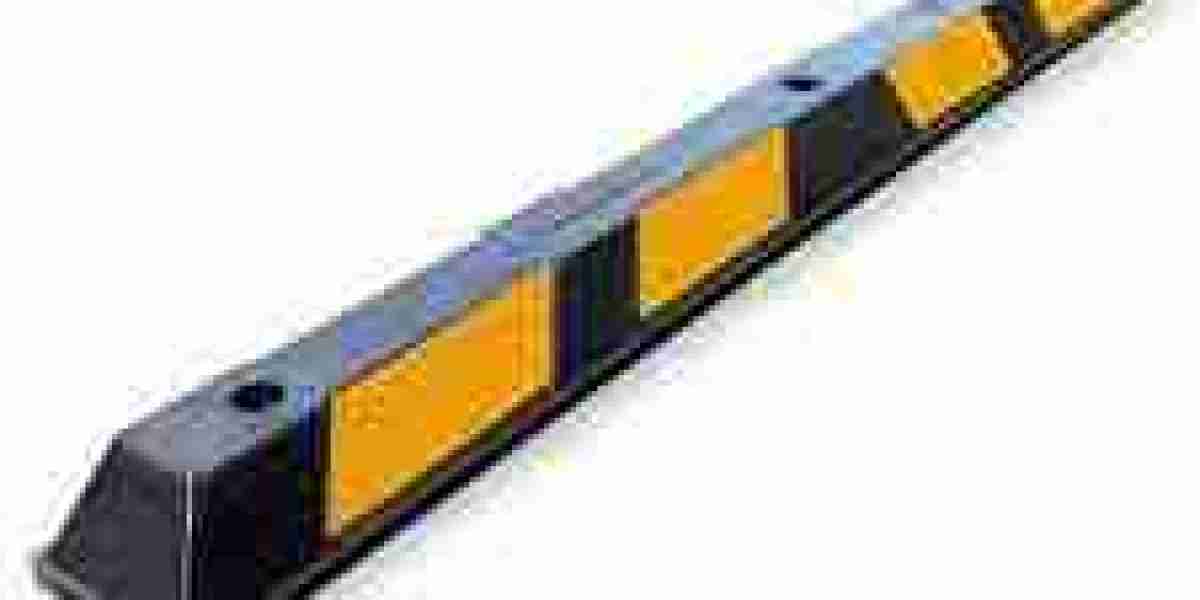
For traffic-related applications, visibility and surface geometry can contribute to safer site organization. Contrasting visual elements may help users recognize a raised cable crossing, while textured surfaces can provide additional contact between the protective structure and surrounding ground. These features are especially useful in temporary work zones where equipment, cables, and pedestrian routes must coexist.
Manufacturing technology determines whether these design concepts can be reproduced consistently. Compression molding, extrusion, injection molding, cutting, bonding, and other processing methods may be selected according to the material and product structure. Process control is important because inconsistent molding, dimensional variation, surface defects, or weak joining areas can affect the practical performance of the finished component.
A capable manufacturer also needs to understand different installation environments. Indoor exhibition halls have different requirements from warehouses, construction sites, factories, parking facilities, or public event areas. A solution suitable for light pedestrian traffic may not be appropriate for repeated vehicle movement. Application analysis therefore becomes an important part of the purchasing process.
For international B2B buyers, communication and quality management are also essential. A reliable Cable Protector Supplier should be able to understand application requirements, clarify material and structural considerations, maintain consistent production processes, and provide clear information for installation and use. This approach can reduce misunderstandings between manufacturers, distributors, contractors, and end users.
Another consideration is logistics. Protective products used in temporary projects may need to be transported frequently between different sites. Practical handling, storage, packaging, and product organization can therefore influence overall project efficiency. Manufacturers serving export markets should consider not only production but also how products are prepared for distribution and repeated field use.
Cable protection also contributes to better workplace organization. Keeping cables within designated routes can reduce loose wiring across working surfaces and make maintenance areas easier to inspect. In industrial environments, organized routing can support clearer separation between pedestrian movement, equipment operation, and electrical infrastructure.
As infrastructure systems become more connected, cable protection will remain relevant across construction, manufacturing, transportation, events, and commercial facilities. Buyers benefit from evaluating materials, design, manufacturing control, application compatibility, and service capabilities together rather than judging a product only by its external appearance.
Zhejiang Luba Traffic Technology Co.,Ltd. focuses on traffic safety and protection solutions for practical application environments. For product information and related traffic protection solutions, buyers can visit https://www.cnluba.com/product/ and explore options suited to different cable management and site safety requirements.