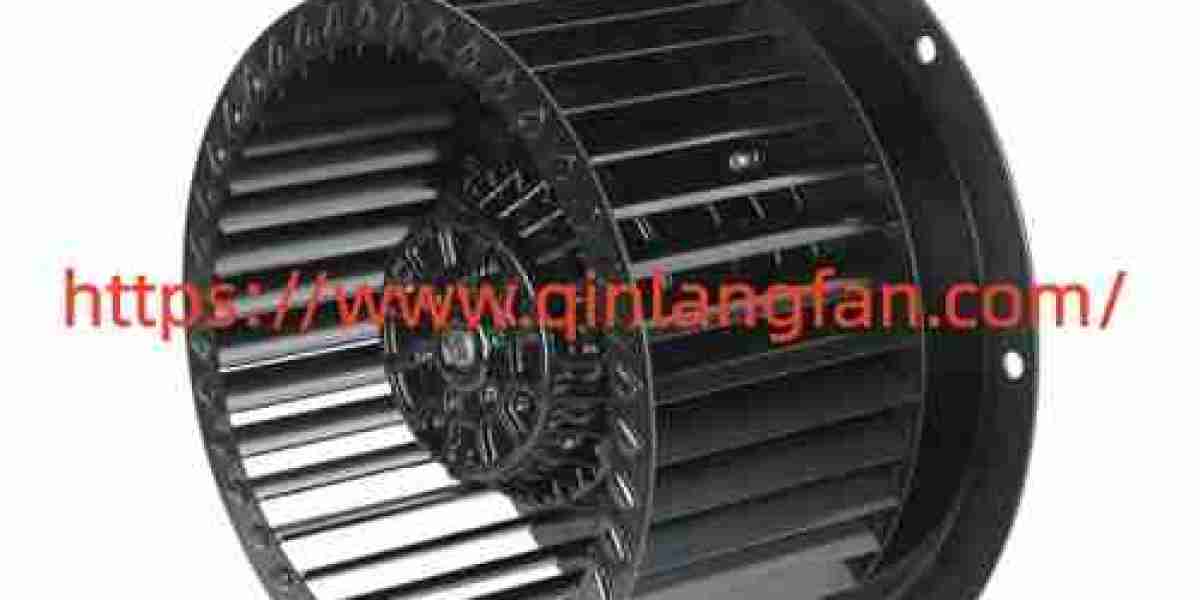

Forward Curved Centrifugal Fan Factory selection should begin with the application rather than the catalogue. Buyers may already know the required air volume, but that figure alone does not tell the whole story. System resistance, static pressure, motor configuration, installation space, noise expectations, operating environment, and maintenance access all influence the final choice. For HVAC projects in particular, the relationship between the fan and the duct system deserves careful attention. Industry guidance notes that forward curved designs are commonly used in HVAC and compact equipment applications, while their performance characteristics require attention during selection.
The first useful question is simple. Where will the unit work? A compact air handling cabinet has different requirements from a larger ventilation installation. Room air circulation, equipment cooling, and ducted air movement may all call for different configurations. Knowing the application gives the supplier a practical starting point and prevents the purchasing discussion from becoming a simple comparison of catalogue numbers.
Airflow should then be considered together with static pressure. Ducts, filters, coils, dampers, bends, and transitions create resistance. As resistance changes, the operating point of the equipment changes as well. A buyer who provides only an airflow target may leave out information that is important for proper selection. Performance curves can help show how airflow and pressure relate at different operating conditions.
This is particularly relevant to forward curved equipment because its performance curve has characteristics that deserve attention. ASHRAE notes that this type has a relatively flat pressure curve and that operation around the unstable region should be treated carefully. The practical takeaway is not complicated. Buyers should provide the design operating point and ask the supplier to confirm that the proposed configuration is appropriate for it.
Motor selection comes next. Voltage and frequency need to match the destination site. Buyers should also consider rated power, speed, control method, starting conditions, and expected operating hours. If the equipment will be integrated into an automated HVAC system, the control requirements should be discussed before production rather than left until installation.
Size is another detail that can cause trouble when ignored. Measure the available installation area and check the inlet, outlet, mounting points, service clearance, and connection dimensions. Compact equipment can be attractive where space is limited, but the complete installation still needs enough room for assembly and maintenance. A product that fits on a drawing may not be convenient to install if access around it is restricted.
Noise also deserves a place on the checklist. Forward curved wheels are widely associated with HVAC and other clean air applications, partly because their operating characteristics can suit spaces where acoustic conditions matter. Still, actual sound levels depend on the complete equipment arrangement, speed, airflow, installation, and ductwork. Buyers should therefore discuss the intended environment instead of relying on the fan type alone.
The working medium matters too. These units are commonly associated with clean air applications, while dusty or harsh environments may require another configuration. The US Department of Energy notes that forward curved fans are commonly used for smaller clean air applications, including HVAC equipment. If the air contains particles, moisture, unusual temperatures, or corrosive substances, those conditions should be explained during the initial technical discussion.
Construction details can tell buyers a great deal about how equipment may fit their project. Housing material, wheel construction, bearings, shaft arrangement, protective guards, mounting structure, and motor placement should all be reviewed. The right combination depends on the application rather than simply choosing the same construction for every installation.
Customization becomes important when standard dimensions do not fit an existing system. Commercial buyers may need a different motor, connection arrangement, mounting method, housing dimension, or electrical configuration. Discussing these points before production allows both sides to confirm what can realistically be supplied.
Qinlang provides fan products for ventilation and air movement applications, giving buyers a range of configurations to consider. Its product information can also serve as a useful starting point when comparing dimensions, structures, and application requirements.
Quality control should be part of the supplier review. Buyers can ask how components are checked, how assemblies are inspected, and what testing is completed before shipment. For repeat orders, keeping approved specifications on record is especially useful. Drawings, motor information, dimensions, and agreed performance requirements can help maintain consistency from one purchasing cycle to the next.
Delivery planning deserves equal attention. Production schedules, packaging, shipping arrangements, product documentation, and spare components should be discussed according to the project. If the equipment is part of a larger HVAC installation, timing can influence work on site. Clear planning helps purchasing teams coordinate with installers and project managers.
There is also value in looking at how the supplier communicates. A useful technical conversation should not stop at model numbers. The supplier should understand where the equipment will operate, while the buyer should receive clear information about airflow, pressure, electrical requirements, dimensions, and available configurations. That exchange can reveal whether the proposed equipment actually fits the project.
A sensible purchasing process can be quite straightforward. Define the application. Calculate system resistance. Confirm airflow and static pressure. Check motor requirements. Measure installation space. Consider noise and working conditions. Then review construction, customization, inspection, delivery, and future maintenance. This approach gives buyers a clearer basis for comparing suppliers.
For HVAC contractors, equipment distributors, and purchasing teams, the goal is not simply to select a fan that looks suitable on paper. The real task is to match the equipment with the complete system and the conditions in which it will operate. Qinlang offers product information for buyers who want to compare available configurations and plan their next project. The current product range can be viewed at https://www.qinlangfan.com/product/