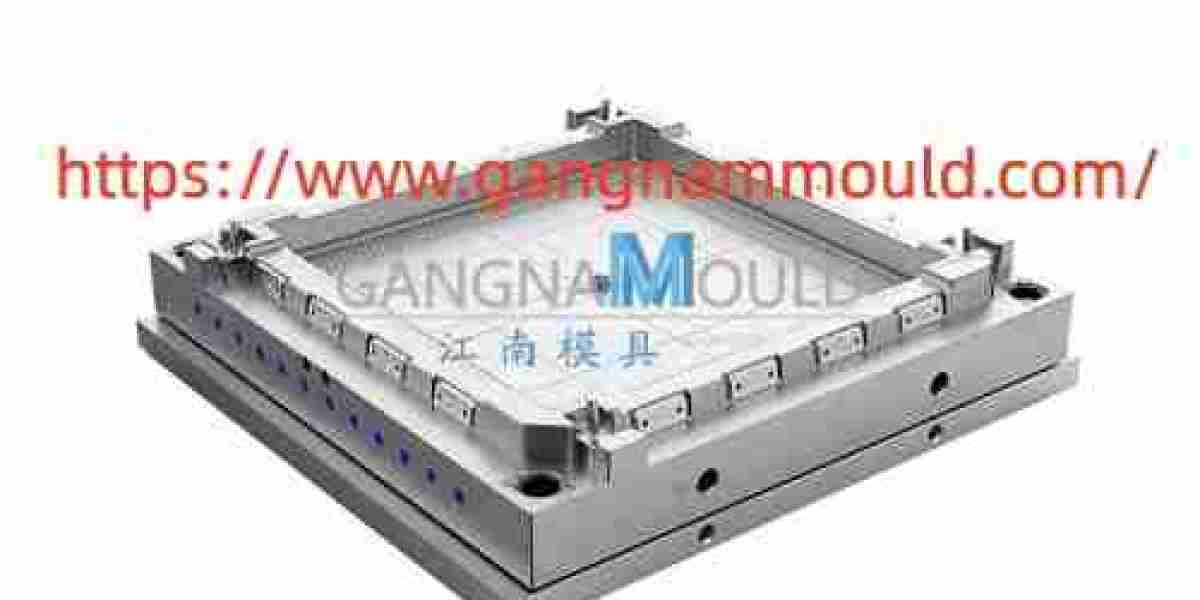

Daily Necessities Mold development is increasingly connected with changes in how people live, organize their homes, clean their spaces, and use everyday products. Consumers often look for convenient storage, easy handling, compact shapes, simple cleaning, reusable functions, and practical details. These expectations influence the way manufacturers approach product design before production begins. Recent household product discussions also show growing attention to convenience, sustainability, hygiene, and functional design.
A household product may appear simple when viewed from the outside, but its internal structure can involve many engineering decisions. Storage containers, cleaning accessories, bathroom items, organizers, dispensers, baskets, trays, and other products each have different requirements. The shape needs to satisfy the user while remaining suitable for injection molding.
One major consideration is product geometry. Consumers may prefer rounded edges, compact proportions, integrated handles, nesting structures, snap connections, or multifunctional features. These details can improve usability, but they also influence cavity construction, parting lines, ejection arrangements, and material flow.
For manufacturers, the challenge is finding a practical connection between appearance and production. A design can look attractive on a computer screen but still require modification before tooling. Corners, ribs, bosses, holes, undercuts, and deep sections should be reviewed during the early design stage.
Wall thickness is particularly important. Uneven sections can cool at different rates, which may contribute to sink marks, warpage, and dimensional variation. Current injection molding design guidance recommends keeping wall sections reasonably consistent and using gradual transitions where changes are necessary.
This becomes especially relevant when consumers want products that feel lightweight while remaining practical for daily use. Simply increasing material thickness is not always the right solution. Ribs, curves, support structures, and carefully positioned reinforcement can provide structural support without creating unnecessarily thick areas.
Material selection also changes with product expectations. Manufacturers may work with polypropylene, polyethylene, ABS, or other thermoplastics depending on the intended application. Each material has different flow behavior, shrinkage characteristics, cooling requirements, and processing conditions. For this reason, material information should be available before tooling details are finalized.
Reusable products create another design consideration. Consumers may handle the same household item repeatedly, wash it frequently, stack it, open and close it, or move it between different locations. Product designers therefore need to consider connection strength, surface treatment, dimensional stability, and ease of assembly.
Cleaning requirements can also influence the shape. Products with fewer unnecessary recesses may be easier to wipe or wash. Rounded transitions can reduce areas where residue might collect, depending on the product application. These choices affect both the user experience and the geometry that engineers need to reproduce during production.
Compact living spaces are another factor influencing household product development. Storage products increasingly need to make efficient use of available space. Nesting containers, stackable units, foldable components, and products with integrated storage features can respond to these requirements. From a manufacturing perspective, such features may require careful consideration of clearances, draft angles, wall thickness, and ejection.
Draft is especially important for components with deep walls. Without suitable taper, the formed part can resist removal from the cavity or core. Draft requirements depend on the material, surface finish, texture depth, and component geometry.
Surface finish is another area where consumer preferences influence tooling decisions. Some household products use smooth surfaces for a clean appearance, while others include texture for grip or visual character. If a textured finish is required, draft should be reviewed at the same time because deeper texture can make release more demanding.
Functional details can also change cavity planning. Snap fits, living hinges, handles, clips, lids, and moving connections may require additional tooling elements or specific release directions. Manufacturers should review these features before production tooling begins instead of waiting until the trial stage.
Production quantity is equally relevant. A product intended for regular high volume manufacturing may require a different cavity arrangement from a product produced in smaller batches. Machine capacity, cycle expectations, component dimensions, material choice, and expected annual volume can all influence the tooling configuration.
Cooling should also be planned according to the actual product structure. Thick sections generally retain heat longer than thin areas. Uneven temperature distribution can affect shrinkage and dimensional stability, so cooling channel placement should be considered during tooling design rather than treated as a later adjustment.
Ejection deserves similar attention. Household products often contain long walls, recessed sections, ribs, handles, or decorative surfaces. Ejector locations should distribute force appropriately and avoid unnecessary marks on visible areas. When the release strategy is considered during product development, geometry can often be adjusted before manufacturing begins.
Gangnammould works with manufacturers on injection tooling projects for everyday household products, taking product geometry, material requirements, production quantities, surface expectations, and manufacturing conditions into consideration. This allows tooling decisions to be connected with the intended product rather than considered separately.
Another useful approach is early design review. A manufacturer can provide three dimensional files, technical drawings, resin information, expected quantities, and surface requirements before tooling construction. Engineers can then examine potential concerns involving wall distribution, draft, ribs, gates, cooling, and ejection. Early review can make later production adjustments more manageable.
Changing consumer needs do not necessarily mean completely redesigning every product. Sometimes a small change in handle shape, container dimensions, surface texture, stacking arrangement, or closure structure can make a product more suitable for a particular application. The tooling needs to accommodate these changes while maintaining a sensible manufacturing process.
Current design guidance continues to emphasize the relationship between product geometry and injection molding performance. Wall thickness, draft, ribs, gate location, cooling, and ejection all need to work together rather than being considered as isolated details.
For manufacturers preparing new household product lines, the key is to consider user expectations and production requirements at the same time. Gangnammould can work with project specific requirements during tooling development, helping manufacturers evaluate practical options for different product structures and production plans. Product and company information can be reviewed at https://www.gangnammould.com/