
In industrial and commercial environments, effective air movement is essential for maintaining suitable working conditions and supporting ventilation processes, and selecting a reliable Centrifugal Fan Factory can help buyers evaluate how equipment is engineered, assembled, and adapted to different applications. Unlike simple air circulation devices, centrifugal systems are designed around controlled airflow paths, rotating components, housing structures, and motor-driven operation. Their overall performance depends on how these elements work together rather than on a single component.
The basic operating principle is straightforward. Air enters the rotating assembly and is accelerated outward by centrifugal force before moving through the surrounding housing toward the discharge point. This configuration allows the equipment to manage airflow through ducts, ventilation networks, filtration systems, and other air-handling structures. The housing plays an important role because its internal geometry influences how efficiently air is guided from the impeller toward the outlet.
Material selection is an important part of fan manufacturing. Common structural materials must provide suitable mechanical strength while remaining compatible with the operating environment. Steel can provide a practical foundation for industrial equipment because of its structural characteristics and manufacturability. Different surface treatments may also be considered when the equipment operates in environments where moisture, dust, or other external conditions could affect exposed surfaces.
The rotating assembly requires careful attention because imbalance or deformation can influence vibration and operating stability. Impellers are therefore manufactured and assembled with attention to geometry, dimensional consistency, and balance. The relationship between the impeller and housing also matters because unnecessary interference or poor alignment can affect airflow behavior and mechanical operation.
Motor integration represents another important engineering consideration. A suitable drive arrangement should work with the intended operating environment and provide consistent rotation. Electrical and mechanical components need to be coordinated during assembly so that the completed unit can operate as part of a larger ventilation system. Proper connection, structural support, and maintenance accessibility can simplify installation and routine service.
Noise is also relevant in ventilation design. Air turbulence, rotating components, vibration, and structural resonance can all contribute to sound generation. Engineers can address these factors through appropriate impeller design, balanced rotating assemblies, stable mounting structures, and carefully designed airflow passages. The objective is not simply to reduce sound but to create an operating configuration that remains suitable for its intended environment.
Different industries may require different ventilation arrangements. Manufacturing workshops may use air-handling equipment to move stale air away from production areas, while warehouses can require continuous circulation to reduce stagnant zones. Commercial buildings, agricultural facilities, workshops, and equipment rooms may also depend on mechanically assisted ventilation. In each situation, airflow direction, installation position, duct arrangement, and operating conditions should be considered together.
Maintenance planning should begin during equipment selection rather than after installation. Accessible components can make inspection and cleaning more practical. Dust accumulation around air passages, rotating assemblies, and protective structures can gradually influence operation if maintenance is neglected. Regular inspection can also help identify unusual vibration, mechanical wear, loose connections, or other signs that deserve attention before they develop into larger operational problems.
Manufacturing quality control supports consistency across these stages. A professional Centrifugal Fan Factory should pay attention to material preparation, component forming, motor integration, assembly accuracy, balance inspection, and finished-unit evaluation. Consistent production procedures help reduce variation between units and make it easier for customers to integrate equipment into larger ventilation projects.
For international B2B buyers, supplier communication is equally important. Technical requirements should be discussed according to the actual application instead of relying only on general product categories. Questions concerning installation environment, airflow arrangement, maintenance expectations, material compatibility, and system integration can help establish whether a particular design is appropriate. Clear documentation can also support installation teams and maintenance personnel after delivery.
Sustainability considerations are increasingly connected with ventilation equipment. Efficient air movement can help reduce unnecessary energy consumption when the system is correctly matched to its application. Durable materials and serviceable construction may also extend useful equipment life and reduce the frequency of replacement. These factors make engineering quality relevant not only to immediate operation but also to long-term resource management.
Safety should remain part of the complete design process. Rotating components require suitable protection, while electrical connections should be installed according to applicable safety practices. Stable mounting is also important because excessive movement or vibration can create mechanical concerns. Ventilation equipment should always be integrated into a system with appropriate protective measures rather than treated as an isolated machine.
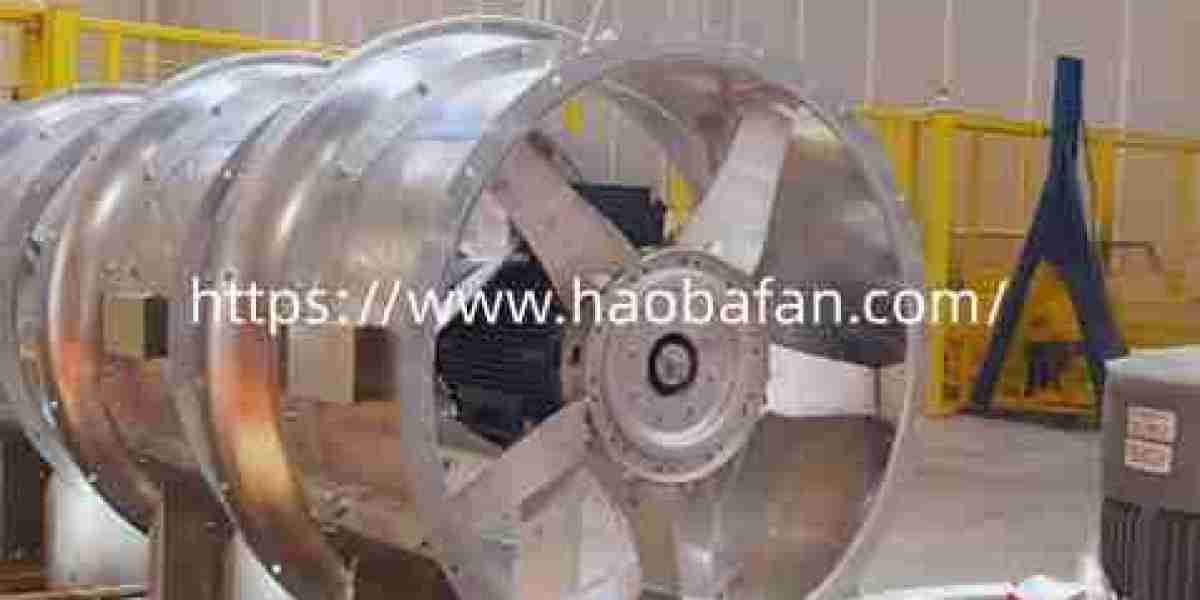
Taizhou Haoba Electromechanical Co Ltd. focuses on practical fan manufacturing and air movement solutions for different application environments. Buyers evaluating ventilation equipment can review its product information and explore the available mixed-flow fan solutions through https://www.haobafan.com/product/mixed-flow-fan/ when considering airflow equipment for industrial and commercial systems.