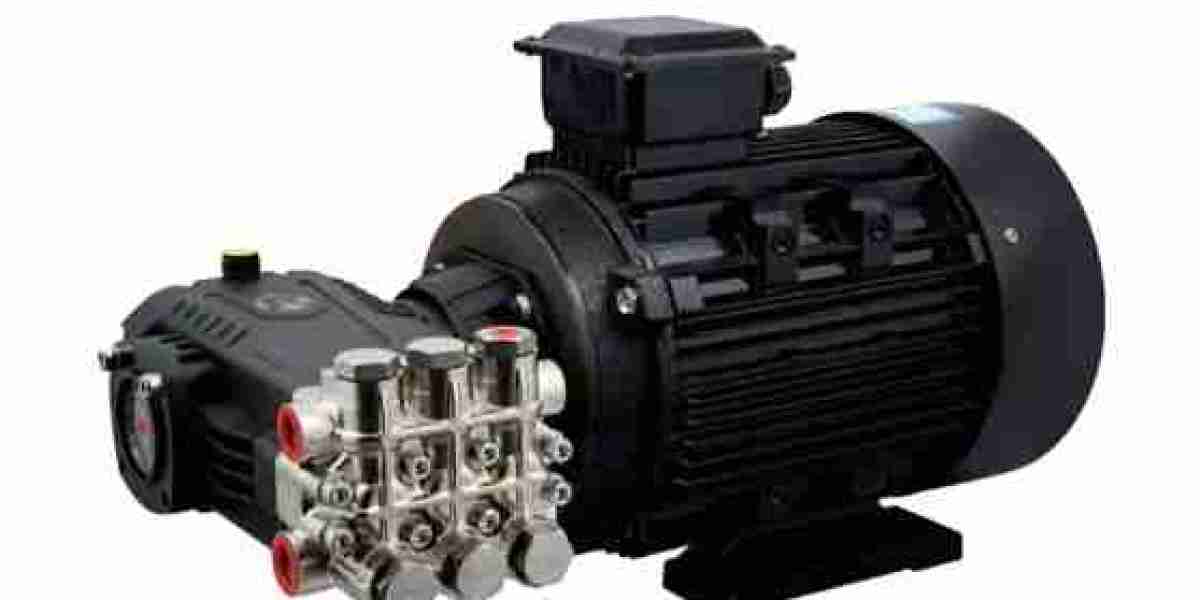

Reliable fluid movement is essential in many industrial processes, from equipment cleaning and water treatment to chemical processing and manufacturing automation. A Piston Pump uses reciprocating mechanical motion to move fluid through a controlled sequence of suction and discharge cycles. Unlike rotary pumping mechanisms, this type of equipment relies on the movement of a piston within a cylinder, making its performance closely connected to cylinder construction, valve response, sealing quality, and mechanical synchronization. Understanding these factors helps industrial buyers evaluate pumping equipment according to application requirements rather than focusing on a single performance characteristic.
The basic operating principle is relatively straightforward. During the suction portion of the cycle, the piston moves in a direction that creates a pressure difference and allows fluid to enter the cylinder. During the discharge portion, the piston reverses direction and pushes the fluid toward the outlet. Inlet and outlet valves control the direction of movement, helping prevent unwanted reverse flow. Although the operating concept is simple, producing consistent results requires careful coordination among mechanical components.
Cylinder manufacturing is therefore an important part of overall pump quality. The internal surface must provide an appropriate environment for piston movement while maintaining compatibility with the selected sealing system. Dimensional accuracy can influence friction, leakage, and mechanical stability. Manufacturers may use different metals or surface treatments depending on the pumped fluid and operating environment. Corrosive liquids, abrasive media, and applications with demanding cleanliness requirements can each require different material strategies.
The piston itself must also withstand repeated mechanical movement. Continuous reciprocation creates cyclic loads that can gradually affect components if material selection and manufacturing processes are not appropriate. Proper machining, surface finishing, and dimensional control can help reduce unnecessary friction and wear. Engineers may also consider heat treatment or specialized surface technologies for components exposed to demanding conditions. These choices should be based on actual application requirements rather than applying the same construction to every industrial system.
Sealing technology is another major consideration. A seal must help prevent fluid leakage around the moving piston while allowing controlled mechanical movement. Excessive friction can increase energy consumption and accelerate wear, while insufficient sealing can reduce fluid containment and affect system reliability. Seal materials should be selected according to fluid compatibility, temperature, pressure conditions, and expected operating cycles. In industrial environments, easy access for inspection and replacement can also reduce maintenance complexity.
Valve design directly affects fluid movement as well. The valves need to open and close in response to pressure changes while maintaining appropriate flow direction. If valve response becomes inconsistent, the pumping process may become less stable and additional mechanical stress may occur. For this reason, valve materials, seating surfaces, spring or actuation mechanisms, and maintenance accessibility should all be considered during equipment development.
Safety is particularly important when reciprocating equipment is incorporated into a high-pressure fluid system. Pressure can accumulate rapidly if an outlet becomes restricted or a control component fails. Appropriate pressure monitoring, relief mechanisms, protective housings, and correctly rated connections can help reduce operational risks. Operators should also follow procedures for depressurizing equipment before maintenance. Routine inspections of seals, valves, connections, and moving components can provide an early indication of developing problems.
Modern manufacturing environments increasingly connect pumping equipment with automation systems. Sensors can monitor pressure, temperature, vibration, or other operating conditions, while controllers can adjust equipment operation according to process requirements. This integration can support more coordinated fluid management in production lines. Data collected during operation may also contribute to maintenance planning by helping engineers identify gradual changes in equipment behavior.
Energy considerations are also relevant when selecting pumping equipment. Mechanical losses can arise from friction, inefficient valve movement, unsuitable operating conditions, or unnecessary pressure generation. Proper system design should therefore consider the relationship between the pump, piping, valves, fluid characteristics, and process demand. Selecting equipment that matches the actual application can help avoid operating the system outside its intended working range.
For industrial buyers evaluating a Piston Pump, the most useful approach is to examine the complete pumping system rather than considering the pump as an isolated component. Fluid characteristics, material compatibility, sealing requirements, valve design, automation needs, maintenance access, and safety provisions all influence equipment suitability. A technically appropriate configuration should reflect the actual process conditions and long-term operating requirements.
Manufacturers serving different industrial sectors may also need flexible equipment options because fluid-handling requirements vary significantly between applications. Working with an experienced pump supplier can help users consider construction materials, mechanical design, control integration, and maintenance requirements as part of one system. Companies interested in exploring related pumping equipment can review the available solutions at https://www.triplex-plungerpump.com/product/pumps/ as part of their industrial fluid-handling equipment evaluation.