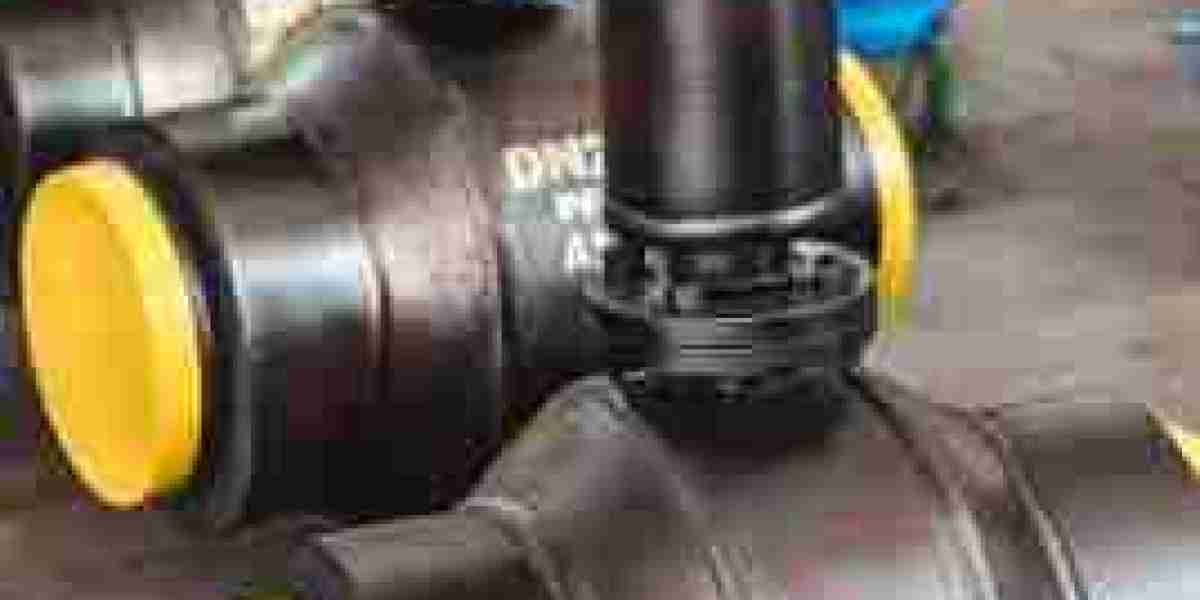

Industrial pipeline systems depend on valves that can provide controlled flow isolation while remaining compatible with the mechanical and environmental conditions of the process. In many applications, a Cast Steel Floating Ball Valve offers a practical design approach that combines a cast body structure with a floating ball mechanism. This configuration is commonly considered for process piping where dependable shutoff, manageable maintenance, and appropriate material selection are important parts of overall equipment planning.
The floating ball principle is based on controlled movement of the ball inside the valve body. Instead of being completely fixed by a trunnion support system, the ball can move slightly in response to line pressure. During closed operation, upstream pressure can push the ball toward the downstream sealing surface, helping establish contact between the ball and seat. This operating principle makes the relationship between pressure, seat construction, ball surface condition, and sealing materials especially important.
Cast steel can provide a useful manufacturing foundation for industrial valve bodies because casting allows manufacturers to produce complex internal and external geometries while maintaining a practical production process. The selection of a suitable steel grade should depend on the operating environment rather than simply on general material strength. Temperature, pressure, chemical composition, corrosion conditions, fluid velocity, and operating frequency can all affect material requirements.
The body material also works together with other valve components. Ball and stem materials should be evaluated according to the process medium and expected mechanical conditions, while seats and packing must be selected with consideration for temperature compatibility, chemical exposure, wear, and sealing behavior. A complete engineering assessment is therefore more useful than evaluating the valve body alone.
Manufacturing quality is another important consideration. Casting quality, heat treatment where applicable, machining accuracy, dimensional consistency, surface preparation, assembly procedures, and inspection practices can all influence the final operating condition of an industrial valve. Particular attention should be given to the areas surrounding the ball, seats, stem, and body connections because these components interact directly during operation.
Inspection and testing procedures should correspond with the intended service. Pressure testing can help verify structural integrity and sealing performance, while dimensional and functional inspections can identify assembly problems before shipment. For projects requiring documentation and traceability, manufacturers may also need to maintain records associated with materials, production stages, inspections, and testing.
Sealing performance is closely connected with the condition of the ball and seats. Surface damage, contamination, unsuitable materials, or excessive mechanical loading can affect the sealing interface. For this reason, operating personnel should consider the characteristics of the process medium before selecting a valve configuration. Fluids containing abrasive particles, corrosive chemicals, or other challenging components may require specialized materials or design considerations.
Safety should also be considered throughout the valve lifecycle. Before inspection or maintenance, the relevant section of the pipeline should be isolated according to established plant procedures, and trapped pressure should be released through appropriate systems. Operators should not assume that closing a valve automatically removes all potential pressure from the surrounding equipment. Correct isolation procedures are particularly important when valves are installed in chemical, energy, petroleum, or other process environments.
Maintenance planning can improve the consistency of valve operation. Operators can monitor external leakage, changes in operating torque, unusual sounds, actuator behavior, and other signs that may indicate developing mechanical problems. Inspection frequency should reflect the application, process medium, operating cycle, and consequences of equipment failure rather than following an identical schedule for every installation.
Automation is increasingly relevant to industrial ball valve applications. Pneumatic or electric actuators can be combined with position feedback and other control accessories to support remote operation and process monitoring. However, successful automation requires more than attaching an actuator. Engineers should evaluate operating torque, actuator sizing, fail-position requirements, environmental conditions, control interfaces, and available power or air supply.
Procurement teams should also consider lifecycle requirements when comparing valve solutions. Initial purchase considerations are important, but compatibility with existing piping, maintenance procedures, replacement parts, documentation, inspection requirements, and actuator systems can affect the practical value of a valve throughout its service life. A design that fits the complete operating environment can simplify installation and future maintenance.
For engineers evaluating a Cast Steel Floating Ball Valve, the most useful approach is to consider body construction, sealing technology, process compatibility, safety procedures, automation requirements, and lifecycle maintenance as an integrated system. Careful coordination between the valve manufacturer, engineering team, and end user can help establish a suitable configuration for the intended application, while additional industrial valve solutions from Zhejiang Naishi Valve Co., Ltd. can be reviewed at https://www.ncevalve.com/product/.