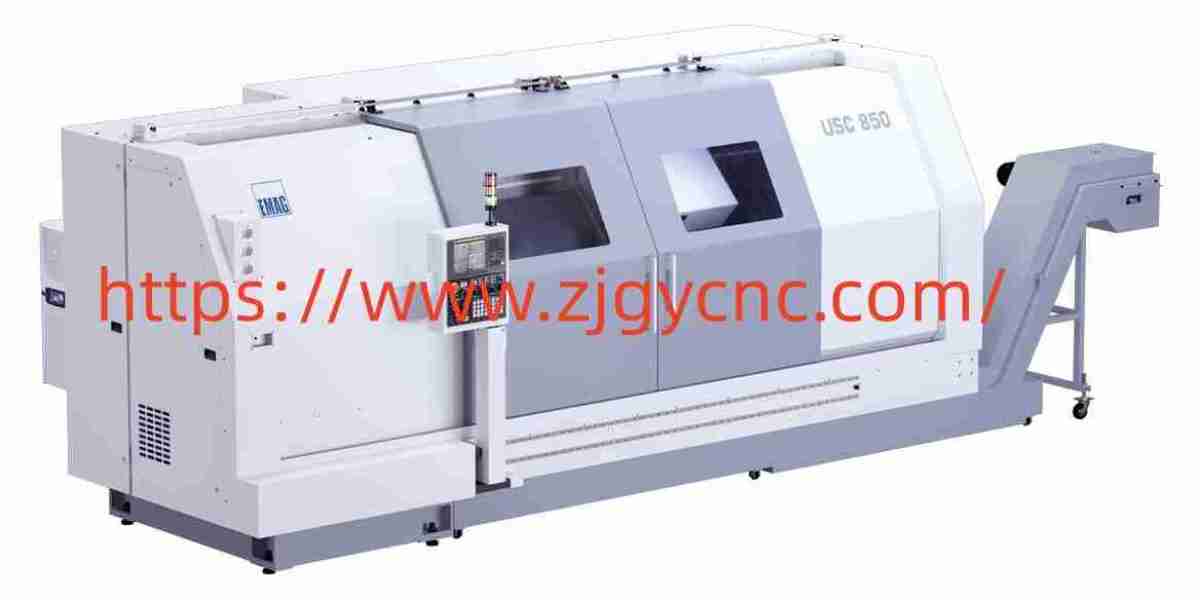

CNC Lathe with Automation combines programmed machining with automatic material handling to reduce repetitive human intervention during production. Instead of requiring an operator to manually load each blank, remove every completed component, and repeat the same handling sequence throughout a shift, an integrated system can coordinate material transfer with the machining cycle. This allows human effort to move toward preparation, supervision, inspection, and process management.
Where Does Manual Time Usually Accumulate?
Manual operation time is not limited to cutting the material. A production cycle can also include opening the enclosure, removing a completed component, preparing the next blank, positioning it correctly, closing the enclosure, and restarting the process.
When these actions are repeated dozens or hundreds of times, the accumulated handling time can become significant. The actual cutting process may remain unchanged, while the time between individual cycles becomes an important part of the production schedule.
Automation addresses this part of the workflow by taking over selected repetitive handling activities.
How Does Automatic Loading Work?
A typical system begins with raw material arranged in a suitable magazine, tray, conveyor, or other storage arrangement. A loading device retrieves a blank and moves it toward the workholding area.
After the previous component has been removed, the new piece is positioned and secured. The machining cycle can then begin according to the programmed sequence.
Once cutting is completed, the handling system retrieves the finished component and moves it toward a collection area. The next blank can then enter the process.
This creates a repeating sequence with fewer manual interruptions between parts.
What Tasks Can Operators Focus On?
Automation does not eliminate the need for skilled personnel. Instead, it can change how their working time is used.
Rather than standing beside the machine throughout every cycle, an operator can prepare incoming materials, check completed components, monitor tool condition, review process information, and organize upcoming orders.
Operators can also respond to alarms, inspect workholding, perform routine cleaning, and make process adjustments when required.
This shift can be useful when repetitive handling takes attention away from activities that require technical judgment.
How Can It Improve Material Flow?
Material movement has a direct effect on workshop organization. With manual loading, raw blanks and completed components may need to be handled individually throughout production.
An automatic handling system can create a defined route from incoming material to finished part collection. This makes the production sequence easier to visualize and can reduce unnecessary movement around the working area.
The exact arrangement depends on component size, production quantity, handling method, and available floor space. A suitable configuration should therefore be planned around the actual workflow rather than treated as a standard solution for every workshop.
Does Automation Reduce Every Type Of Labor?
Not necessarily. Automation mainly targets repetitive and predictable tasks. Programming, setup, tool adjustment, maintenance, quality control, and troubleshooting still require appropriate personnel.
The amount of time saved depends on the component, batch size, cycle structure, handling requirements, and level of integration.
For short runs involving frequent product changes, manual handling may remain practical. For repeated production with stable component designs, automatic loading and unloading can provide greater value because the same sequence can operate repeatedly with limited intervention.
What About Quality Checks?
Inspection remains an important part of production. Automatic handling can move completed components into a designated collection area or, when the system supports it, toward an inspection stage.
Operators can then organize dimensional checks according to the production plan rather than interrupting every individual cycle.
Quality control still depends on appropriate measuring equipment, inspection procedures, tool condition, material consistency, and process management. Automation should support these activities rather than replace them.
How Should Manufacturers Plan A Suitable System?
Manufacturers should begin by examining the actual production cycle. Important questions include how frequently material must be loaded, how long each cutting cycle takes, how components are positioned, how finished parts are collected, and how often operators need to intervene.
Part geometry is also important. A handling device must be compatible with the shape, weight, surface condition, and orientation of the component.
Workshop layout should be considered as well. Material storage, finished part collection, operator access, maintenance areas, and safety arrangements all influence the practical design.
How Can Zjgycnc Support Automated Production?
Zjgycnc provides machining solutions for manufacturers seeking to organize repetitive production tasks through suitable equipment configurations. Buyers can evaluate their component requirements, handling routines, production quantities, operator workflow, and available workshop space before selecting an appropriate setup.
The objective is to create a balanced production process where automatic handling manages predictable movements while operators remain available for setup, monitoring, inspection, and technical decisions. Manufacturers planning an automated machining project can review available product options at https://www.zjgycnc.com/product/ as part of their equipment selection process.