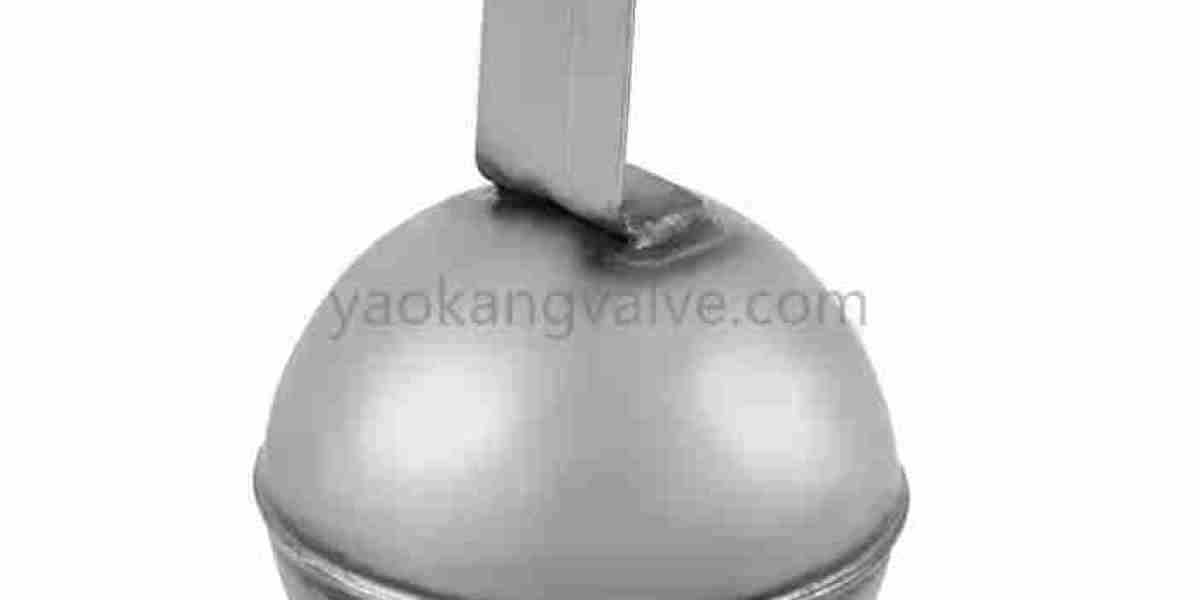

Liquid-level control systems rely on mechanical components that can respond consistently to changes in fluid height. In this field, a Float Ball Factory must combine suitable materials, controlled forming processes, dimensional accuracy, and reliable inspection methods to produce components that can integrate effectively with valves and other fluid-control equipment. Although the operating principle is based on buoyancy, the manufacturing details can have an important influence on overall system performance.
A float ball generally moves according to the changing level of liquid and transfers this movement to a connected valve or mechanical mechanism. When the liquid rises, the floating element moves upward; when the level falls, it moves downward. This simple operating principle makes the component useful in tanks, water-control equipment, process systems, and other applications where mechanical level regulation is required.
Manufacturing begins with material selection. Different working environments create different requirements, so manufacturers need to consider the type of liquid, temperature, exposure conditions, cleaning methods, and expected service environment. Stainless steel is often considered for applications where corrosion resistance and mechanical stability are important. Other materials may also be suitable depending on the application and construction of the complete assembly.
Forming accuracy is another important consideration. A floating component needs consistent geometry so that its buoyancy and movement remain predictable. Variations in shape, wall structure, or connection areas can influence how the component interacts with the liquid and surrounding mechanism. Controlled forming processes can help reduce unnecessary variation between production batches.
Machining may be introduced where threaded connections, mounting areas, or other interfaces require closer dimensional control. Properly manufactured connection sections help the component work with corresponding valve parts without excessive adjustment. For OEM equipment manufacturers, dimensional consistency is particularly useful because components may need to fit established assemblies or automated production processes.
Joining technology can also affect manufacturing quality. When a design involves multiple formed sections, welding or another joining method may be required. The process should be controlled to reduce deformation and maintain structural integrity. Surface condition around joined areas may also require inspection and finishing so that the completed component meets the intended application requirements.
Quality inspection should extend throughout production rather than being limited to the final stage. Incoming material verification can establish basic consistency before processing begins. During manufacturing, dimensional checks can help identify deviations early. Final inspection may include appearance checks, connection verification, leak-related evaluation, and functional assessment according to the product design and application.
For industrial equipment, repeatability is especially important. A supplier may need to produce components repeatedly for the same customer, making stable production procedures valuable for maintaining consistency. Clear drawings, material specifications, inspection requirements, and communication between engineering and manufacturing teams can help establish a practical production standard.
Application conditions should also be considered before selecting a component. A float used in a clean water tank may face different requirements from one installed in a chemical-processing system. Fluid density, installation space, movement range, connection arrangement, and surrounding materials can all influence the appropriate design. Evaluating the complete system helps prevent a component from being selected based only on its general appearance.
Automation has increased the importance of predictable mechanical movement. In automated fluid equipment, a float mechanism may interact with valves, switches, sensors, or other control elements. Consistent movement can support stable operation within the larger system. Manufacturers therefore need to understand not only how to produce the individual component but also how its geometry and connection arrangement affect system integration.
Customization is another consideration for equipment manufacturers. Standard designs may not always match a particular tank, valve assembly, or installation environment. Depending on production capabilities, a manufacturer may support different connection structures, materials, shapes, or other design requirements. Providing accurate technical drawings and application information at an early stage can make communication more efficient.
For international B2B procurement, supplier evaluation should cover more than production capacity. Buyers may also review material control, manufacturing consistency, inspection procedures, engineering communication, customization capabilities, and experience with fluid-control applications. These factors provide a broader basis for evaluating whether a supplier can support both initial orders and future production requirements.
A well-managed manufacturing process connects material selection, forming, machining, joining, inspection, and application requirements into one controlled workflow. This approach helps floating components maintain consistent physical characteristics while fitting the needs of different fluid-control systems. Companies evaluating suitable solutions can review the product range and related manufacturing information at https://www.yaokangvalve.com/product/ as part of their supplier research.