
The changing seasons of Forza Horizon 6 Modded Accounts do more than provide beautiful scenery. In the game's wilderness, seasonal transitions can redefine the terrain itself, transforming familiar routes into entirely different driving challenges.
Japan provides an especially effective setting for this system. Its varied landscapes allow the game to move from mountain forests and river valleys to alpine peaks and rural trails, creating numerous opportunities for weather and temperature to affect the driving experience.
Spring is the season of transformation. Heavy mountain rainfall can turn dry trails into thick mud, dramatically changing how vehicles behave. A route that previously rewarded speed can suddenly demand patience and careful throttle management.
Mud creates an especially interesting problem because acceleration and traction are no longer directly connected. Applying more throttle does not necessarily produce more forward progress. Wheels can spin, momentum can disappear, and a vehicle can struggle to climb a slope that looked manageable under dry conditions.
This makes vehicle preparation essential. Off-road tires become more valuable, while suspension and drivetrain settings can influence how effectively a vehicle deals with unstable surfaces.
For players pursuing Forza Horizon 6 Credits, these changing conditions can also make the wilderness an important part of their overall progression. Instead of repeatedly focusing on the same type of event, players can explore seasonal opportunities and discover new activities, routes, and rewards.
Summer presents a dramatically different environment. As temperatures rise and water levels recede, riverbeds can dry out. Areas that were once blocked by water can become high-speed corridors.
These newly accessible routes change the meaning of exploration. A player who previously knew a particular valley as a difficult crossing may return during summer and discover an entirely new road through the landscape.
Dry riverbeds also encourage different vehicle choices. A machine built primarily for deep mud may not be ideal for rapid gravel travel. Players can therefore benefit from maintaining multiple specialized vehicles rather than expecting one setup to handle every environment.
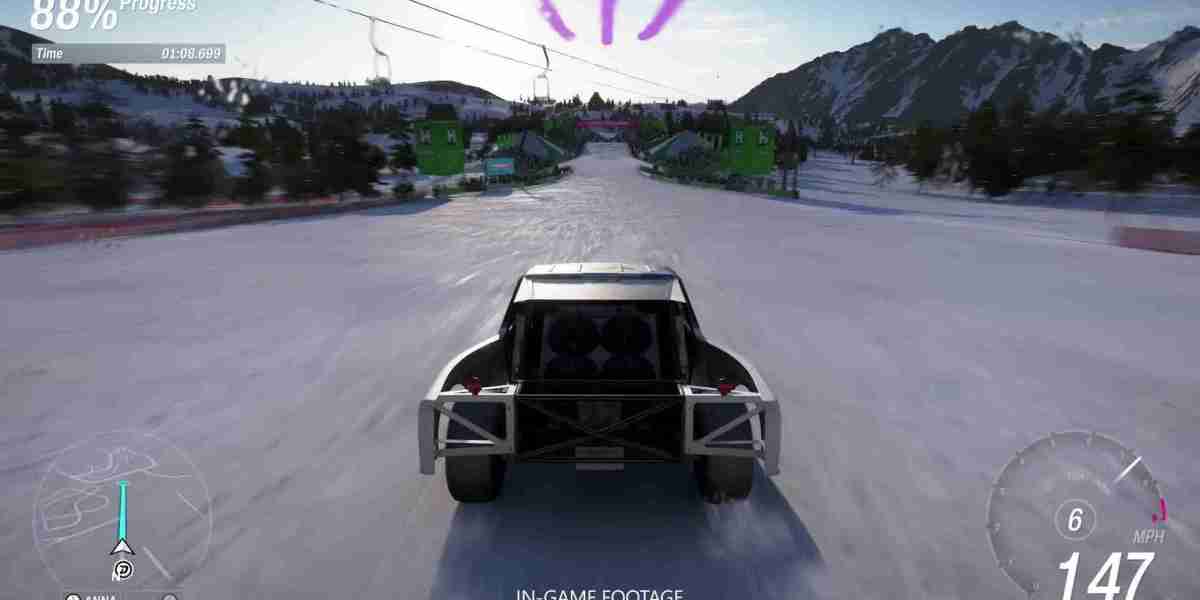
Winter is perhaps the most visually dramatic season. Northern alpine areas can become covered in snow, while icy surfaces create unpredictable braking and cornering behavior.
Snow changes momentum management. Braking distances become longer, acceleration requires restraint, and steering inputs can produce unexpected results. Specialized winter rally builds become valuable because their equipment is designed to operate under conditions where ordinary road-oriented vehicles struggle.
The danger of winter driving comes partly from deceptive surfaces. Snow can conceal changes in terrain, while black ice can reduce grip with little visual warning. A driver traveling too quickly can discover the problem only after the vehicle has already begun to slide.
This makes familiarity with the terrain less reliable. Knowing a route is not enough; players must know the conditions under which they are driving it.
The four-season cycle also supports the game's broader exploration philosophy. The Overland Expedition mode encourages players to travel toward coordinates without necessarily following a predetermined path. Seasonal changes ensure that the best route can vary depending on the time of year.
A forest crossing might be relatively easy in summer but muddy in spring. A river route might be impossible during wetter periods but become a useful shortcut once the water recedes. A mountain pass could become a serious winter challenge.
This creates a world that feels less static than a conventional racing map.
Rally racing benefits from the same seasonal philosophy. Dirt stages running through forests, villages, and bamboo groves can acquire completely different personalities depending on surface conditions.
The sound design adds to this effect. In wet conditions, the vehicle's interaction with mud creates a heavier, more aggressive atmosphere. On dry gravel, the sound of stones striking the underside of the car emphasizes speed. During intense rally runs, turbo systems and sequential gearboxes add a mechanical soundtrack.
Players interested in customization can also use the seasonal cycle as a reason to build distinct cars. One vehicle might be designed for muddy spring trails, another for summer overland speed, and another for winter mountain stages.
That approach gives the garage a practical purpose. Cars stop being collections of performance statistics and become tools for specific environments.
The Estate supports this philosophy by functioning as a wilderness-oriented home base. Players can showcase up to three off-road builds there, creating a natural staging area for expeditions.
The broader lesson of Forza Horizon 6's seasonal system is that weather can be much more interesting when it changes how the player drives. A beautiful snowfall is memorable, but a snowfall that forces the player to rethink braking, tires, route selection, and speed is much more significant.
By connecting seasons directly to terrain, the game turns its Japanese landscape into a constantly changing playground. The same mountain, river, or forest can provide a completely different experience months later.
The wilderness therefore never remains entirely solved. Players can learn the map, but they still have to respect the conditions.