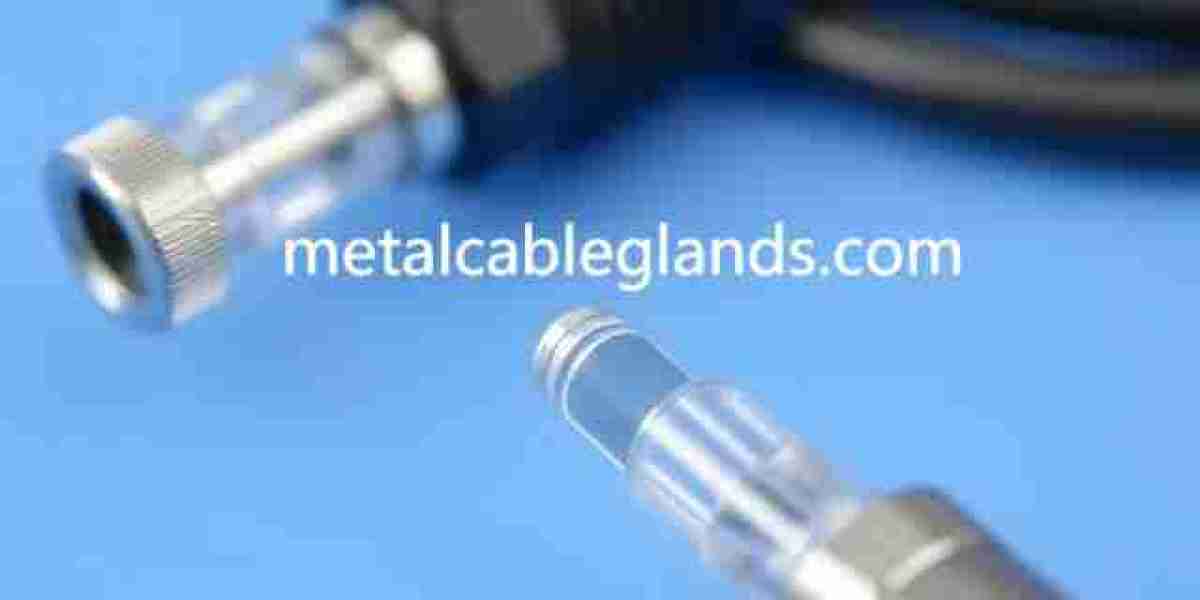

Cable routing becomes more challenging when equipment operates in spaces where wires are frequently bent, moved, or exposed to mechanical stress. In these situations, an Anti-Bending Cable Gland can provide useful support around the cable entry point, while selecting a suitable Anti-Bending Cable Gland can help improve cable organization and reduce unnecessary bending near the enclosure. For electrical equipment designers, control cabinet manufacturers, lighting producers, automation equipment builders, and cable assembly teams, the gland is more than a simple connection accessory. Its structure can influence cable positioning, installation convenience, sealing performance, and long-term mechanical protection. By considering cable diameter, bending direction, mounting space, material, and working conditions before installation, manufacturers can create a more organized cable-entry system that better matches the requirements of different equipment designs.
Why Cable Bending Protection Matters
Cables rarely remain completely straight after installation. Depending on equipment structure, wiring routes may require cables to curve around corners, pass through narrow spaces, or move during operation.
Repeated bending close to an enclosure entry point can place additional mechanical stress on the cable jacket. Over time, poor cable positioning may also make wiring less organized.
An anti-bending structure can help guide the cable as it leaves the enclosure, creating a smoother transition between the cable and the entry point.
The required bending protection depends on cable diameter, flexibility, installation angle, and the amount of movement expected during operation.
Engineers should therefore consider the cable and gland as a complete system rather than selecting the accessory separately.
Choosing the Right Gland Structure
Different equipment applications may require different gland structures. Before purchasing, buyers should check the cable diameter range and available mounting space.
The external shape of the gland can affect how the cable is guided after passing through the enclosure wall. A suitable structure should provide sufficient flexibility without creating unnecessary pressure on the cable.
Material selection is also important. Nylon-based components may be considered for applications where lightweight construction, corrosion resistance, and practical installation are desired.
The mounting thread or connection dimensions should match the enclosure opening. Accurate dimensional matching can reduce modification work during assembly.
For customized equipment, buyers can provide cable specifications, panel thickness, installation conditions, and expected bending requirements to help determine a suitable configuration.
Metalcableglands for Organized Installation
A well-designed cable entry can make assembly easier, especially when equipment contains numerous cables.
During installation, the gland should be positioned so that the cable can follow its intended routing path without excessive twisting or sharp directional changes.
Cable routing should also leave sufficient space around connectors and other components. This can make later inspection and maintenance more convenient.
For production environments, standardized installation procedures can help operators repeat the same steps across multiple units.
Clear instructions covering mounting, cable insertion, tightening, and positioning can reduce inconsistencies between assemblies.
When different cable sizes are used, separating gland specifications according to diameter can also make warehouse and production management easier.
Applications in Different Equipment
Anti-bending cable glands can be considered for equipment where cable movement or directional changes are part of normal operation.
Control cabinets may use them to organize external wiring, while automation equipment can benefit from additional cable guidance around moving or articulated areas.
Lighting equipment, outdoor electrical housings, machinery, communication devices, and industrial control systems may also require structured cable-entry solutions.
Each application has different environmental and mechanical conditions. Indoor equipment may focus primarily on installation convenience, while outdoor systems may require additional consideration of weather exposure and enclosure protection.
Moving equipment may place greater emphasis on flexibility and bending behavior.
Therefore, application-specific evaluation is useful before finalizing the gland specification. Understanding how the cable will be routed and how much movement it will experience can help buyers make a more practical selection.
Planning Better Cable Protection
Procurement teams can improve purchasing efficiency by defining cable-entry requirements before placing an order.
Important details may include cable diameter, material preference, thread specification, panel thickness, installation direction, quantity, and operating environment.
For repeat production, standardized specifications can simplify future purchasing and reduce communication time. Buyers can maintain records of previously approved configurations and update only the necessary parameters when equipment designs change.
Sample evaluation may also be useful for new projects. A physical sample allows engineers to check cable fit, bending direction, mounting space, and overall appearance before larger quantities are ordered.
Quality inspection can cover dimensions, material appearance, assembly condition, and packaging accuracy according to defined requirements.
Ultimately, effective cable management begins with understanding how cables behave after installation. By selecting suitable bending protection, matching dimensions carefully, organizing installation procedures, and considering actual working conditions, manufacturers can create cleaner and more practical cable-entry systems. A thoughtful approach to cable gland selection can also simplify assembly and support consistent production across different equipment projects. For more information about cable protection and related gland solutions, visit https://www.metalcableglands.com/ .