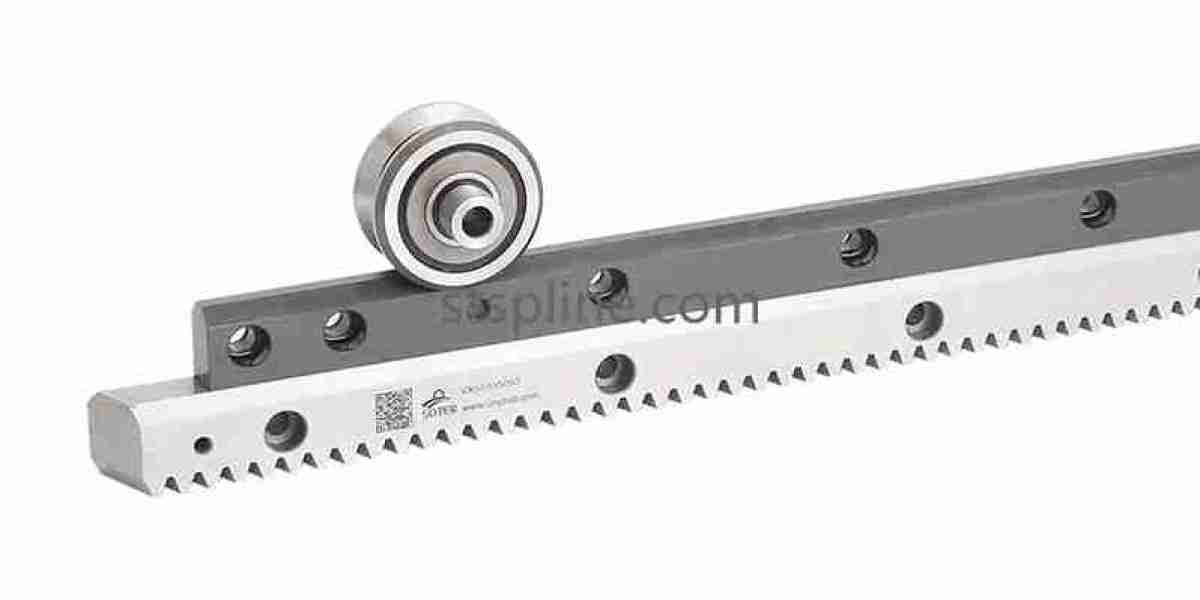

Specialized industrial machinery often requires mechanical components that fit particular structures and operating conditions rather than relying entirely on standardized solutions. As automation equipment becomes more application-specific, manufacturers increasingly need flexible transmission technology that can integrate with different machine designs. A professionally engineered Custom Rack And Pinion solution can convert rotary input into controlled linear movement while adapting to specialized equipment requirements.
Material selection is an important stage in customized component development. Engineering metals may be selected according to structural requirements, expected mechanical loads, operating environment, and manufacturing compatibility. Proper material processing can help maintain consistent characteristics throughout production, while appropriate engineering decisions contribute to durability and stable mechanical performance.
Machining accuracy is equally important when developing application-specific transmission components. Consistent tooth geometry and accurately produced contact surfaces help connected components engage smoothly. Controlled machining can support predictable force transfer, stable movement, and reduced mechanical vibration. These characteristics become particularly valuable when a customized component must integrate precisely with an existing machine structure.
The primary function of a rack and pinion system is to transform rotational movement into controlled linear travel. This principle can support automated positioning equipment, robotic systems, assembly machinery, material handling platforms, packaging equipment, and specialized production systems. Custom engineering provides additional flexibility when standard configurations cannot fully satisfy the requirements of a particular machine.
Every application may involve different mechanical conditions. Equipment designers may need to consider machine layout, installation space, movement direction, operating cycles, environmental conditions, and system integration. Reviewing these factors before manufacturing helps ensure that the resulting transmission component is appropriate for the complete equipment structure rather than being treated as an isolated mechanical part.
SOTER combines manufacturing capabilities with practical engineering experience to support specialized industrial motion applications. Its approach emphasizes material management, precision machining, quality control, and application compatibility. By integrating engineering considerations with controlled manufacturing, SOTER can support manufacturers developing customized automation and mechanical systems.
Quality management is especially important when producing components for specialized equipment. Custom products may involve specific drawings, production requirements, or integration conditions, making process consistency essential. Material inspection, machining control, dimensional verification, and final quality checks can help maintain reliable results throughout production.
Technical cooperation between the equipment manufacturer and component producer can further improve the development process. Drawings, samples, machine structures, and operating requirements can provide valuable information for engineering evaluation. Clear communication helps identify potential integration challenges early and allows manufacturing decisions to be made according to actual application needs.
Long-term reliability should also be considered during customized transmission development. Repeated mechanical movement creates operational loads and contact between transmission surfaces. Appropriate material selection, accurate machining, and effective mechanical design can help distribute forces more consistently. This supports stable operation and can contribute to more predictable maintenance requirements.
The expansion of intelligent manufacturing is creating greater demand for adaptable mechanical solutions. Modern production systems may combine robotics, sensors, digital controls, automated handling, and flexible manufacturing platforms. Customized transmission components can help connect these technologies with the mechanical movement required by specialized equipment.
For OEM manufacturers, consistency across recurring production is another important consideration. Once a customized component has been successfully integrated into a machine design, maintaining consistent manufacturing quality across subsequent orders can support efficient production and equipment standardization. Reliable supplier cooperation can therefore become an important part of long-term product development.
Ultimately, Custom Rack And Pinion solutions should be evaluated through material quality, machining capability, engineering support, application compatibility, and production consistency. Businesses seeking professional SOTER transmission solutions can explore https://www.stspline.com/product/straight-teeth-rack/ to discover products and engineering capabilities for modern industrial automation.