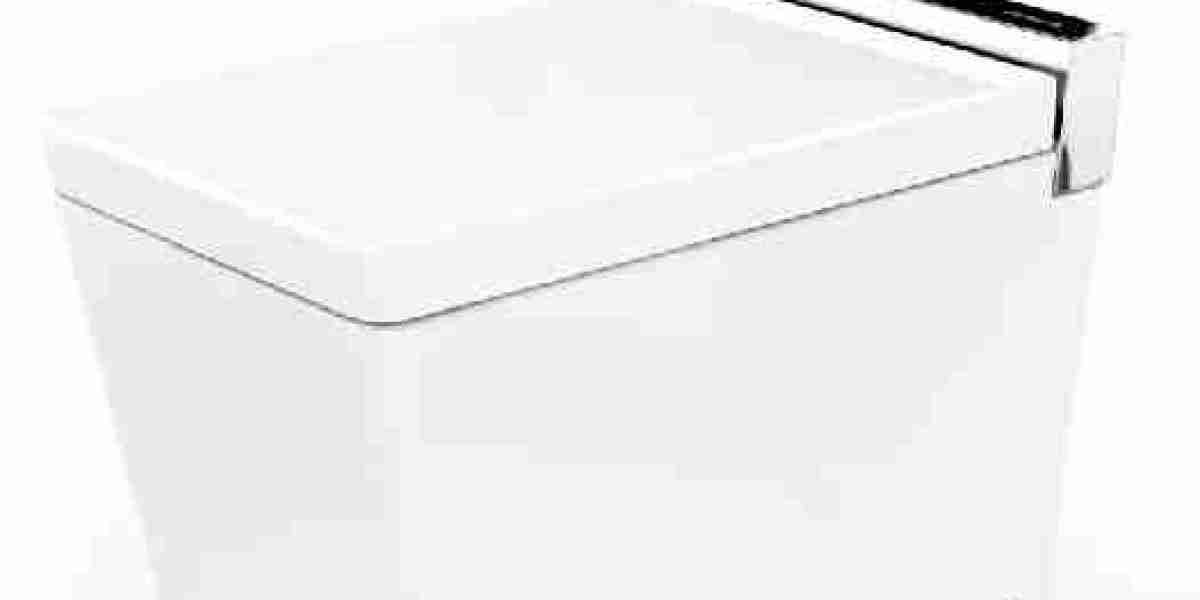

A square intelligent toilet suppliers needs dedicated attention to ceramic tooling because the square profile creates different requirements around corners, bowl transitions, and surface consistency. Unlike a round ceramic body, a square structure must maintain clean geometric lines while avoiding excessive thickness variations. These areas influence both appearance and the weight of the finished toilet.
The seat and lid also need to be developed specifically around the ceramic body. Even a small mismatch between the seat edge and bowl can become noticeable because straight lines and corners make dimensional deviations easier to see. Hinge positioning therefore needs to be coordinated with the ceramic mold rather than treated as a separate component during final assembly.
The internal configuration is equally important. Buyers should specify whether the toilet uses an S-trap or P-trap, as well as whether the intended installation is floor mounted or wall mounted. A one-piece ceramic structure can simplify the external appearance, but the internal space still needs to accommodate flushing components, water channels, sensors, and electronic modules without creating unnecessary structural compromises.
Smart functions add another layer to the sourcing process. UV sterilization, automatic flushing, heated seats, ambient lighting, and app control can all be integrated into the product, but their actual configuration varies between models. For international buyers, app compatibility deserves particular attention because language support, regional app stores, and connectivity requirements may differ between destination markets.
Material and component consistency also influence long-term production. Ceramic bodies require controlled firing and inspection, while electronic components need functional testing before shipment. When these processes are coordinated within the same production system, dimensional quality and electronic performance can be checked as part of the complete product rather than evaluated independently.
Customization is another consideration for private-label projects. Finish colors, lighting configurations, control interfaces, packaging, and certain functional combinations may be adjusted according to market requirements. However, buyers should confirm which options require tooling changes before approving samples, especially when the exterior geometry is being modified.
For procurement teams, evaluating square intelligent toilet suppliers should therefore go beyond comparing prices and feature lists. Mold capability, ceramic consistency, component integration, installation specifications, testing procedures, and export documentation all contribute to whether a square smart toilet can be produced consistently at commercial volume.