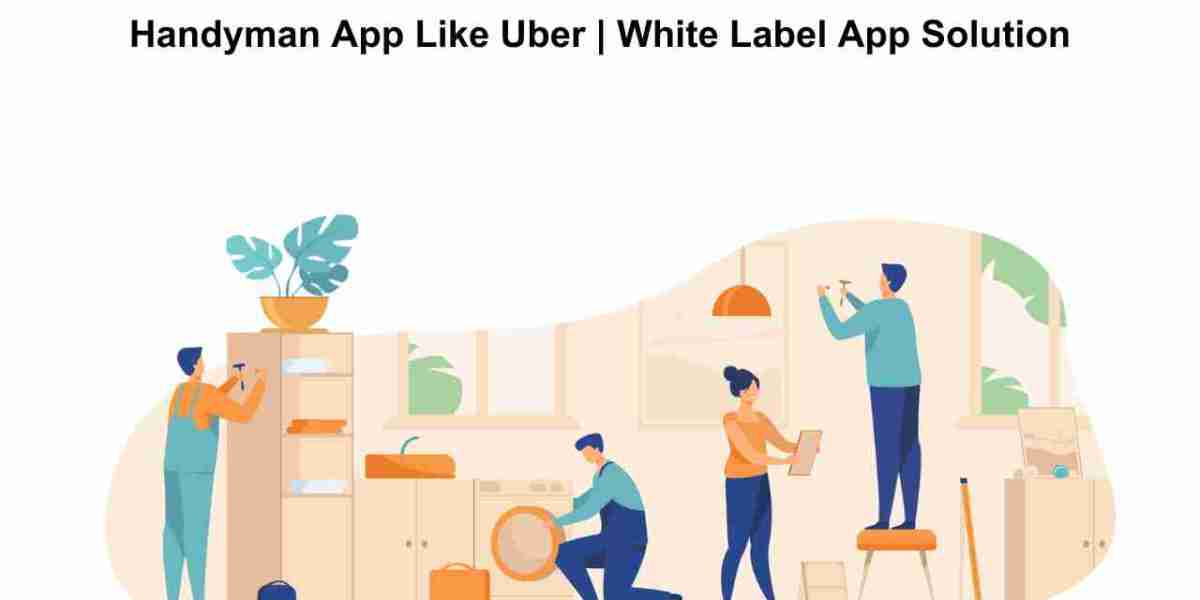

The home services industry is becoming increasingly digital as customers look for faster, easier, and more reliable ways to book professionals for everyday maintenance and repair requirements. Instead of searching through directories, making multiple phone calls, or waiting for a service provider to become available, customers now expect to discover, book, track, and review services through a mobile application.
This shift has created a strong opportunity for startups, entrepreneurs, local businesses, and established service companies to launch digital home service platforms. A handyman marketplace can connect customers with verified professionals such as plumbers, electricians, carpenters, painters, cleaners, appliance technicians, and general maintenance workers through one convenient platform.
A Handyman Clone App provides a practical foundation for businesses that want to enter this market with an established service marketplace model. Rather than developing every business function from the ground up, entrepreneurs can use a proven application concept and customize it around their target market, service categories, operational requirements, and business goals.
The concept is closely associated with the growing demand for an Uber for Home Services experience, where customers can request a professional, receive service information, schedule an appointment, and manage the booking from their mobile devices.
For entrepreneurs planning to build a scalable home services marketplace in 2026, understanding how this model works, what customers expect, and how to differentiate the platform is essential.
What Is a Handyman Clone App?
A Handyman Clone App is a ready-made or customizable application solution designed around the business model of popular on-demand service platforms. It allows a business to launch a digital marketplace where customers can find and book professionals for home maintenance and repair services.
The concept follows the convenience of an Uber Like App For Handyman, but instead of transportation, the platform focuses on household services.
Customers can use the application to:
- Browse available home services
- Select a suitable service category
- Find professionals operating in their location
- Schedule a service
- Submit service requests
- Track booking status
- Communicate with service providers
- Complete payments
- Rate and review completed services
- View booking history
- Request support when necessary
For service professionals, the platform creates an opportunity to receive customer requests without depending entirely on traditional advertising or offline referrals.
The business owner operates the marketplace, manages service categories, establishes platform policies, monitors service quality, and creates an environment where customers and professionals can interact efficiently.
This makes the model suitable for businesses targeting local handyman services as well as entrepreneurs planning to expand across multiple cities or regions.
Why Launch a Handyman App Like Uber in 2026?
Consumer expectations around convenience have changed significantly. People increasingly prefer digital services that reduce the effort involved in finding and managing everyday services.
A Handyman App Like Uber brings this convenience into the home maintenance industry by organizing fragmented service providers within one digital marketplace.
The model can be particularly attractive because home maintenance is not limited to one type of requirement. Customers may need plumbing today, electrical repair tomorrow, appliance maintenance next week, and painting or carpentry services later.
A well-planned platform can bring these different requirements together.
Growing Demand for Convenient Home Services
Homeowners, tenants, landlords, property managers, offices, and commercial establishments regularly require maintenance services.
Traditional service discovery can be inconvenient because customers may not know which professional is available, trustworthy, or suitably qualified for a particular job.
An on-demand marketplace can simplify this process by giving customers a structured way to discover and request services.
Multiple Service Categories
A single platform can support several categories instead of depending on one service.
Popular categories can include:
- Plumbing
- Electrical services
- Carpentry
- Painting
- Cleaning
- Appliance repair
- Furniture assembly
- Air conditioning services
- Gardening
- Pest control
- Home installation services
- General maintenance
This creates opportunities to increase customer engagement and build a broader home services ecosystem.
Local Marketplace Opportunity
Home services are naturally location-oriented. Customers usually want professionals who can serve their specific neighborhood, city, or service area.
This makes the marketplace model suitable for entrepreneurs who want to build a strong regional platform before expanding into additional locations.
How Does an Uber for Handyman Business Model Work?
The business model of an Uber for handyman platform generally connects three major participants: customers, service professionals, and the platform operator.
Customers submit service requirements through the application. Professionals can receive relevant requests based on service categories and operating areas. The platform facilitates the interaction and manages the overall marketplace experience.
The process can be structured as follows.
1. Customer Requests a Service
A customer opens the application and selects the required service. They can provide relevant details about the job, location, preferred schedule, and other requirements.
For example, someone experiencing a leaking tap could choose plumbing and submit a request to professionals available in the selected service area.
2. Professionals Receive Service Requests
Suitable professionals can receive requests based on their category, availability, and operating location.
The platform can help service providers organize incoming requests instead of relying only on phone calls or offline customer acquisition.
3. Customer Selects a Professional
Depending on the business model, customers can select professionals using information such as ratings, reviews, experience, availability, service category, and other profile details.
This creates transparency and helps customers make informed decisions.
4. Service Is Scheduled
Customers can select an appropriate time for the service. The professional can then prepare for the appointment and complete the requested job.
Scheduled bookings are particularly useful for services such as painting, furniture installation, appliance maintenance, and larger repair projects.
5. Service Completion and Feedback
After completing the job, customers can provide ratings and reviews. Feedback can help future customers evaluate professionals while giving the platform valuable information about service quality.
This creates a continuous marketplace feedback loop.
Essential Features of a Handyman App Like Uber
A successful platform should focus on functionality that solves real problems for both customers and service professionals.
The goal is not simply to copy another application. It is to build a service marketplace that provides a smooth experience for discovering, booking, completing, and reviewing home services.
Customer Features
Customers should have access to a straightforward interface that makes service discovery and booking simple.
Important capabilities can include:
- Account registration and login
- Customer profile management
- Service category browsing
- Location-based service discovery
- Service descriptions
- Professional profiles
- Ratings and reviews
- Booking requests
- Appointment scheduling
- Booking status
- Service history
- Notifications
- Digital payment support
- Customer support
- Review and rating functionality
The customer experience should remain simple. A user looking for a handyman plumber should not have to navigate through unnecessary screens before requesting assistance.
Service Professional Features
Service professionals are equally important to the success of a marketplace.
A professional-side application can provide features such as:
- Registration and profile creation
- Service category selection
- Availability management
- Service area management
- Incoming booking requests
- Booking acceptance or rejection
- Appointment management
- Customer information
- Service history
- Earnings information
- Notifications
- Customer ratings and reviews
- Account settings
The objective is to give professionals the tools required to manage their marketplace activities efficiently.
Business Management Features
The platform owner needs control over the marketplace.
Business management capabilities can include:
- User management
- Professional management
- Service category management
- Booking management
- Location management
- Review management
- Content management
- Promotional management
- Customer support management
- Marketplace monitoring
- Reporting and analytics
Strong management functionality helps the business maintain service quality while scaling into new locations.
Services You Can Offer Through an On-Demand Handyman App
One of the biggest advantages of an On-Demand Handyman Services App is the ability to support multiple categories under one marketplace.
Instead of creating separate applications for every service, entrepreneurs can develop a unified platform.
Plumbing Services
Plumbing is one of the most common home maintenance requirements. Customers may need help with leaking pipes, blocked drains, faucet repairs, toilet issues, water installations, and other plumbing-related tasks.
A platform can connect customers with professionals specializing in these requirements.
Electrical Services
Electrical services can include appliance installation, lighting work, wiring-related services, switch replacement, and other household electrical requirements.
Carpentry Services
Customers may require furniture assembly, door repairs, shelving installation, cabinet work, and other carpentry services.
Painting Services
Homeowners and businesses may need professionals for room painting, touch-ups, wall preparation, and larger property painting projects.
Appliance Repair
An application can also connect users with professionals who handle maintenance and repair requirements for household appliances.
Cleaning and Maintenance
Cleaning, gardening, furniture assembly, and general property maintenance can expand the service ecosystem beyond traditional handyman work.
The exact categories should depend on local demand, available professionals, and the business's operating strategy.
Uber for Home Services: What Customers Expect
The phrase Uber for Home Services represents more than simply putting service providers inside a mobile application. It represents a customer experience based on convenience, transparency, accessibility, and efficient service discovery.
Customers generally want to know:
- What service is available?
- Which professional can provide it?
- When can the professional arrive?
- What are other customers saying?
- How can the booking be managed?
- How can support be contacted if something goes wrong?
An effective platform should answer these questions clearly.
A strong Uber for Home Services model therefore combines service discovery, scheduling, professional information, communication, payments, reviews, and support into a single digital journey.
How to Build a Handyman App Like Uber for Global Markets
A global business strategy requires more than translating an application into another language. Home service expectations vary by country, city, customer segment, and service category.
Entrepreneurs should consider the following areas before expanding internationally.
Understand the Target Market
Start by identifying the locations where the service marketplace has a genuine opportunity.
Research:
- Customer demand
- Popular service categories
- Existing competitors
- Local service providers
- Consumer behavior
- Service availability
- Regulatory requirements
- Payment preferences
A focused launch market can make marketplace operations easier to manage.
Localize the Customer Experience
Localization can include language, currency, date formats, service terminology, communication preferences, and local customer support.
A platform serving multiple countries should avoid assuming that one operating model will work equally well everywhere.
Build a Strong Professional Network
A marketplace needs service providers before it can deliver a consistent customer experience.
Entrepreneurs can partner with independent professionals, service companies, local contractors, maintenance businesses, and specialized technicians.
A larger and better-organized professional network can improve service availability and customer satisfaction.
Handyman Script vs. Building From Scratch
Entrepreneurs entering the home services industry generally consider two approaches: developing an application entirely from the ground up or using a handyman script as a foundation.
A handyman script can provide an established starting structure for the core marketplace workflow. Businesses can then adapt the solution to their requirements instead of designing every component from the beginning.
This can be useful for startups that want to validate their business concept and enter the market with a structured digital product.
However, customization remains important. A business targeting residential customers in one city may require a different workflow from an enterprise platform serving property managers across multiple regions.
The right solution should therefore provide flexibility rather than forcing every business into an identical model.
How to Make an Uber for Handyman Platform Stand Out
The home services market can be competitive, particularly in major cities. Simply launching another marketplace may not be enough.
Businesses need a clear value proposition.
Focus on Trust
Trust is one of the most important factors in home services because professionals enter customers' homes.
Professional profiles, verification processes, ratings, reviews, transparent service information, and customer support can help establish confidence.
Make Booking Simple
Customers should be able to identify their service requirement and request assistance without unnecessary complexity.
Support Multiple Booking Models
Different services require different scheduling methods.
Some customers may need immediate assistance, while others may want to schedule a service for a specific day.
Supporting both immediate and scheduled service models can make the platform more useful.
Build Strong Customer Support
Service issues can happen in any marketplace. Responsive support can help resolve booking disputes, appointment changes, service concerns, and other customer issues.
Encourage Quality Through Reviews
Ratings and reviews provide useful marketplace signals. They can help customers select professionals while encouraging service providers to maintain quality standards.
Handyman App Development: Key Planning Considerations
Handyman app development should begin with business requirements rather than technology decisions.
Before development begins, entrepreneurs should clearly define:
- Target customers
- Target service providers
- Initial locations
- Service categories
- Booking model
- Marketplace rules
- Customer journey
- Professional journey
- Support process
- Expansion strategy
- Business objectives
This creates a clear foundation for product development.
The application should also be designed with future growth in mind. A platform that starts in one city may eventually operate across multiple regions, so the business model should be capable of supporting additional service categories and markets.
Business Opportunities Beyond Individual Customers
A home services marketplace does not have to focus only on individual homeowners.
There are several B2B opportunities within the same ecosystem.
Property Management Companies
Property managers regularly need professionals for repairs, inspections, maintenance, and emergency requirements.
A digital marketplace can simplify the process of coordinating these services.
Real Estate Businesses
Real estate companies can use home maintenance platforms to manage repair and maintenance requirements for properties.
Hospitality Businesses
Hotels, serviced apartments, and vacation rental businesses frequently require maintenance support.
Offices and Commercial Properties
Businesses may need electricians, plumbers, cleaners, maintenance professionals, and other service providers for their commercial locations.
This creates opportunities for entrepreneurs to develop both B2C and B2B revenue channels around the same marketplace.
Why an Uber for Handyman Model Can Scale
The scalability of this business model comes from its marketplace structure.
Once a platform has established a strong operational process in one location, the same fundamental model can potentially be adapted for other cities and regions.
For example, a business might initially focus on plumbing and electrical services in one city. After establishing demand and a professional network, it could introduce additional categories such as cleaning, painting, appliance repair, and carpentry.
Expansion can then move into additional locations.
This approach allows entrepreneurs to grow progressively instead of trying to launch every service and location simultaneously.
Common Mistakes to Avoid
Launching an On-Demand Handyman Services App without understanding marketplace operations can create avoidable problems.
Launching Too Many Services Initially
Offering every possible service from day one can make operations difficult.
Starting with high-demand categories can make it easier to maintain service quality.
Ignoring Service Provider Quality
A large professional network is not useful if service quality is inconsistent.
Businesses should establish clear onboarding and quality standards.
Making the Application Complicated
A complicated booking process can reduce customer engagement.
The interface should make the most common tasks easy to understand.
Focusing Only on Customer Acquisition
A marketplace needs both sides. Customers need available professionals, and professionals need enough customer demand.
Entrepreneurs should develop strategies for balancing both sides of the marketplace.
Expanding Before Establishing Operations
International expansion can be attractive, but poor operational processes can create customer dissatisfaction.
It is better to establish a repeatable marketplace model before entering additional regions.
Future Scope of Handyman Services Platforms
The future of home service marketplaces is likely to become increasingly digital and personalized.
Platforms can evolve by introducing smarter service recommendations, automated booking assistance, improved professional matching, digital service records, subscription-based maintenance plans, and more personalized customer experiences.
Businesses may also develop specialized solutions for property managers, commercial facilities, landlords, and real estate companies.
The broader opportunity is not simply to build a handyman booking application. It is to create a complete digital ecosystem for home maintenance services.
This is where a Handyman App Like Uber can become more valuable than a basic service directory. A marketplace can manage the complete customer journey from service discovery to completion and feedback.
Final Thoughts
The demand for convenient home maintenance services creates an attractive opportunity for startups, entrepreneurs, local businesses, and established service companies.
A Handyman Clone App can provide the foundation for launching a digital marketplace that connects customers with professionals across multiple service categories. The model can support plumbing, electrical work, carpentry, painting, cleaning, appliance repair, and other local handyman services.
However, the application itself is only one part of the business. Long-term success depends on professional quality, customer trust, service availability, operational efficiency, marketplace management, and a clear expansion strategy.
Entrepreneurs should focus on solving genuine customer problems instead of simply copying another platform. Whether the goal is to build an Uber for Handyman Services App for one city or develop a global home services marketplace, the product should be customized around the target market and business model.
A reliable clone app development company can help businesses turn this concept into a scalable digital service marketplace while allowing room for customization and future expansion.
For startups and entrepreneurs planning to enter the on-demand services market in 2026, a well-planned Handyman App Like Uber can be a practical starting point for building a modern home services business.
Frequently Asked Questions
1. What is a Handyman Clone App?
A Handyman Clone App is a customizable application solution based on the on-demand handyman marketplace model. It connects customers with professionals who provide services such as plumbing, electrical work, carpentry, painting, cleaning, appliance repair, and general home maintenance.
2. How does a Handyman App Like Uber work?
A Handyman App Like Uber allows customers to select a service, provide their location and requirements, find suitable professionals, schedule or request a service, manage bookings, and provide feedback after completion. Professionals can use the platform to receive and manage service requests.
3. What services can be offered through an Uber for home services platform?
An Uber for home services platform can offer plumbing, electrical services, carpentry, painting, cleaning, appliance repair, gardening, furniture assembly, air conditioning services, and other home maintenance services. The available categories can be customized according to local demand.
4. Is an Uber for Handyman model suitable for startups?
Yes. The marketplace model can be suitable for startups because entrepreneurs can begin with selected service categories and a focused geographic market before expanding. A customizable solution can also help businesses adapt the platform to their target customers and operating model.
5. What should businesses consider before starting Handyman App Development?
Businesses should define their target market, customer requirements, service categories, professional network, booking model, marketplace policies, support process, and expansion strategy before starting Handyman App Development. Understanding local demand and creating a reliable service experience are also critical for long-term growth.