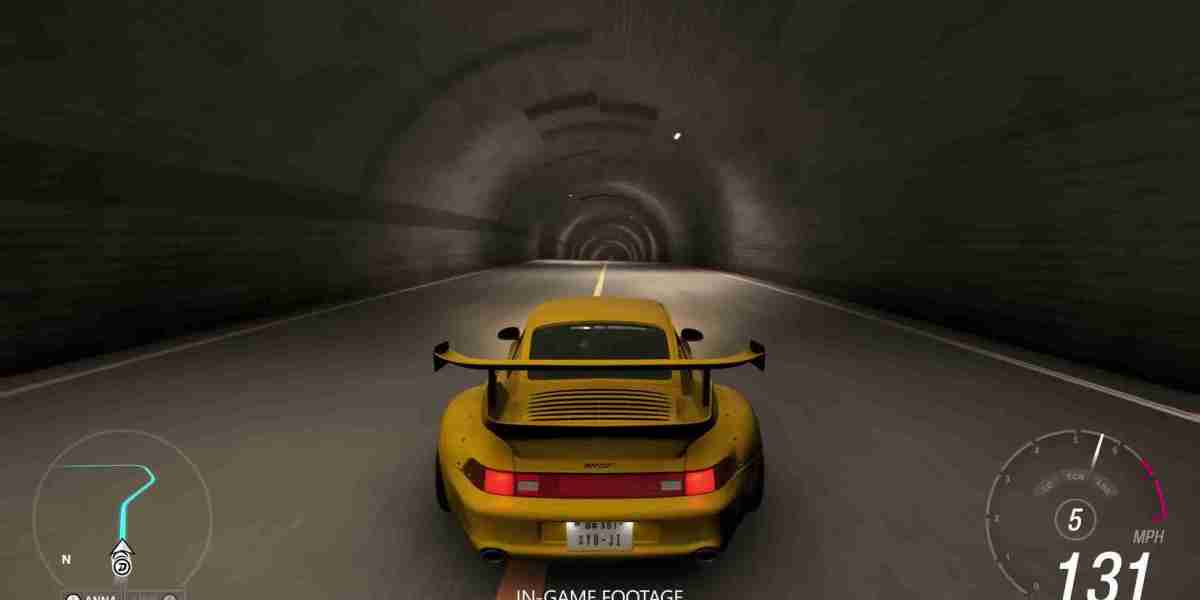

A racing game can provide hundreds of vehicles and thousands of miles of roads, but those things become more meaningful when players understand the culture behind them. Forza Horizon 6 attempts to create that connection through storytelling, particularly through its Day Tour missions.
The concept is straightforward but effective: driving becomes an opportunity to learn.
Japan is a particularly rich setting for this approach because its automotive history extends far beyond individual manufacturers. The country has influenced performance-car design, motorsport, tuning, drifting, engineering, and global car culture.
For players unfamiliar with some of that history, the game provides a way to encounter it while actively exploring the world.
Touge culture is one example. Mountain roads have become an important part of Japan's driving mythology, particularly through the development of drifting and performance driving traditions. By incorporating these themes into an open-world experience, Forza Horizon 6 connects the physical shape of the landscape with the culture that developed around it.
The car is therefore not simply a vehicle.
It is a cultural object.
That perspective changes how players may perceive the game's enormous roster. A classic Japanese sports car can be appreciated for its historical significance as well as its acceleration. An older dashboard can evoke an earlier technological era. An engine note can become part of the identity of the vehicle.
This makes the game feel like a digital archive.
Forza Horizon 6 Credits contribute to that collecting experience because acquiring different vehicles gives players access to different pieces of automotive history. A garage can become a personal timeline, stretching across decades of automotive development.
For players focused on rapid progression, cheap FH6 Boosting represents another side of the game's ecosystem. Speeding up progression may appeal to those who want to reach particular cars or activities quickly. Yet the cultural storytelling suggests that there is value in taking the longer route as well.
The game rewards curiosity.
That is especially apparent in activities that are not traditional races. Raku-Raku food deliveries are a good example. Instead of asking players to win against opponents, these missions involve navigating narrow Tokyo streets to deliver food.
The activity may be lighthearted, but its significance is broader. It shows the automobile as part of everyday urban life.
Cars deliver people and goods. They connect neighborhoods. They help businesses function. They are part of communities.
That perspective balances the game's more extreme racing experiences.
A hypercar traveling at extraordinary speed represents one side of automotive culture. A compact hatchback navigating a crowded city street represents another. Both are valid uses of the automobile, and the game can accommodate both.
The architecture reinforces this cultural storytelling. Historic temples and traditional locations sit alongside modern skyscrapers, creating visual contrasts that mirror the game's broader themes.
The player can move from an environment shaped by centuries of history into a futuristic city in a single session.
That contrast gives the open world a sense of scale that statistics cannot provide.
Photography again plays a role. Capturing a car beside historic architecture allows players to create visual relationships between vehicle design and cultural environments. The resulting image can communicate ideas about Japan even without words.
Community features extend the storytelling into player-created content. Custom tracks and Car Meets allow players to add their own interpretations of automotive culture to the world.
In this sense, Forza Horizon 6 becomes a conversation between developers and players.
The developers create the environment, vehicles, and stories. Players respond through liveries, photographs, tuning setups, custom tracks, and social gatherings.
That interaction is what makes the world feel alive.
A traditional racing game might measure progress in podium finishes. Forza Horizon 6 Modded Accounts offers a broader definition. Progress can mean discovering a new location, understanding an aspect of automotive history, creating a memorable photograph, or meeting another player at a Car Meet.
This is why the game's cultural approach matters.
It does not abandon racing. Instead, it places racing inside a larger world.
Cars remain fast, competition remains exciting, and performance remains important. But those elements exist alongside history, architecture, food, geography, art, and community.
The result is an experience in which driving can be educational without feeling like a classroom.
Players learn because they are curious about where the road leads.
And that may be the most effective form of storytelling a racing game can offer.