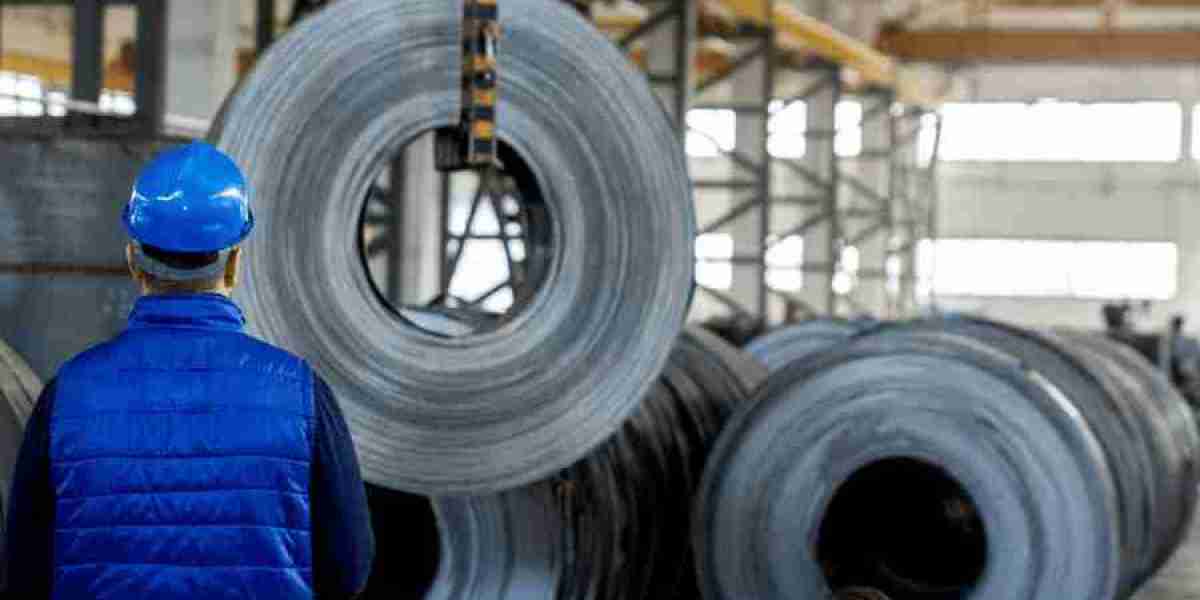

Electrical steel is a specialized flat steel product engineered to carry magnetic flux with minimal energy loss. Although it represents a relatively specialized segment of the broader steel industry, its importance is rising alongside electricity demand, grid modernization, electric mobility, renewable power generation, and the global push toward greater energy efficiency.
The material is fundamental to the cores of transformers, electric motors, and generators. Its carefully controlled magnetic properties allow electrical equipment to convert and transmit energy more efficiently. Nippon Steel, for example, describes electrical steel as a material developed to reduce iron loss and support energy-saving applications, with grain-oriented grades primarily serving transformers and non-grain-oriented grades used extensively in motors and generators.
The global electrical steel market attained approximately USD 49.77 billion in 2025 and is projected to grow at a CAGR of 7.20% between 2026 and 2035, reaching nearly USD 99.75 billion by 2035, according to the market figures supplied for this analysis.
Behind this expansion is a convergence of infrastructure and technology trends. Aging electrical grids require new and replacement transformers, while renewable energy projects introduce additional generation and transmission infrastructure. At the same time, electric vehicles, industrial automation, appliances, and other electrically powered equipment are increasing demand for efficient motors and generators.
The market is broadly divided into grain-oriented electrical steel (GOES) and non-grain-oriented electrical steel (NOES). Their different magnetic characteristics make them suited to different equipment, creating distinct demand drivers and competitive dynamics.
Electrical Steel Market Overview and Growth Outlook
The electrical steel market is expanding because energy infrastructure and electrification increasingly depend on materials that minimize magnetic losses. Demand is being supported by transformer manufacturing, electric motors, generators, renewable power systems, electric vehicles, and investments in transmission and distribution networks.
Electrical steel differs from conventional steel because its composition, processing, crystal structure, thickness, and surface coating are carefully engineered to optimize magnetic performance. When used in laminated cores, the material helps limit losses generated as magnetic fields repeatedly change direction.
This characteristic makes electrical steel particularly valuable in equipment that operates continuously. A transformer, for example, may remain energized for years, meaning even relatively small improvements in core efficiency can produce meaningful energy savings over its operating life.
The market is therefore closely linked to the economics of electricity. As power systems become larger and more sophisticated, efficiency improvements in transformers, motors, and generators can contribute to lower energy consumption and operating costs.
The International Energy Agency has identified electrification and electricity infrastructure as central themes in the energy transition, while rising electricity demand is increasing the importance of grids and electrical equipment. This creates a favorable structural environment for materials used in power equipment.
Another important factor is the growing emphasis on compact, high-efficiency electrical machines. Manufacturers of motors increasingly need materials that can support higher power density while controlling heat and energy losses. Electrical steel is consequently becoming an engineering component rather than simply a commodity input.
Grain-Oriented and Non-Grain-Oriented Steel Define the Market
Grain-oriented electrical steel is primarily optimized for magnetic performance in a specific direction, making it particularly suitable for transformer cores. Non-grain-oriented electrical steel provides more uniform magnetic properties in different directions and is widely used in rotating electrical machines such as motors and generators.
Grain-Oriented Electrical Steel Supports Transformer Efficiency
Grain-oriented electrical steel is manufactured so that the magnetic properties of its crystal structure are strongly aligned with the rolling direction. This directional behavior enables low iron loss and high permeability when the magnetic flux follows the preferred direction.
That makes GOES particularly important for transformer cores. Nippon Steel states that its grain-oriented products are used in large and small transformers as well as large power generators, with advanced grades designed to deliver lower iron loss and higher magnetic flux density.
Transformer manufacturers increasingly require high-performance grades because transformers are critical infrastructure and operate for long periods. A more efficient core can reduce lifetime energy losses, making the material selection important not only for equipment manufacturers but also for utilities and grid operators.
Non-Grain-Oriented Steel Powers Rotating Machines
Non-grain-oriented electrical steel has magnetic properties that are comparatively uniform in different directions. This makes it better suited to applications where the magnetic field rotates, particularly electric motors and generators.
The material is used across industrial motors, appliances, automotive traction motors, generators, and other electrical equipment. Nippon Steel highlights the role of non-oriented electrical steel in improving motor efficiency and enabling smaller motors for electric vehicles, hybrid vehicles, air conditioners, and industrial machines.
The distinction between GOES and NOES is therefore central to understanding the market. Transformer investment tends to strengthen demand for grain-oriented grades, while electrification and motor efficiency increasingly support non-grain-oriented steel.
Transformer Demand Is Strengthening the Electrical Steel Industry
Transformers remain one of the most important applications for electrical steel because they are essential to electricity transmission and distribution. Grid expansion, renewable generation, industrial development, and replacement of aging equipment are all creating demand for transformer capacity.
A transformer needs to transfer electrical energy between voltage levels efficiently. Its magnetic core plays a central role in this process, and grain-oriented electrical steel is specifically designed to minimize core losses.
The growth of renewable electricity is particularly relevant. Solar and wind installations are often geographically separated from electricity demand, increasing the need for transmission and distribution infrastructure. New substations and grid connections require transformers, while existing networks require replacement and upgrading.
The same trend applies to developing economies experiencing urbanization and industrialization. As households and businesses gain access to electricity and consumption rises, utilities need additional distribution infrastructure.
Transformer shortages can also create opportunities for electrical steel producers. If transformer manufacturers expand production capacity, they require reliable supplies of suitable grades. However, the industry cannot respond instantly because producing high-quality electrical steel requires specialized equipment, process control, and technical expertise.
The performance requirements are demanding. Thickness, magnetic loss, permeability, coating quality, dimensional accuracy, and processing behavior all affect the finished transformer. Manufacturers therefore tend to place significant emphasis on consistency and qualification.
This helps explain why electrical steel can command a premium compared with conventional flat steel. The value is determined not only by the weight of steel supplied but also by its ability to improve the efficiency and performance of sophisticated electrical equipment.
Electric Vehicles and Efficient Motors Are Creating a New Demand Engine
The electrification of transportation is becoming an increasingly important growth driver for non-grain-oriented electrical steel. Electric vehicles require traction motors that are compact, efficient, powerful, and capable of operating across a broad range of speeds.
An EV motor may operate under demanding thermal and mechanical conditions, making the magnetic characteristics of its core material critical. Manufacturers seek electrical steel that can help achieve high efficiency while supporting greater power density and reduced vehicle weight.
The connection between electrical steel and electric mobility is already reflected in industry investment. Nippon Steel identifies non-oriented electrical steel as a material for motors in electric and hybrid vehicles and emphasizes the need to achieve efficiency, torque, rotation speed, lightweight construction, and compactness simultaneously.
The opportunity extends beyond passenger cars. Electric buses, commercial vehicles, rail systems, industrial drives, pumps, compressors, and automated machinery all depend on electric motors.
Industrial electrification provides another long-term source of demand. Factories increasingly use variable-speed drives, automated equipment, robotics, and highly efficient motors to reduce energy consumption and improve productivity.
Household appliances are also relevant. Air conditioners, refrigerators, washing machines, and other equipment use motors that increasingly require greater efficiency. As energy-efficiency standards become stricter, motor manufacturers have stronger incentives to use advanced electrical steel grades.
This creates a diversified demand base. Even if automotive demand temporarily weakens, industrial motors, appliances, generators, and other applications can continue supporting NOES consumption.
Renewable Energy and Grid Modernization Are Expanding Market Opportunities
Renewable energy development is supporting electrical steel demand on both the generation and grid sides. Wind turbines, generators, transformers, substations, and transmission infrastructure all depend on efficient magnetic components.
Wind power is particularly relevant because generators contain substantial amounts of electrical steel. As turbine designs become more powerful and manufacturers seek improved efficiency, material performance becomes increasingly important.
Solar power has a more indirect effect. Photovoltaic panels themselves do not require large quantities of electrical steel, but solar farms require transformers, inverters, substations, and grid connections. As renewable generation expands, these supporting electrical systems create additional demand.
Grid modernization is even broader. Utilities worldwide are investing in transmission capacity, distribution networks, substations, digital monitoring, and resilience. Every new or upgraded transformer represents a potential application for grain-oriented electrical steel.
Nippon Steel explicitly positions both grain-oriented and non-oriented electrical steel within energy-saving and renewable-energy applications, including transformers, generators, and other power equipment.
The electrification of buildings and industry reinforces this trend. Heat pumps, electric heating, charging infrastructure, data centers, and industrial equipment increase electricity demand and consequently the need for reliable power networks.
For electrical steel producers, this means demand is increasingly connected to long-term infrastructure investment rather than only short-term steel consumption. Grid assets typically have long operating lives, creating a relatively durable market foundation.
Asia Pacific Holds a Strategic Position in Global Demand
Asia Pacific is a particularly important region for electrical steel because it combines large-scale manufacturing, rapidly expanding electricity infrastructure, automotive production, and substantial investments in renewable energy and electric mobility.
China is central to the regional market due to its enormous industrial base and extensive electricity infrastructure. The country's position in electric vehicle manufacturing, motors, transformers, renewable energy equipment, and consumer appliances creates demand across both major electrical steel categories.
Japan and South Korea are also strategically important because of their advanced steelmaking and electrical-equipment industries. Leading producers have invested heavily in high-grade electrical steel technologies, particularly grades designed for energy-efficient transformers and advanced motors.
India represents another important growth opportunity. Its expanding electricity network, industrialization, urbanization, and growing electric-mobility ecosystem are increasing the need for electrical equipment. Industry data indicates that India's non-grain-oriented electrical steel market is projected to grow through 2033, with motors identified as a particularly attractive growth application.
North America benefits from grid modernization, data-center electricity demand, industrial investment, and electric-vehicle manufacturing. Transformer availability has become an increasingly important issue as utilities and large electricity consumers expand infrastructure.
Europe has strong demand for high-efficiency electrical equipment because of its emphasis on energy efficiency, renewable generation, electric vehicles, and industrial decarbonization. The region's automotive industry also creates a substantial market for advanced non-oriented grades.
Latin America, the Middle East, and Africa offer longer-term opportunities as electricity access expands and generation and transmission infrastructure develops. However, market growth in these regions can be more sensitive to infrastructure financing, industrial investment, and economic conditions.
Competitive Landscape Is Focused on Capacity, Technology and Product Quality
The electrical steel market is relatively specialized, and competitive strength depends heavily on manufacturing technology, product consistency, research capabilities, production capacity, and the ability to supply demanding customers. Major companies identified in the supplied market landscape include ArcelorMittal, China Baowu Steel Group, Nippon Steel, United States Steel, Steel Authority of India Limited, and Tata Steel.
Nippon Steel has a particularly broad electrical-steel portfolio spanning both grain-oriented and non-grain-oriented products. Its product range includes advanced GOES grades designed for lower iron loss and high permeability, alongside NOES grades for motors and other electrical equipment.
ArcelorMittal also offers electrical steel products for applications ranging from low-voltage transformers and micro-motors to electricity meters and other electrical equipment. Its European product portfolio demonstrates the importance of matching grades and coatings to the specific performance requirements of end-use equipment.
China Baowu has an important position because of China's enormous steelmaking and electrical-equipment ecosystem. Its scale provides strategic advantages in serving domestic infrastructure and manufacturing demand.
Tata Steel and Steel Authority of India Limited are particularly relevant to India's industrial development and efforts to strengthen domestic steel and electrical-equipment supply chains. United States Steel has historically participated in the electrical steel segment serving North American customers.
Competition is increasingly influenced by localization and supply security. Electrical-equipment manufacturers require consistent material supplies, while governments and utilities are becoming more attentive to resilient domestic supply chains for critical infrastructure materials.
At the high-performance end of the market, technological differentiation can be especially important. Improvements in grain orientation, surface coatings, magnetic-domain refinement, thickness control, and manufacturing precision can allow suppliers to command higher value.
Supply Constraints and Technology Requirements Shape Market Development
The electrical steel industry faces a fundamental challenge: demand for high-performance grades can grow faster than qualified production capacity. Expanding capacity is capital-intensive, and achieving consistent magnetic performance requires specialized manufacturing expertise.
Producing electrical steel involves carefully controlled metallurgical and rolling processes. Small variations can influence magnetic losses and other properties, meaning quality control is critical.
The challenge becomes more significant as customers demand thinner gauges and lower-loss grades. Advanced transformer and motor designs can require materials with tighter specifications, pushing producers toward continuous investment in process technology.
Raw-material costs are another consideration. Electrical steel remains exposed to broader steel-market conditions, including iron ore, energy, alloying elements, transportation, and manufacturing costs. Producers must balance these costs with customers' demand for increasingly sophisticated performance.
There is also a sustainability dimension. Because electrical steel itself helps reduce energy losses during equipment operation, higher-performance grades can deliver environmental benefits over long equipment lifecycles. Nippon Steel specifically categorizes its high-efficiency electrical steel products as contributing to energy conservation and CO₂ reduction.
For manufacturers, the challenge is therefore to improve both product performance and production efficiency. The ability to develop lower-loss materials without creating excessive manufacturing costs will be a major competitive differentiator.
Future Outlook for the Electrical Steel Market
The electrical steel market is positioned for sustained growth as electricity infrastructure, electric mobility, renewable generation, and industrial electrification expand. The supplied forecast of nearly USD 99.75 billion by 2035 reflects the increasing importance of high-efficiency magnetic materials in the global energy system.
The market's strongest structural driver is the continuing electrification of the economy. More electric vehicles require more motors. More renewable generation requires more electrical infrastructure. More electricity consumption requires more transformers and grid equipment.
At the same time, efficiency requirements are becoming more demanding. Manufacturers cannot simply produce more electrical equipment; they increasingly need equipment that is smaller, lighter, more efficient, and capable of operating under demanding conditions.
This favors advanced electrical steel grades. In transformers, low-loss grain-oriented steel can help reduce energy waste over decades of operation. In motors, advanced non-oriented steel can support efficiency and power-density improvements.
Regional supply chains will also become increasingly important. Asia Pacific is likely to remain a major manufacturing center, while North America, Europe, and India are investing in domestic industrial capacity and resilient energy infrastructure.
The market's competitive landscape will consequently be shaped by a combination of scale and specialization. Large producers with advanced technology, strong customer relationships, and geographically diversified production will be better positioned to serve growing demand.
Ultimately, electrical steel is becoming strategically important because it sits at the intersection of steel manufacturing and electrification. Its market prospects are therefore tied not only to steel consumption but to one of the most significant transformations in the global economy: the transition toward an increasingly electricity-dependent energy system.
Conclusion
The electrical steel market is moving from a specialized steel segment toward a strategically important material market closely connected with global electrification. Its importance comes from a simple but powerful proposition: reducing magnetic losses in the equipment that generates, transforms, distributes, and consumes electricity.
The projected increase from approximately USD 49.77 billion in 2025 to nearly USD 99.75 billion by 2035 reflects this broader structural shift. Transformer investment is strengthening demand for grain-oriented electrical steel, while electric vehicles, industrial automation, appliances, and generators are creating new opportunities for non-grain-oriented grades.
Regional dynamics will remain important. Asia Pacific combines large-scale production with strong downstream demand, while North America, Europe, and India are seeing increased investment in grids, renewable energy, industrial electrification, and electric mobility.
For producers, success will increasingly depend on advanced metallurgy, low-loss grades, production consistency, capacity expansion, and reliable supply. For equipment manufacturers, the ability to source high-quality electrical steel is becoming increasingly important to achieving efficiency and performance targets.
The long-term outlook is therefore supported by more than conventional market growth. As economies become increasingly dependent on electricity, the efficiency of the machines and infrastructure carrying that electricity becomes more consequential. Electrical steel is at the heart of that efficiency equation, positioning the material for sustained demand across power grids, electric mobility, renewable energy, industrial equipment, and next-generation electrical systems.