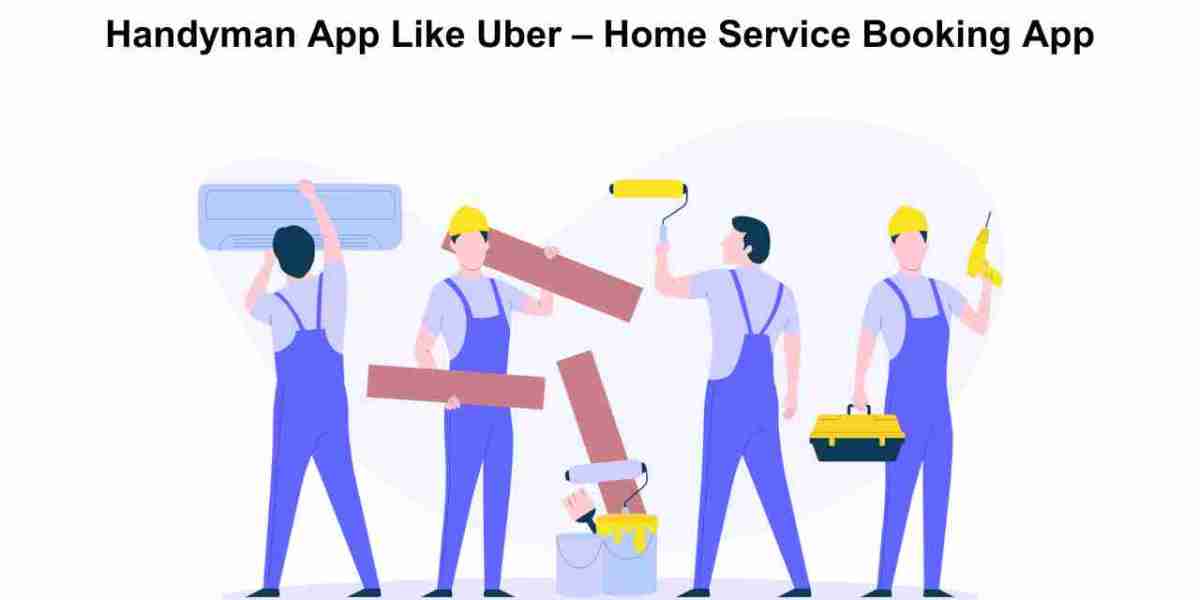

The home services industry is changing quickly as customers increasingly prefer to find, compare, schedule, and pay for professional services through digital platforms. From plumbing and electrical work to cleaning, appliance repair, painting, carpentry, and general home maintenance, customers now expect the same convenience they experience from ride-hailing and food delivery applications.
This shift has created a strong opportunity for startups, entrepreneurs, and established service businesses to build digital platforms that connect customers with skilled professionals. An On Demand Handyman App can help organize this process by bringing customers, service providers, bookings, payments, communication, and operational workflows into one centralized platform.
However, the real value of an on-demand platform is not simply allowing users to book a professional. Automation can significantly improve how the entire business operates. It can reduce manual coordination, speed up service assignment, improve communication, organize schedules, and provide businesses with better visibility into daily operations.
For entrepreneurs planning to enter the home services market, understanding how automation works within an On Demand Handyman App can help them build a more scalable and efficient business model.
What Is an On Demand Handyman App?
An On Demand Handyman App is a digital platform that allows customers to find and book professionals for different household and maintenance requirements. Instead of searching through directories, making multiple phone calls, or waiting for a service provider to become available, customers can use an application to request a service based on their location, preferred time, and specific requirements.
The concept is similar to other successful on-demand platforms. A customer selects a service, provides relevant details, chooses a suitable time, and receives information about the assigned professional. The service provider receives the request and can manage the job through the platform.
For businesses, the platform creates a structured way to manage demand and service supply. It can support categories such as:
- Plumbing
- Electrical services
- Carpentry
- Painting
- Cleaning
- Appliance repair
- Air conditioning services
- Furniture assembly
- Gardening
- Pest control
- General maintenance
This model is particularly useful for businesses targeting local handyman services because customers often need reliable professionals quickly and prefer convenient digital booking options.
Why Automation Matters in Home Service Operations
Traditional home service businesses often depend on phone calls, spreadsheets, messaging applications, and manual coordination. These methods can work for a small operation, but they become difficult to manage when the number of customers and service professionals increases.
Imagine a business receiving hundreds of requests every day. Employees may need to verify customer information, identify available professionals, check locations, assign jobs, communicate schedules, follow up with customers, and update service records.
Manual processes increase the possibility of delays and mistakes.
Automation helps businesses create repeatable workflows. Once predefined rules are established, routine activities can be handled automatically without requiring employees to perform every step manually.
For example, when a customer requests a plumber, the platform can identify suitable professionals based on service category and location. The selected professional can receive the request immediately, while the customer receives booking information through the platform.
This allows the business to handle more transactions without increasing administrative work at the same rate.
How a Handyman App Like Uber Uses Automation
A Handyman App Like Uber can use automation to simplify the customer journey and improve internal operations. The goal is not simply to copy another application. The objective is to apply the convenience of an on-demand marketplace to the specific requirements of home services.
Several operational areas can benefit from automation.
Automated Service Matching
One of the most important functions is connecting customers with appropriate professionals.
A customer requesting an electrician should not receive a professional who only provides plumbing services. Similarly, a professional who is already occupied should not be assigned another job for the same time period.
An automated matching system can consider factors such as service category, availability, location, working schedule, and other business rules.
This reduces the time employees spend searching for available professionals manually.
For example, if a customer searches for a handyman near me app, the platform can prioritize professionals operating within the relevant service area. This creates a faster process for both the customer and the business.
Automated Booking Management
Booking management can become complicated when a platform has many service providers and customers.
Automation can help organize appointments according to available schedules. Customers can select available time slots instead of waiting for an employee to confirm an appointment manually.
Once the booking is confirmed, the relevant parties can automatically receive the necessary information.
This can reduce unnecessary calls and messages while giving customers more control over their appointments.
Automated Notifications
Communication is essential for home services because customers need to know when a professional is arriving and service providers need accurate job information.
An automated platform can send notifications for events such as booking confirmation, professional assignment, appointment reminders, service status updates, and completion confirmation.
These notifications can help reduce missed appointments and improve transparency.
A Handyman App Like Uber can therefore create a communication flow where customers receive relevant updates without requiring staff to manually contact every customer.
Improving Workforce Utilization
For a home services marketplace, service professionals are one of the most important operational resources. Poor scheduling can result in professionals spending too much time traveling between jobs or remaining inactive while customers are waiting for service.
Automation can improve workforce utilization by considering professional availability and location when assigning jobs.
For example, if two professionals are qualified to handle a particular job, the platform can consider which professional is available and geographically better positioned.
This can reduce unnecessary travel and help professionals complete more jobs during their working hours.
Better workforce utilization can also improve customer satisfaction because customers are more likely to receive faster service when assignments are organized efficiently.
Real-Time Service Tracking
Customers increasingly expect visibility after placing an on-demand request.
A modern platform can provide status information such as booking confirmed, professional assigned, professional traveling, service started, and service completed.
For certain services, location-based tracking can also help customers understand the approximate arrival of a professional.
This feature is particularly useful for an Uber for Home Services business model because customers are already familiar with real-time tracking from ride-hailing applications.
The same principle can be adapted for home maintenance services while considering the specific needs of service professionals.
Automated Scheduling for Recurring Services
Not every home service is a one-time requirement.
Customers may need recurring cleaning, maintenance, gardening, appliance servicing, or other household services.
A platform can simplify recurring appointments by allowing customers to schedule services based on predefined intervals.
Instead of creating a new booking every time, customers can establish recurring service preferences where the business model supports them.
For entrepreneurs, recurring bookings can also create stronger customer relationships and more predictable demand.
Smart Management of Service Categories
A growing home services marketplace may eventually offer dozens of service categories.
Without a structured system, managing these categories can become complicated.
Automation can help businesses organize professionals according to their skills and service categories. When customers select a particular service, the platform can identify professionals who are eligible for that category.
For example, a customer looking for a handyman plumber should be connected with professionals who provide plumbing-related services rather than general providers without the required skills.
This helps improve job relevance and reduces operational confusion.
How a Handyman App Like Uber Improves Customer Experience
Customer experience is closely connected with operational efficiency.
When a business responds quickly, provides accurate information, communicates clearly, and completes services on schedule, customers are more likely to trust the platform.
A Handyman App Like Uber can improve this experience by reducing unnecessary steps in the booking journey.
Instead of calling several service providers, a customer can search for the required service, review available options, schedule an appointment, and receive updates through one platform.
The application can also maintain customer history, making it easier for users to repeat previously booked services.
For example, someone who regularly books home cleaning or air conditioner maintenance may prefer a platform that remembers previous service preferences.
Automated Payments and Transaction Records
Payment management is another operational area where automation can provide significant benefits.
After a service is completed, the platform can organize the transaction and maintain relevant records. Depending on the business model, customers may be able to select from supported digital payment options.
Automated transaction records can help businesses track completed services and reduce manual accounting work.
For customers, digital receipts and booking histories can make it easier to review previous transactions.
This becomes increasingly valuable as the marketplace grows and the number of daily transactions increases.
Ratings and Service Quality Management
Maintaining service quality is essential for a marketplace that connects customers with independent professionals.
A platform can automatically request customer feedback after a completed booking. Customers can rate their experience and provide feedback about the service.
This information can help businesses identify patterns in service quality.
Professionals consistently receiving positive feedback may build stronger customer trust, while repeated negative feedback can indicate that additional review or action may be required.
Automation makes the feedback collection process more consistent because customers do not have to be contacted manually after every service.
Automation for Service Provider Management
Managing a large network of professionals can become one of the biggest operational challenges for a growing home service business.
A handyman clone app can provide structured workflows for professional onboarding, service availability, job management, earnings information, and service history.
Automation can reduce repetitive administrative tasks by allowing professionals to update their availability and manage job-related information themselves.
This creates a more self-service operating model.
Instead of depending on employees for every update, service professionals can interact directly with the platform.
Why Businesses Are Exploring the Uber for Handyman Services App Model
The success of on-demand platforms has demonstrated that customers value convenience, transparency, and speed.
The Uber for Handyman Services App concept applies similar marketplace principles to household services.
Customers can discover professionals through a centralized platform, while businesses can manage service demand and provider availability through structured workflows.
This model can be especially attractive in cities where customers regularly require home maintenance and repair services.
Entrepreneurs can also adapt the concept according to their target market. A business may begin with a small number of categories and gradually expand as customer demand increases.
Building a Scalable Handyman App Like Uber
Scalability should be considered from the beginning of an on-demand business strategy.
A platform designed only for a small number of customers may struggle when the marketplace expands into multiple cities or service categories.
A Handyman App Like Uber should therefore be planned around operational growth. This includes flexible service categories, organized provider management, automated booking workflows, location-based service allocation, customer communication, and reporting capabilities.
The objective is to create a platform that can support more transactions without requiring the business to increase manual administrative work at the same rate.
This is one of the biggest advantages of automation.
How a Handyman Script Can Support Faster Business Launch
For entrepreneurs who want to enter the market without creating every marketplace function from the beginning, a handyman script can provide a foundation for an on-demand service platform.
A pre-developed solution can help businesses establish standard marketplace workflows and then customize them according to their business model.
However, entrepreneurs should not select a solution only because it contains a large number of features. The more important consideration is whether the platform supports the operational processes required by the target market.
The selected solution should be flexible enough to adapt to service categories, booking rules, professional workflows, customer requirements, and geographic expansion.
Automation and Local Handyman Services
Local demand is one of the strongest characteristics of the home services market.
Unlike some digital services, handyman work usually requires a professional to physically visit the customer's location.
This makes location-based operations extremely important.
An On-Demand Handyman Services App can use location information to help identify professionals serving a particular area. This can make service allocation faster and reduce unnecessary travel.
For businesses operating in multiple cities, location-based organization can also help separate service areas and manage local professional networks more effectively.
Supporting an Uber For Home Services Business Model
The Uber For home services model can cover many different household requirements beyond traditional handyman work.
A platform may connect customers with professionals for cleaning, repairs, installation, maintenance, gardening, electrical work, plumbing, and other services.
The broader the marketplace becomes, the more important automation becomes.
Without automated workflows, managing multiple categories, providers, schedules, bookings, and customer requests can become increasingly difficult.
Automation allows businesses to establish consistent processes across different service categories while still giving them flexibility to customize individual workflows.
How Automation Can Reduce Operational Errors
Manual data entry and repetitive communication create opportunities for mistakes.
A booking may be assigned to an unavailable professional. A customer may receive incorrect appointment information. A service provider may miss an important update.
Automation can reduce these risks by applying predefined business rules.
For example, if a professional has already accepted a booking during a specific time period, the platform can prevent another conflicting assignment based on the configured workflow.
Similarly, automated status updates can ensure that customers receive consistent information throughout the booking lifecycle.
Reducing operational errors can save time and protect the customer experience as the business grows.
Handyman App Like Uber for Different Business Models
The Handyman App Like Uber concept can be adapted to several types of businesses.
A startup may create a marketplace focused on one city and a limited number of services.
An established home services company may use an application to digitize its existing operations.
An entrepreneur may create a multi-category marketplace that connects customers with independent professionals.
A larger business may expand the model across several cities or regions.
The underlying concept remains similar, but the operational requirements can vary significantly.
This is why customization and business-specific workflows are important when selecting a platform for handyman app development.
What Entrepreneurs Should Consider Before Launch
Entrepreneurs should first identify the target customer and service market.
A platform serving residential customers in one city may require a different operational approach from a marketplace serving multiple countries.
The business should also determine which services it wants to offer initially. Starting with too many categories can make operations difficult before the marketplace has enough professionals and customer demand.
Another important consideration is the professional network. A platform cannot provide reliable on-demand services without enough qualified providers in its target locations.
Customer acquisition and provider acquisition should therefore be considered together.
The technology should support the business model rather than define it.
The Role of Data in Operational Efficiency
Automation becomes more valuable when businesses can measure operational performance.
A platform can provide useful information about bookings, service categories, provider activity, customer behavior, cancellations, completed services, and other business metrics.
These insights can help entrepreneurs understand where operational bottlenecks exist.
For example, if customers frequently request a particular service but experience long waiting times, the business may need to increase provider availability in that category.
If cancellations are high during particular time periods, the company can investigate scheduling or service availability.
Data-driven decisions can help businesses improve operations continuously.
Why Automation Matters for Long-Term Growth
The goal of automation is not simply to reduce the amount of manual work today.
It is to create operational systems that can support future growth.
A business may begin with a few professionals and a limited number of customers. As the marketplace expands, manual processes become increasingly expensive and difficult to manage.
Automation provides a foundation for handling larger transaction volumes while maintaining consistent processes.
For startups and entrepreneurs, this can be especially important because operational efficiency can directly influence the ability to expand into new locations and service categories.
Handyman App Like Uber as a Business Opportunity
The growing preference for convenient digital services creates opportunities for entrepreneurs interested in the home services market.
A Handyman App Like Uber can bring together customers and professionals while simplifying the management of bookings, schedules, communication, and service operations.
However, success depends on more than launching an application.
The marketplace needs reliable professionals, strong customer support, appropriate service coverage, efficient operations, and a clear value proposition.
Technology can provide the infrastructure, but the business model and execution determine whether the platform can build long-term demand.
The Future of On-Demand Home Services
The home services industry is likely to become increasingly digital as customers become more comfortable booking essential services online.
Platforms can move beyond basic service discovery toward more organized service management.
Automation, location-based services, digital communication, customer preferences, recurring bookings, and data-driven decision-making can create a more efficient experience for both customers and professionals.
For entrepreneurs, this creates an opportunity to build specialized marketplaces rather than relying entirely on traditional service directories.
The future of home services will likely focus on convenience, reliability, transparency, and faster access to qualified professionals.
Final Thoughts
An On Demand Handyman App can become much more than a digital booking platform when automation is integrated into its operational processes. Automated service matching, scheduling, notifications, provider management, customer communication, feedback collection, and transaction organization can reduce repetitive work while improving the overall customer experience.
For startups and entrepreneurs, the Handyman App Like Uber model provides an opportunity to build a scalable marketplace for household services. Whether the business focuses on plumbing, cleaning, electrical work, repairs, or broader home maintenance services, automation can help create more organized operations and support growth across new locations.
The key is to build around the actual needs of the market instead of simply copying an existing application. A well-planned business model combined with the right technology and operational strategy can help entrepreneurs create a reliable home services marketplace with long-term growth potential. Working with an experienced clone app development company can also help businesses turn their on-demand service concept into a practical and scalable digital platform.
Frequently Asked Questions
1. What is an On Demand Handyman App?
An On Demand Handyman App is a digital platform that connects customers with professionals who provide household repair, maintenance, cleaning, plumbing, electrical, carpentry, and other services. Customers can use the platform to find suitable professionals, request services, schedule appointments, and receive booking updates.
2. How does a Handyman App Like Uber improve operational efficiency?
A Handyman App Like Uber can automate service matching, booking management, notifications, scheduling, provider availability, customer communication, and feedback collection. These automated workflows can reduce repetitive administrative work and help businesses manage a larger number of bookings more efficiently.
3. Can a handyman platform support multiple home services?
Yes. A platform can support multiple categories such as plumbing, electrical services, cleaning, carpentry, appliance repair, painting, gardening, and general maintenance. The exact categories can be organized according to the business model and target market.
4. Why is automation important for a growing handyman marketplace?
Automation becomes increasingly important as the number of customers, professionals, bookings, and service categories grows. It can help businesses maintain consistent workflows, reduce manual coordination, improve scheduling, and provide customers with faster updates.
5. Is a Handyman App Like Uber suitable for startups?
Yes. The model can be adapted for startups that want to launch a focused home services marketplace in a specific city or service category. Entrepreneurs can begin with their core market and expand the platform as customer demand and professional availability increase.