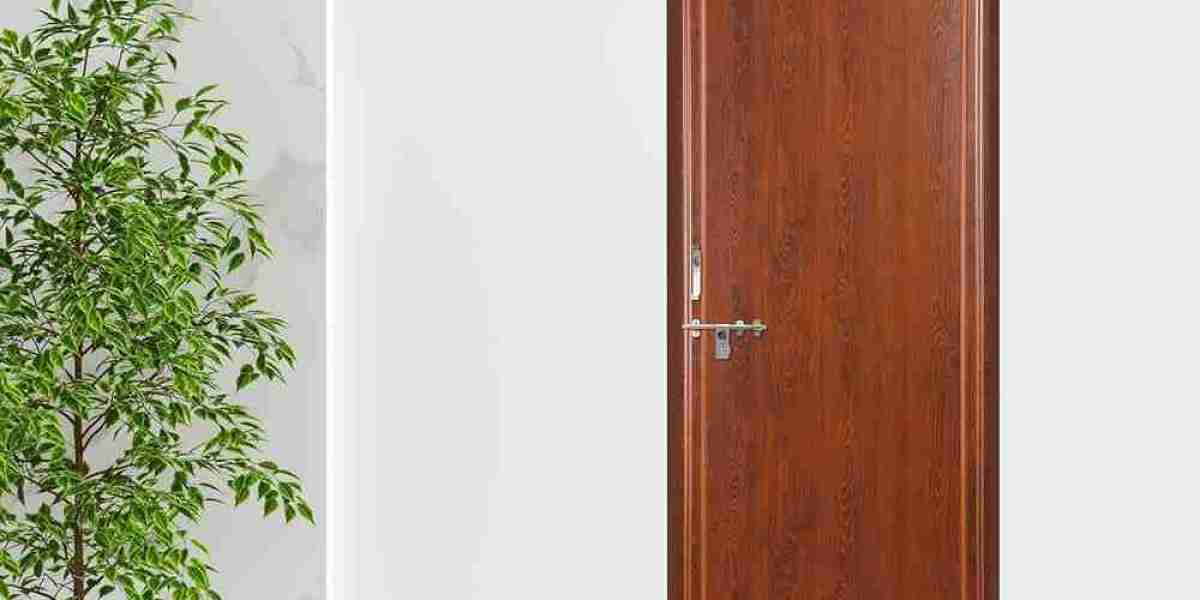

PVC MDF Door Factory suppliers can give builders a practical combination of engineered board construction and decorative surface flexibility for interior projects. Residential renovations, apartments, offices, hotels, and other buildings can have different requirements, so material selection needs to consider room conditions, appearance, dimensions, maintenance, installation, and budget. Haibodoor provides interior products and customized solutions that can be considered for different residential and commercial applications.
Material Flexibility Supports Different Projects
Every construction project has its own design language. Some apartments use neutral colors and simple lines, while hotels or offices may require stronger visual identity across several rooms.
An MDF core provides a manufactured substrate with a relatively consistent surface, while PVC finishing can introduce different colors, textures, and decorative patterns. This combination gives builders more room when coordinating an interior product with flooring, furniture, wall colors, and cabinetry.
Instead of treating every room separately, designers can establish a common material direction and then adjust colors or surface patterns according to individual spaces.
Surface Choices Can Match Interior Styles
Modern interior projects often require materials that can adapt to different decorative concepts.
Wood-inspired finishes can introduce warmth into bedrooms and living areas. Plain colors can work with minimalist interiors, while subtle textures may add visual interest without making a room feel crowded.
For commercial buildings, coordinated surfaces can help maintain a consistent appearance across offices, guest rooms, corridors, or other connected spaces.
Builders can request samples before production to compare color, texture, edge treatment, and overall appearance under the lighting conditions of the actual project.
Customization Helps With Renovation Conditions
Renovation projects can be more complicated than new construction because existing openings may have different dimensions.
Walls can vary in thickness, floor levels may not be identical, and previous installations can create unusual conditions. A manufacturer that accepts customized dimensions can give builders greater flexibility when dealing with these situations.
Customization can involve size, surface color, decorative patterns, panel arrangement, frame details, and hardware positions.
Haibodoor supports customized interior solutions, allowing buyers to communicate project drawings, measurements, finish preferences, and other requirements before production.
Consider The Room Environment
Material selection should reflect where the product will be installed.
Bedrooms and living rooms generally have different environmental conditions from kitchens, bathrooms, laundry areas, and other spaces exposed to moisture.
The surface treatment can provide a protective layer, but builders should still consider the complete construction, including the core, edges, adhesives, frame, and installation conditions.
For humid locations, buyers should communicate the expected environment to the manufacturer before choosing a specific construction. A material suitable for a dry bedroom should not automatically be assumed to suit every moisture-exposed application.
Maintenance Matters In Busy Buildings
Commercial interiors can experience frequent daily use. Offices, hotels, rental properties, schools, and other facilities may require regular cleaning and maintenance.
A surface that is straightforward to clean can make routine property management easier. Smooth or lightly textured finishes can also support different visual requirements without adding unnecessary maintenance complexity.
For residential projects, maintenance expectations can vary according to the room. Kitchens, entrances, and shared areas may receive more frequent contact than bedrooms or private studies.
Builders should therefore consider the expected usage pattern when comparing different surface options.
Production Consistency Is Worth Checking
When a project includes many rooms, consistency becomes important. Variations in dimensions, colors, surface treatment, or panel arrangement can create installation and appearance issues.
Buyers can ask manufacturers about their production process, inspection procedures, sample approval, and methods for handling repeated orders.
It is useful to confirm the final specifications before mass production begins. Approved drawings and samples can then serve as references during manufacturing.
For projects with multiple models, each specification should be clearly identified by size, finish, location, quantity, and hardware requirements.
Factory Communication Supports Project Planning
Communication can influence the efficiency of a customized order.
Builders may need to discuss drawings, dimensions, surface selections, revisions, packaging instructions, shipping schedules, and installation requirements. If these details are not recorded clearly, misunderstandings can occur during production.
A professional purchasing process should establish who approves drawings, who confirms samples, and how changes are documented.
International projects may require additional communication regarding packaging labels, shipping documents, customs requirements, and delivery arrangements.
Clear communication gives both the buyer and manufacturer a shared reference throughout the order.
Packaging And Delivery Also Matter
The production process does not end when products leave the factory. Transportation and site handling can affect the condition of finished surfaces.
Builders should ask how individual units are protected, how different models are labeled, and how products are organized for loading.
Clear labeling can be particularly useful for large developments where products are distributed across numerous rooms.
Delivery planning should also consider the construction schedule, destination, order quantity, shipping method, and expected installation sequence.
A coordinated delivery plan can make it easier for construction teams to receive and organize materials on site.
Product Variety Can Help Large Projects
A manufacturer offering several interior product categories may be useful when a project involves more than one material type.
Haibodoor provides products across several interior categories, including PVC interior solutions, MDF products, veneer wooden products, solid wood products, HPL products, WPC products, wall panels, kitchen cabinets, and wardrobes.
This range allows builders and designers to compare different materials while developing a consistent interior concept.
For whole-house projects or commercial developments, having related product categories available from one manufacturing partner can also simplify communication and purchasing coordination.
Discuss Design Before Production
A good purchasing process begins with the project concept rather than an isolated product image.
Builders can prepare floor plans, opening measurements, preferred colors, surface references, hardware requirements, and estimated quantities before contacting a manufacturer.
This information helps the supplier understand the intended application and prepare suitable options.
For customized projects, buyers can also request samples or prototypes before moving into larger production. This provides an opportunity to review appearance and construction details while changes are still easier to manage.
Why Builders Consider Haibodoor
Haibodoor combines interior product manufacturing with customized project support. Its product range gives residential builders, contractors, designers, developers, and distributors different material directions for various applications.
The company can work with project-specific dimensions, finishes, and design requirements, giving buyers room to develop products around actual construction conditions.
For builders, the value of working with a manufacturer should be considered through several factors together: material selection, customization, production organization, quality inspection, communication, packaging, and delivery.
This broader evaluation can help create a purchasing plan that fits the project instead of relying on a single feature.
Building A Practical Selection Process
Builders working on renovation and new construction projects can begin by identifying the application, room conditions, dimensions, design style, maintenance expectations, and quantity requirements.
They can then compare manufacturers according to material options, customization, production procedures, samples, inspection, communication, packaging, and project support.
PVC and MDF construction can provide useful design flexibility for many interior applications, but the appropriate specification should always be based on the actual room and project conditions.
Haibodoor provides customized interior solutions for different construction requirements. Builders and buyers can review available product categories at https://www.haibodoor.com/product/