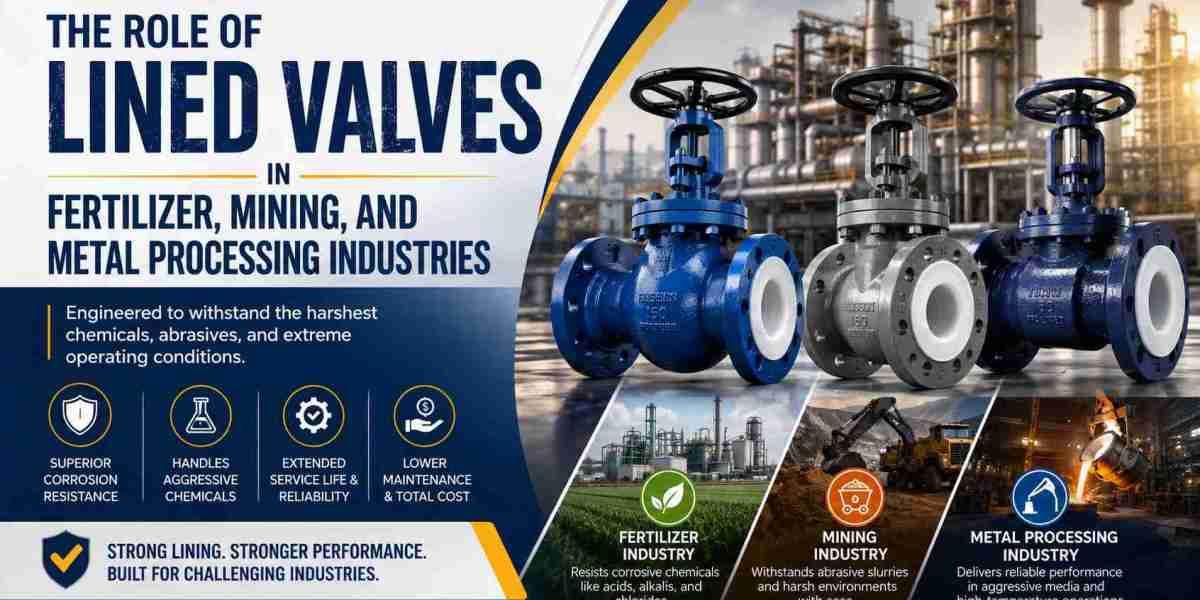

Few industries combine chemical aggression and physical abrasion quite like fertilizer manufacturing, mineral processing, and metal treatment. These sectors regularly move concentrated acids, abrasive slurries, and mineral suspensions through their piping systems — often at high volumes and around the clock. In such conditions, ordinary valves wear out fast, either from chemical attack, physical erosion, or both simultaneously. That combination is exactly why lined valves have become indispensable across fertilizer plants, mineral beneficiation units, and metal pickling lines, where they need to resist corrosion and abrasion at the same time without becoming a recurring maintenance liability.
Why This Sector Demands More From Its Valves
Fertilizer production involves handling sulfuric acid, phosphoric acid, and ammonia-based compounds — some of the most aggressive media used in any industrial process. Mining and mineral processing plants, meanwhile, deal with slurries containing fine abrasive particles suspended in acidic or alkaline liquors used for leaching and beneficiation. Metal processing operations, particularly pickling and surface treatment lines, use hydrochloric or sulfuric acid baths to strip scale and oxide layers from steel. In every one of these cases, an unlined or improperly lined valve will degrade quickly, leading to leaks, seized components, and unplanned production stoppages.
How Lined Valves Handle Both Corrosion and Abrasion
The internal lining in these valves — typically PTFE, PFA, or a specially formulated rubber compound — creates a barrier that resists both chemical attack and the physical wear caused by suspended solids. Key benefits for this sector include:
- Resistance to concentrated acids such as sulfuric, phosphoric, and hydrochloric acid used across fertilizer and pickling processes
- Abrasion tolerance for slurry lines carrying ore fines, gypsum, or other particulate matter
- Reduced seizing and sticking, since fluoropolymer linings maintain a smooth, low-friction bore even after prolonged exposure to abrasive media
- Lower total cost of ownership, as lined valves typically outlast unlined alternatives by a significant margin in these harsh-duty applications
Common Lined Valve Types Used in This Sector
- Lined Plug Valves – a top choice for slurry and acid service due to their straight-through bore, which resists clogging from suspended solids
- Lined Ball Valves – used for isolation duty in acid transfer and storage lines
- Lined Butterfly Valves – suited to larger-diameter slurry and process water lines in mineral processing plants
- Lined Diaphragm Valves – used in dosing and metering applications involving acids or reagents
These valves are typically manufactured to standards such as API 6D, API 602, and BS 1873, ensuring they meet the pressure and safety requirements demanded by heavy process industries.
Key Applications
- Sulfuric acid and phosphoric acid production and storage in fertilizer plants
- Ammonium sulfate and DAP (di-ammonium phosphate) processing lines
- Ore leaching and mineral beneficiation circuits in mining operations
- Acid pickling and surface treatment lines in steel and metal processing plants
- Gypsum and phosphogypsum slurry handling systems
In each of these applications, the cost of a valve failure extends well beyond the part itself — it can mean hours or days of lost production in continuous-process plants where downtime is measured in lakhs of rupees per shift.
Matching Lining Material to the Application
Because fertilizer, mining, and metal processing plants often combine chemical exposure with abrasive wear, lining selection matters even more than in purely chemical services. Thicker PTFE or PFA linings are generally recommended for high-abrasion slurry duty, while standard linings may suffice for cleaner acid transfer lines. Consulting with a manufacturer experienced in heavy-process industries helps ensure the valve specification matches the actual operating conditions rather than a generic, one-size-fits-all approach.
Conclusion
Fertilizer, mining, and metal processing plants operate in some of the harshest conditions any valve will ever face, and cutting corners on valve selection almost always leads to costly downtime. Lined valves offer the combined corrosion and abrasion resistance these industries need to keep production running reliably. If your plant is looking to reduce valve failures and extend maintenance intervals, you can buy Lined Valves at Freture Techno Pvt. Ltd., a Mumbai-based manufacturer with proven experience supplying PTFE and PFA lined ball, plug, butterfly, and diaphragm valves to fertilizer, mining, and metal processing industries in India and abroad.