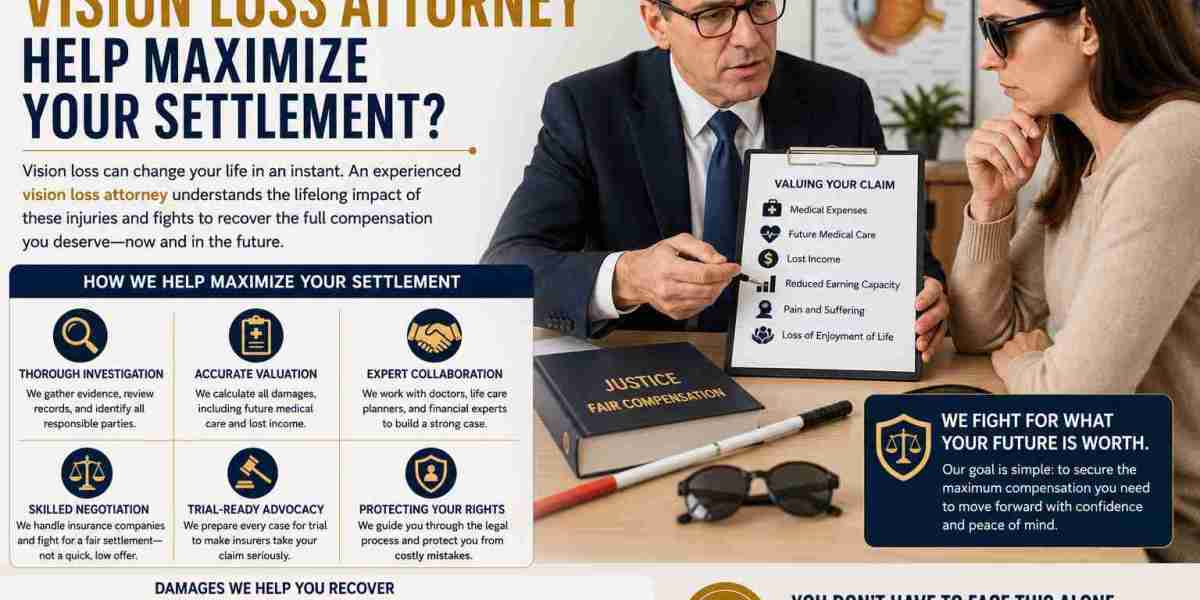

A serious eye injury or permanent loss of vision can affect every part of your life, from your ability to work and earn an income to performing everyday tasks independently. If your vision loss was caused by another party's negligence, you may be entitled to compensation. Working with an experienced vision impairment legal team can significantly improve your chances of recovering the full value of your claim. A skilled vision loss attorney understands the complexities of these cases and knows how to build strong evidence, negotiate with insurance companies, and pursue the maximum settlement available.
Why Vision Loss Cases Are Different from Other Personal Injury Claims
Vision loss cases often involve catastrophic injuries with lifelong consequences. Unlike injuries that heal over time, blindness or severe vision impairment may require ongoing medical treatment, rehabilitation, assistive technology, and long-term personal care.
These claims typically involve:
Extensive medical documentation
Future medical expenses
Permanent disability
Reduced earning capacity
Emotional distress
Pain and suffering
Life-care planning
Because the financial and personal impact can last a lifetime, accurately valuing the claim is essential.
How a Vision Loss Attorney Builds a Strong Case
A successful settlement begins with strong evidence. An experienced attorney conducts a detailed investigation to establish liability and prove the full extent of your damages.
This process may include:
Reviewing accident reports
Collecting medical records
Interviewing witnesses
Preserving photographic evidence
Obtaining surveillance footage
Working with accident reconstruction experts
Consulting ophthalmologists and medical specialists
The goal is to clearly demonstrate that another party's negligence directly caused your vision loss.
Calculating the Full Value of Your Claim
Many injury victims underestimate the true value of their case. Insurance companies often focus on immediate medical expenses while overlooking future losses.
A vision loss attorney evaluates both economic and non-economic damages, including:
Medical Expenses
Compensation may include:
Emergency treatment
Eye surgeries
Hospital stays
Prescription medications
Vision rehabilitation
Occupational therapy
Future medical care
Lost Income and Reduced Earning Capacity
If vision loss prevents you from returning to your previous occupation or limits future employment opportunities, these financial losses should be included in your claim.
An attorney may work with vocational experts and economists to estimate long-term income losses.
Pain and Suffering
Vision loss affects much more than finances.
Non-economic damages may include:
Physical pain
Emotional distress
Anxiety
Depression
Loss of independence
Reduced quality of life
Loss of enjoyment of hobbies and activities
Proper documentation helps demonstrate these invisible but significant losses.
Negotiating with Insurance Companies
Insurance companies are businesses focused on minimizing payouts. Adjusters may:
Dispute liability
Downplay the severity of the injury
Challenge future medical needs
Offer quick settlements
Question emotional damages
A vision loss attorney understands these tactics and negotiates aggressively on your behalf.
Instead of accepting a low settlement, your attorney presents medical evidence, expert opinions, and financial analyses to support a higher compensation demand.
Working with Medical and Financial Experts
Vision loss claims often require testimony from specialists who can explain the long-term effects of the injury.
Experts may include:
Ophthalmologists
Neurologists
Vision rehabilitation specialists
Vocational experts
Economists
Life-care planners
These professionals help calculate future expenses and demonstrate how the injury affects your ability to work and maintain your quality of life.
Preparing for Trial If Necessary
Although many personal injury claims settle outside of court, insurance companies are more likely to negotiate fairly when they know your attorney is prepared to take the case to trial.
A litigation-ready attorney can:
File a lawsuit
Gather additional evidence
Depose witnesses
Present expert testimony
Advocate before a judge and jury
Being prepared for litigation often strengthens settlement negotiations.
Avoiding Common Mistakes That Reduce Settlements
Without legal guidance, accident victims may unintentionally weaken their claims.
Common mistakes include:
Accepting the first settlement offer
Delaying medical treatment
Giving recorded statements without legal advice
Posting about the accident on social media
Failing to document ongoing symptoms
Missing important filing deadlines
An attorney helps protect your rights throughout the legal process.
Why Timing Matters
Evidence can disappear quickly after an accident. Witness memories fade, surveillance footage may be erased, and legal deadlines can limit your ability to file a claim.
Contacting a vision loss attorney as soon as possible allows them to:
Preserve critical evidence
Coordinate expert evaluations
Obtain medical documentation
Handle communication with insurers
Build a stronger claim from the beginning
Early legal intervention often leads to better outcomes.
Conclusion
A vision loss injury can create lifelong physical, emotional, and financial challenges. Recovering fair compensation requires more than submitting medical bills—it requires a comprehensive evaluation of your current and future losses. A knowledgeable vision loss attorney can investigate your case, gather compelling evidence, negotiate with insurance companies, and fight for the maximum settlement you deserve. If your blindness or vision impairment resulted from someone else's negligence, experienced legal representation can make a meaningful difference in the outcome of your claim.
Frequently Asked Questions
1. How can a vision loss attorney increase my settlement?
An attorney gathers strong evidence, works with medical experts, accurately calculates damages, negotiates with insurance companies, and prepares your case for trial if necessary.
2. What damages can I recover in a vision loss claim?
You may recover medical expenses, future treatment costs, lost wages, reduced earning capacity, pain and suffering, emotional distress, and other related damages.
3. Should I accept the insurance company's first offer?
In most cases, it is wise to consult an attorney before accepting any settlement, as initial offers often fail to reflect the full value of lifelong losses.
4. What evidence helps support a vision loss lawsuit?
Medical records, ophthalmologist reports, accident reports, witness statements, expert testimony, photographs, and financial documentation all strengthen a claim.
5. How long does a vision loss settlement take?
The timeline depends on the complexity of the case, the severity of the injury, negotiations with the insurance company, and whether litigation becomes necessary.