
Why Data Quality Management Services Are Essential for Reliable Business Intelligence and AI in 2026
Introduction
Data is one of the most valuable assets an organization owns—but only if it is accurate, complete, and consistent. As businesses embrace artificial intelligence (AI), cloud analytics, and digital transformation, poor-quality data has become a significant barrier to innovation and informed decision-making. Inaccurate records, duplicate entries, and inconsistent formats can lead to costly mistakes, compliance risks, and missed business opportunities.
This is why data quality management services have become a strategic priority for enterprises. These services help organizations identify, cleanse, standardize, and monitor data across multiple systems, ensuring that business leaders can trust the information driving critical decisions. According to industry studies, poor data quality costs organizations millions of dollars annually through operational inefficiencies, inaccurate reporting, and compliance issues, making proactive data quality management more important than ever.
What Are Data Quality Management Services?
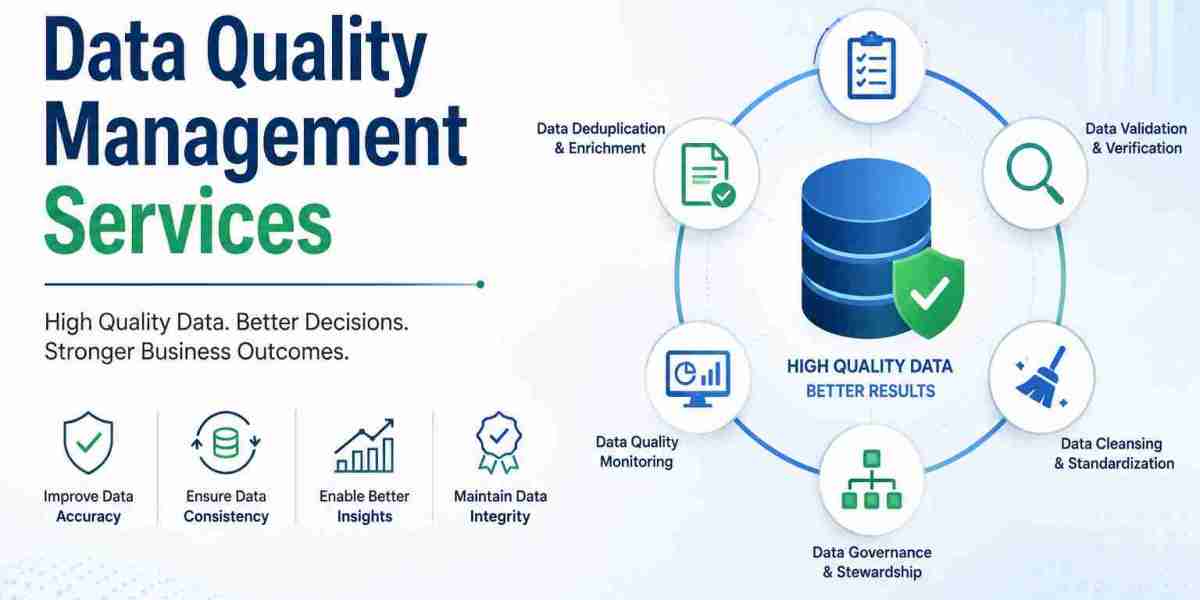
Data quality management services are processes and technologies that ensure enterprise data remains accurate, complete, consistent, and reliable throughout its lifecycle. They help businesses improve data integrity while supporting analytics, AI initiatives, regulatory compliance, and operational excellence.
These services combine multiple disciplines, including:
Data profiling
Data cleansing
Data governance
Master Data Management (MDM)
Data validation
Data standardization
Continuous data quality monitoring
Together, these capabilities create a trusted data foundation that enables confident, data-driven decision-making across the organization.
Why Are Data Quality Management Services Critical for AI Integration?
AI systems are only as effective as the data they learn from. Clean, well-governed, and standardized data improves model accuracy, reduces bias, and enhances predictive analytics.
Organizations investing in AI often discover that inconsistent or incomplete datasets reduce algorithm performance. Duplicate customer records, missing values, and outdated information can produce unreliable predictions and poor business outcomes.
Modern data quality management services address these challenges by:
Eliminating duplicate records
Correcting inaccurate information
Standardizing data formats
Validating incoming datasets
Monitoring data quality continuously
With reliable enterprise data, organizations can confidently deploy machine learning models, intelligent automation, and advanced analytics while minimizing risk.
What Are the Core Components of Enterprise Data Quality Management?
Effective data quality management combines governance, automation, monitoring, and standardization to maintain trustworthy enterprise data. Rather than treating data quality as a one-time project, successful organizations establish ongoing quality frameworks.
Data Profiling
Data profiling analyzes existing datasets to identify inconsistencies, missing values, duplicate records, and structural issues before they affect reporting or analytics.
Data Cleansing
Data cleansing removes inaccurate, outdated, or duplicate information while correcting formatting errors to improve overall data integrity.
Data Governance
Strong data governance establishes policies, ownership, security controls, and quality standards that ensure consistent data management across departments.
Master Data Management (MDM)
Master Data Management (MDM) creates a single, authoritative version of critical business data such as customers, products, suppliers, and employees, reducing inconsistencies across systems.
Continuous Monitoring
Automated monitoring identifies data quality issues in real time, allowing organizations to resolve problems before they impact business operations.
How Do Data Quality Management Services Improve Decision-Making Accuracy?
Reliable decisions depend on reliable data. High-quality information enables leaders to make strategic decisions with confidence while reducing operational risks.
When business users trust their reports and dashboards, they can respond faster to market changes and customer demands. Conversely, poor-quality data often leads to inaccurate forecasting, duplicate work, and inconsistent reporting.
Organizations implementing enterprise data quality programs commonly experience improvements such as:
Better reporting accuracy
Faster business intelligence insights
Improved regulatory compliance
Higher customer satisfaction
Reduced operational costs
Stronger confidence in AI-driven recommendations
Common Challenges Solved by Data Quality Management Services
Most organizations struggle with fragmented, inconsistent, and rapidly growing data ecosystems. Professional data quality solutions address these challenges through automation and governance.
Common problems include:
Duplicate customer records
Missing or incomplete business information
Inconsistent naming conventions
Poor integration between enterprise systems
Outdated master data
Manual spreadsheet errors
Compliance and audit challenges
Low confidence in business reports
Addressing these issues improves collaboration across departments while creating a consistent view of enterprise information.
Key Benefits of Enterprise Data Quality Management Services
Organizations that prioritize data quality gain measurable operational and strategic advantages.
Business Benefits
Higher decision-making accuracy
Improved business intelligence reporting
Reduced operational inefficiencies
Greater trust in enterprise data
Enhanced customer experiences
More effective AI and machine learning models
Stronger regulatory compliance
Lower data management costs
Improved cross-functional collaboration
Scalable enterprise data architecture
As enterprises continue generating larger volumes of structured and unstructured data, maintaining high-quality information becomes a competitive advantage rather than simply an IT initiative.
How Should You Choose the Right Data Quality Management Services Partner?
The right partner should combine technical expertise, governance knowledge, scalable technology, and industry experience. A strategic implementation delivers long-term business value rather than short-term fixes.
When evaluating providers, consider the following:
Proven Expertise
Choose a partner with experience in enterprise data management, cloud platforms, and modern analytics ecosystems.
Comprehensive Technology Stack
Look for capabilities covering:
Data profiling
Data cleansing
Data governance
Master Data Management (MDM)
Data integration
Metadata management
Quality monitoring
Scalability
Ensure the solution supports future business growth and increasing data volumes.
Security and Compliance
The provider should follow strong governance practices and comply with relevant regulatory requirements.
Business Alignment
Successful implementations focus on measurable business outcomes rather than technology alone.
Frequently Asked Questions
1. What are data quality management services?
Data quality management services improve the accuracy, consistency, completeness, and reliability of business data through cleansing, governance, profiling, and continuous monitoring.
2. Why is data quality important for business intelligence?
High-quality data ensures accurate dashboards, reliable reports, and better decision-making while reducing operational risks and reporting errors.
3. What is the role of Master Data Management (MDM)?
Master Data Management (MDM) creates a single, trusted version of critical business data, helping eliminate duplicates and maintain consistency across enterprise systems.
4. How do data quality management services support AI initiatives?
Clean and standardized data improves AI model accuracy, reduces bias, and enables more reliable predictive analytics and automation.
5. How do I choose the right partner for enterprise data quality management services?
Look for expertise in data governance, data cleansing, MDM, cloud technologies, and scalable implementation capabilities. UnivDatos is a trusted partner that delivers tailored data quality management services to help organizations build reliable, governed, and AI-ready data ecosystems.
Conclusion
As organizations continue investing in analytics, artificial intelligence, and digital transformation, the importance of trusted data has never been greater. Poor-quality data affects every aspect of the business—from operational efficiency and customer experience to compliance and strategic planning.
Implementing data quality management services enables enterprises to establish strong data governance, improve decision-making accuracy, streamline master data management (MDM), and build a reliable foundation for future innovation. By treating data quality as an ongoing business strategy rather than a one-time cleanup project, organizations can unlock greater value from their information assets and remain competitive in an increasingly data-driven world.