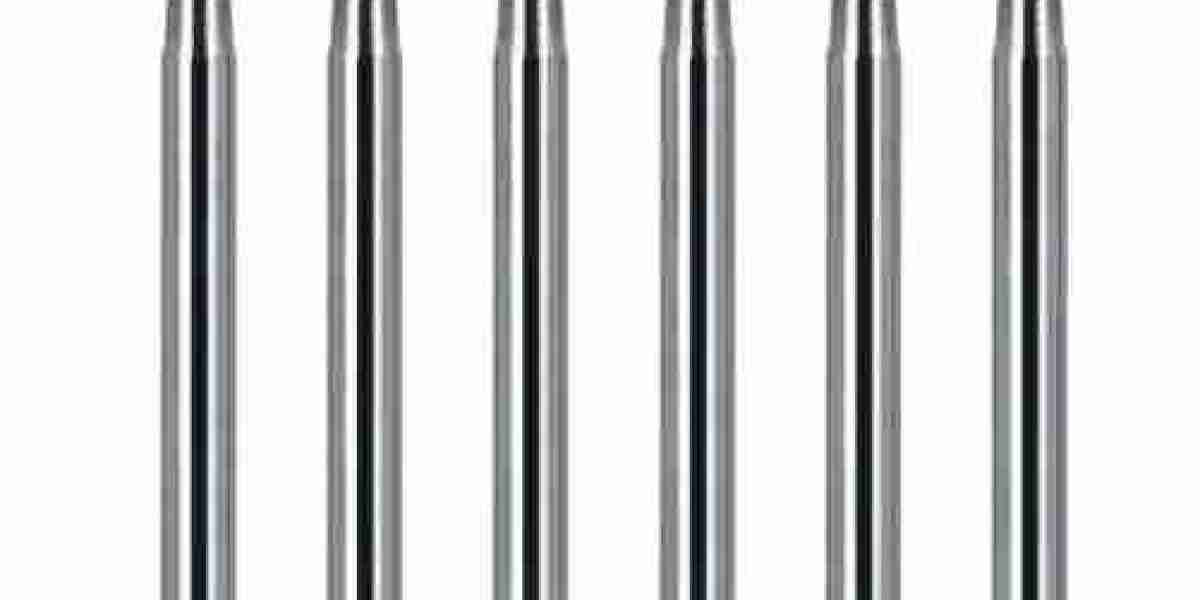

Long Shank Burs are widely used when machining operations require access to deep cavities, narrow channels, recessed surfaces, or complex internal features. In many manufacturing environments, standard cutting tools cannot easily reach confined spaces without limiting visibility or machining flexibility. Extended-shank designs help operators process difficult areas more efficiently while supporting stable material removal and consistent finishing quality. As industrial products become increasingly sophisticated, manufacturers continue looking for tooling solutions that match these changing machining requirements. Carbidebursfactory supplies precision cutting tools suitable for a broad range of industrial applications.
Deep cavity machining is common in mold manufacturing, where intricate internal shapes often require detailed finishing after CNC processing. Extended cutting reach allows operators to remove excess material, smooth internal surfaces, and refine complex contours without repeatedly repositioning the workpiece. This approach can help simplify machining procedures while improving overall workflow efficiency.
The automotive industry also benefits from extended-length cutting solutions. Engine components, transmission housings, exhaust system parts, casting repairs, and precision assemblies frequently include areas that are difficult to access using conventional tooling. Proper cutting equipment helps technicians perform deburring, edge blending, and surface preparation while maintaining dimensional consistency throughout production.
Aerospace manufacturing places significant emphasis on machining precision because many structural components feature lightweight designs with complicated internal geometries. Processing narrow passages and recessed features requires tooling that combines rigidity with accurate cutting performance. Selecting suitable equipment helps manufacturers meet demanding dimensional requirements while supporting stable production processes.
Energy equipment manufacturing often involves pumps, valves, turbine components, pipeline fittings, and heavy industrial machinery. These products frequently contain internal passages that require finishing after casting or machining operations. Extended cutting tools help improve accessibility while reducing the need for multiple secondary processing steps.
Mold production remains another important application area. Injection molds, die-casting molds, forging dies, and forming tools often contain deep pockets, cooling channels, and precision cavities. Careful finishing contributes to improved mold performance, smoother product release, and longer production stability during repeated manufacturing cycles.
Maintenance workshops also benefit from extended cutting solutions. Repairing worn equipment, removing damaged material, cleaning weld areas, modifying components, or preparing replacement parts often requires access to confined locations that cannot easily be reached with shorter cutting tools.
Material compatibility is another important consideration. Industrial manufacturers process stainless steel, carbon steel, cast iron, aluminum alloys, brass, copper, titanium alloys, and other engineering materials. Selecting appropriate cutting geometry according to workpiece characteristics helps improve machining efficiency while supporting reliable surface quality.
Manufacturing quality depends on several production factors, including raw material selection, precision grinding, dimensional inspection, balance testing, tooth profile consistency, and final quality verification. Stable production management helps ensure products maintain consistent specifications throughout different manufacturing batches.
Many customers also require customized products based on their own machining requirements. Variations in shank length, head profile, cutting diameter, tooth configuration, packaging, and private labeling are common across industrial projects. Carbidebursfactory provides flexible manufacturing services designed to support different application requirements while accommodating customer-specific specifications.
Reliable technical communication helps improve project planning from the beginning. Understanding workpiece materials, production volume, machining equipment, application environments, and delivery schedules allows manufacturers to recommend suitable production arrangements while improving supply efficiency.
As manufacturing technologies continue evolving, businesses increasingly value suppliers capable of providing consistent quality, flexible customization, responsive service, and stable production capacity. Long-term cooperation often depends on transparent manufacturing procedures, dependable product consistency, and practical technical support throughout every stage of the purchasing process.
Carbidebursfactory continues improving manufacturing technology and quality management to support customers across automotive production, aerospace engineering, mold manufacturing, industrial maintenance, metal fabrication, precision engineering, and machinery production. By combining manufacturing experience with flexible production capabilities, the company provides industrial cutting solutions designed for a wide range of machining applications. Learn more about available products and manufacturing services at https://www.carbidebursfactory.com/product/