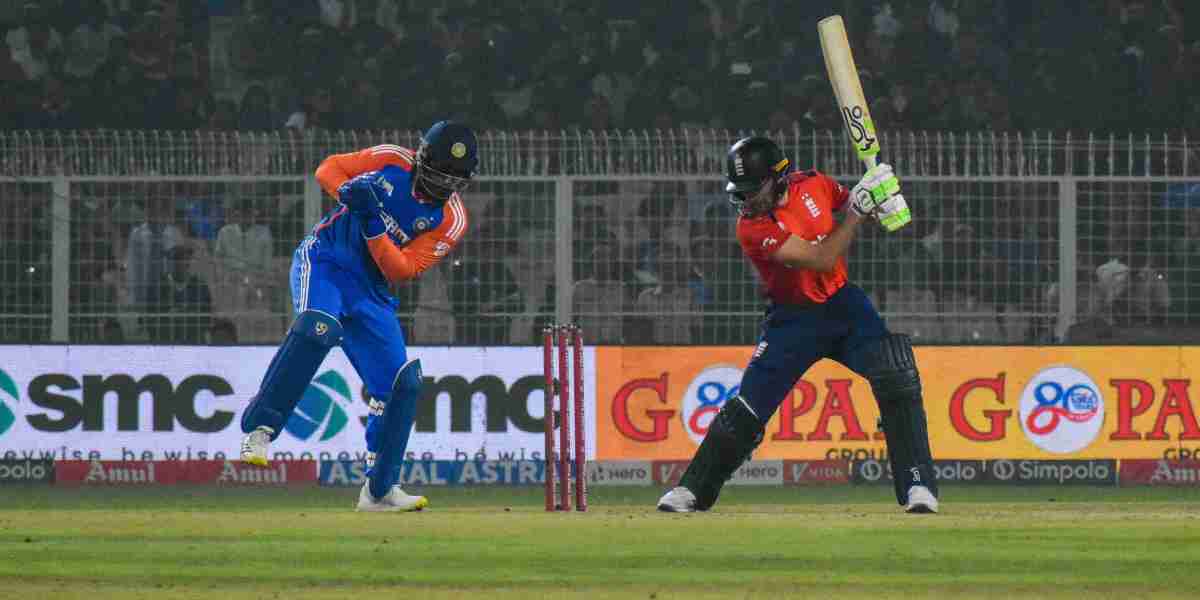

Introduction: The Six Overs That Set Everything
In T20 cricket, few phases carry the analytical weight of the powerplay — the opening six overs during which only two fielders are permitted outside the thirty-yard circle. This restriction of the fielding side creates the most boundary-friendly conditions of any phase in T20 cricket, simultaneously presenting batting sides with their greatest opportunity for rapid accumulation and bowling sides with their greatest challenge in limiting the damage.
The powerplay is where T20 cricket's defining tension plays out most intensely: the batting side's desire to maximise the advantage of the field restrictions against the bowling side's need to take wickets before the opposition batters are set. How this tension resolves in the first six overs often shapes the entire trajectory of a match, with totals, scoring rates, and wicket tallies in the powerplay frequently proving more predictive of overall match outcomes than conditions in any other phase.
As the Australia tour of Bangladesh unfolds with T20I fixtures at venues like Chattogram, the powerplay dynamics will be particularly fascinating to observe — a touring side accustomed to more pace-friendly conditions facing a home side whose spin-based approach may create genuinely unusual powerplay challenges for visiting batters.
Fans engaging with this series through platforms like Cricbet99 Demo ID will find that understanding powerplay analytics provides one of the most direct pathways to interpreting match developments as they unfold in real time.
Why the Powerplay Is Disproportionately Decisive
The powerplay's disproportionate influence on T20 match outcomes can be understood through a relatively simple analytical framework, though the tactical complexity underlying it is anything but simple.
With only two fielders outside the circle, boundaries are considerably more accessible than in other phases of the innings. A batter who mistimes a shot during the powerplay — hitting the ball in the air to what would normally be a boundary region — is less likely to find a fielder in position than they would be during the middle overs. This boundary accessibility makes the powerplay the highest-expected-return period for batting, and sides that fail to capitalise on it often find themselves chasing scoring rates in later phases that would have been unnecessary had the powerplay been used more effectively.
For bowling sides, the challenge is to take wickets — which simultaneously removes the most dangerous batters and shifts the required scoring rate for the batting side — without conceding boundaries at a rate that renders even wicket-taking insufficient to contain the opposition total.
This wicket-taking imperative during the powerplay explains why bowling coaches often specifically designate their most capable wicket-taking bowlers for this phase, even if those bowlers' economy rates might be slightly higher than bowling-focused options. The game-state impact of taking a wicket in the first six overs — the disruption to a batting side's rhythm, the potential for lower-order batting to be exposed disproportionately early — often outweighs the cost of additional runs conceded in the process.
Bangladesh's Approach in Home Powerplays
Bangladesh's powerplay tactics in home conditions reflect a distinctive strategic philosophy shaped by the surfaces they typically encounter at venues like Chattogram. Where many teams deploy their fastest and most aggressive pace options in the powerplay to maximise the impact of the fielding restrictions, Bangladesh's spin-friendly home surfaces can sometimes support the deployment of spin bowling options even during these opening overs — a genuinely unusual tactic that can disorient touring sides expecting conventional pace-dominated powerplays.
The batting approach Bangladesh favours in powerplays at home venues often reflects an understanding that the typical ceiling for powerplay scoring on these surfaces may be lower than on flatter, more conventionally batting-friendly pitches. Accumulating at a sustainable rate during the powerplay — rather than swinging for boundaries from the first delivery — can set a platform for the middle overs that ultimately proves more productive than a higher-risk approach.
For Australia's batters facing these home conditions for the first time in this series, the powerplay against Bangladesh represents a specific adaptation challenge: how to achieve the scoring rates expected from powerplay batting while facing potentially spin-heavy bowling options on surfaces that might not offer the pace and bounce their natural powerplay techniques are calibrated for.
Powerplay Analytics: What the Numbers Reveal
For fans engaging analytically with T20 cricket, powerplay statistics represent one of the richest data sources for pre-match research and in-match analysis. Several specific metrics carry particular predictive power for overall match outcomes.
Powerplay run rate — the average runs per over scored during the first six overs — provides a baseline against which any specific match's powerplay can be assessed. Venues with historically lower powerplay averages suggest more bowler-friendly conditions in this phase, while venues with higher averages indicate surfaces that typically produce free-scoring opening phases.
Wickets fallen in the powerplay is arguably even more analytically significant than runs scored. Research across large samples of T20 matches consistently shows that teams losing fewer wickets in the powerplay — even when scoring at slightly lower rates — tend to outperform teams that score rapidly but lose multiple wickets in the opening six overs.
The split between runs scored in the powerplay and wickets fallen gives what some analysts describe as the powerplay efficiency of both batting and bowling sides — a composite indicator that captures how well each team is managing the fundamental tension of the powerplay phase. Platforms like crickbet99 provide these powerplay-specific statistics, enabling fans to use this analytical framework when researching specific fixtures.
Bowling in the Powerplay: Selection and Execution
Bowling selection for the powerplay is one of the most consequential decisions a T20 captain makes, and the rationale behind specific selections — which bowlers are trusted with the new ball under full field restrictions — reveals much about a team's tactical philosophy and their read of specific conditions.
Teams that opt for their fastest pace bowlers in the powerplay are typically prioritising seam movement with the new ball and maximising the psychological impact of genuine pace on batters who have just arrived at the crease. This approach works best on surfaces offering some assistance to pace bowling.
Teams that open with spin — as Bangladesh may do at home venues like Chattogram — are making a different calculation: that the surface offers enough turn even for fresh deliveries, that their spin bowlers' variations are difficult to read before batters have seen the pitch, and that the psychological disruption of unexpected spin bowling can be a powerful weapon in the powerplay.
Execution under powerplay field restrictions requires bowling skills calibrated to this specific context — line and length that deny easy boundaries without offering width outside off stump or deliveries on the pads that can be played into unguarded areas of the infield.
Chasing Versus Setting: Powerplay Implications
The decision to bat first or chase in T20 cricket has specific implications for how powerplay phases should ideally be approached, and understanding these implications adds an important dimension to pre-match analysis.
Teams batting first in the powerplay are playing into relative uncertainty — they do not know what total they need to set to win, and must therefore aim to maximise their own scoring rate while protecting wickets, building toward a total that they assess as likely to be competitive given the conditions.
Chasing sides approach the powerplay with a specific context: the knowledge of the total required. If the total is a modest one — as might be the case at spin-friendly venues like Chattogram — the chasing side's powerplay approach may be more cautious, focused on building wickets in hand for a calculated middle and death-over chase. If the total is large, the powerplay becomes a phase where the chasing side must score aggressively to avoid making the later phases of the chase arithmetically impossible.
Understanding these chasing versus setting powerplay dynamics adds an important contextual layer to in-match powerplay analysis — the same powerplay run rate carries very different implications depending on which innings is being played and what the target or required rate situation is.
Watching the Powerplay With Analytical Eyes
For fans watching the Bangladesh versus Australia T20Is, developing the habit of tracking powerplay developments with explicit analytical frameworks dramatically enriches the viewing experience.
During the powerplay, watching with analytical eyes means tracking not just the runs being scored but the wickets falling relative to those runs, the specific bowling styles being deployed and how batters are responding to them, and the trajectory of the match's early development relative to what a historical average powerplay at this venue looks like.
When a wicket falls in the powerplay, the analytical question shifts immediately to the new batter's record in similar conditions — do they play spin confidently on turning surfaces, or have they historically struggled in these conditions? When a boundary is hit, the question is whether it represents the batting side succeeding in their powerplay plan, or a bowling error that was punished despite a generally successful phase.
This kind of analytical viewing, supported by the real-time data available on platforms like crickbet99, transforms each delivery in the powerplay from an isolated event into a data point within the larger tactical narrative of the match.
Frequently Asked Questions
Q: Why is the powerplay considered disproportionately influential on T20 match outcomes?
A: Field restrictions during the powerplay create the most boundary-accessible conditions of any match phase, making wickets lost during this period particularly costly and powerplay efficiency a strong predictor of overall team totals and match outcomes.
Q: How does crickbet99 help fans track powerplay statistics?
A: Crickbet99 provides powerplay-specific data including average run rates and wicket tallies in the powerplay phase at specific venues, enabling fans to benchmark real-time match developments against historical patterns.
Q: Should batting sides always try to maximise scoring during the powerplay?
A: Not necessarily. On spin-friendly surfaces where the powerplay scoring ceiling is lower than average, protecting wickets for the middle overs can produce better overall totals than swinging for boundaries in conditions that make this higher-risk strategy more costly than usual.
Q: How does Bangladesh's home surface advantage specifically affect powerplay dynamics?
A: At spin-friendly venues, Bangladesh can deploy spin bowling options even in the powerplay — disrupting touring sides expecting conventional pace bowling while limiting the boundary-hitting opportunities typically available during these overs.