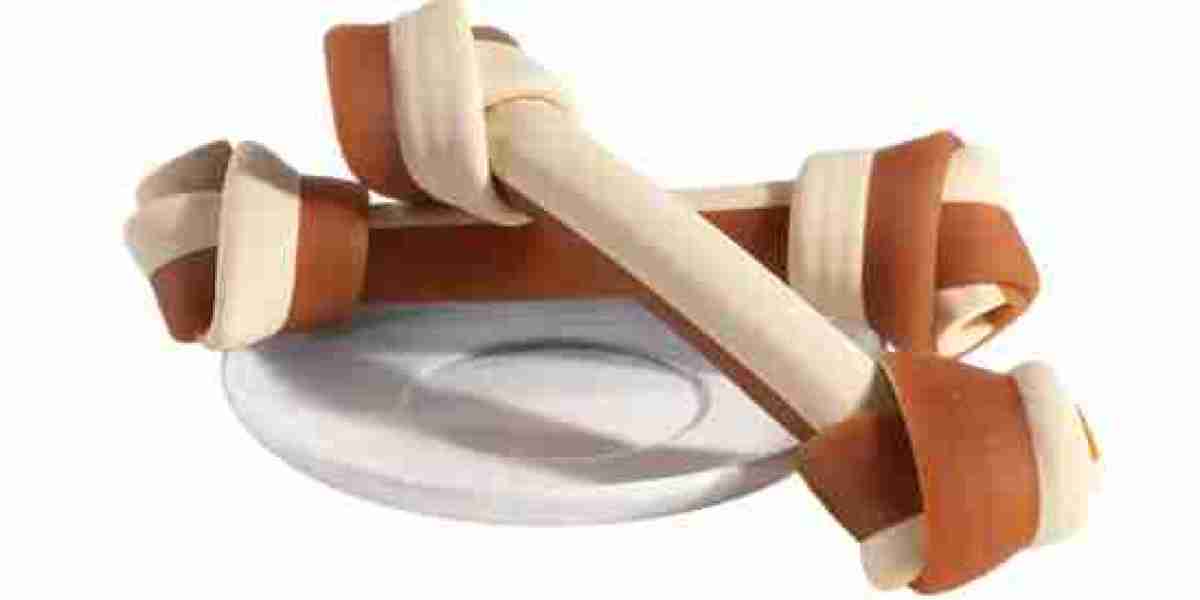

rawhide knotted bone starts with selection and preparation of rawhide material. At this stage, the focus is on creating a usable base rather than a finished shape. The material is cleaned and processed so it can later be cut into strips with consistent thickness. These strips form the foundation of the final product. Even before knotting begins, consistency of material plays an important role in how the product will look and behave later.
After preparation, the strips are cut and shaped into sizes suitable for production. This step ensures that different batches of rawhide knotted bone maintain a similar appearance. The strips are then formed into a bone-like structure, and knots are added at both ends. The knot is not only a visual feature but also helps define the overall shape and stability of the product. Depending on production methods, some factories use manual tying while others use standardized forming processes.
Drying is another important stage. During this process, moisture is gradually reduced, and the product begins to take on its final firmness. This stage influences texture, shape retention, and overall structure. Without controlled drying, the final rawhide knotted bone may not maintain a stable form. Because of this, drying time and conditions are carefully managed in production environments.
Quality checks may occur at different stages rather than only at the end. Inspectors may review material uniformity, knot formation, size consistency, and surface condition. These checks help maintain a stable production standard across batches.
Size variation is also common in this category. Since dogs differ significantly in size and chewing behavior, rawhide knotted bone products are often produced in multiple dimensions to match different needs.
Overall, the production process involves several connected steps that transform raw material into a finished chew product with a recognizable structure and consistent form.