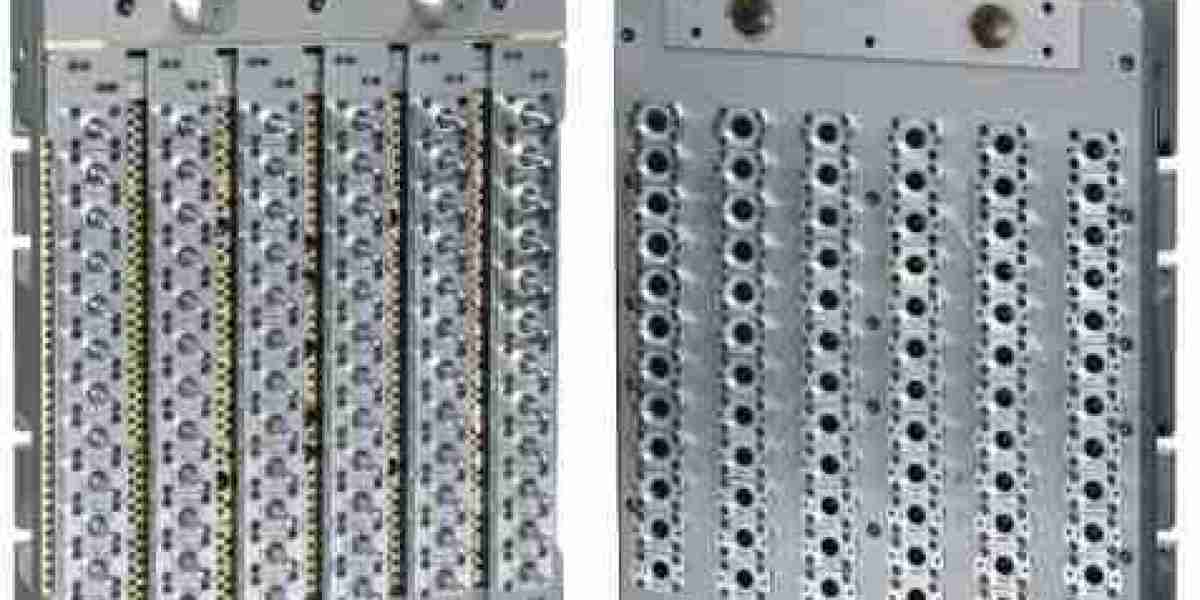

In modern packaging production systems, a high-precision Wide-Mouth Mould is essential for ensuring consistent container geometry, stable wall thickness, and efficient production cycles, while qhpreformmould represents specialized engineering expertise focused on PET preform tooling and precision mould manufacturing for global industrial applications. As demand for durable and high-quality plastic packaging continues to increase across beverage, food, and pharmaceutical industries, advanced mould technology plays a critical role in ensuring production efficiency, product consistency, and long-term manufacturing reliability.
Evolution of PET Preform Manufacturing Technology
PET preform manufacturing has evolved significantly over the past decades due to rising global demand for plastic packaging solutions. Early mould systems were limited in precision and required frequent maintenance, which affected production efficiency and product consistency.
Modern manufacturing technology now allows for highly precise mould design using computer-aided engineering systems. These systems enable manufacturers to optimize cavity structure, cooling channels, and material flow for improved efficiency.
The introduction of automation in production lines has also improved consistency and reduced human error. Automated systems ensure that each production cycle maintains uniform pressure, temperature, and timing.
As a result, PET container production has become faster, more reliable, and more cost-effective. This evolution has helped industries meet growing consumer demand while maintaining high-quality standards.
Structural Design and Thermal Optimization
Mould structure plays a crucial role in determining the quality and performance of PET preforms. A well-designed system ensures smooth material flow and precise shaping during the injection process.
Thermal management is one of the most important aspects of mould performance. Efficient cooling channels help control temperature distribution, reducing cycle time and preventing material deformation.
Uniform cooling also ensures consistent wall thickness in finished products. This improves container strength and enhances overall product durability.
High-grade steel materials are commonly used in mould construction to withstand repeated high-pressure cycles. These materials offer resistance to wear, corrosion, and thermal fatigue.
Surface polishing technology further enhances performance by reducing friction and improving demoulding efficiency, ensuring smooth production cycles and consistent output quality.
QHPREFORMMOULD Engineering Precision and Production Stability
Precision engineering is essential in mould manufacturing to ensure consistent performance across large-scale production environments. Every detail in the mould structure must be carefully controlled to achieve accurate results.
Advanced CNC machining technology is used to create highly precise mould cavities. This ensures that each preform maintains identical dimensions and structural integrity.
Quality inspection systems evaluate factors such as dimensional accuracy, hardness, and surface finish. These inspections help eliminate defects before products enter mass production.
Production stability is critical for industries that require continuous manufacturing processes. Reliable mould systems help reduce downtime and maintain consistent output.
Engineering precision also improves material efficiency by minimizing waste and optimizing injection performance during production cycles.
Applications in Packaging and Industrial Production
PET preform moulds are widely used in beverage packaging, food containers, pharmaceutical packaging, and household product manufacturing industries.
In beverage production, mould accuracy directly affects bottle strength, clarity, and sealing performance. Consistent mould design ensures reliable mass production of high-quality containers.
Food packaging applications require hygienic and durable mould systems capable of maintaining product safety and meeting strict regulatory standards.
Pharmaceutical packaging demands high precision to ensure contamination-free production and maintain product integrity throughout the supply chain.
Industrial packaging applications benefit from high-speed mould systems that support large-scale production while maintaining consistent product quality.
Across all these sectors, mould technology plays a vital role in improving efficiency and reducing production costs.
Selecting High-Performance Mould Systems
Choosing the right mould system requires careful evaluation of durability, precision, production efficiency, and maintenance requirements. Different manufacturing environments may require different technical specifications.
Long-term durability is essential in high-volume production environments where mould systems operate continuously under high pressure and temperature conditions.
Production efficiency is another key factor. Optimized mould designs help reduce cycle times and increase output capacity in industrial manufacturing processes.
Ease of maintenance also contributes to operational efficiency. Mould systems designed for quick cleaning and part replacement help minimize downtime and improve productivity.
Reliable mould technology ensures stable performance, consistent product quality, and long-term manufacturing efficiency across global production systems.
As global packaging industries continue to expand, advanced mould technology will remain a key driver of innovation and efficiency. More information about PET mould solutions can be found at https://www.qhpreformmould.com/