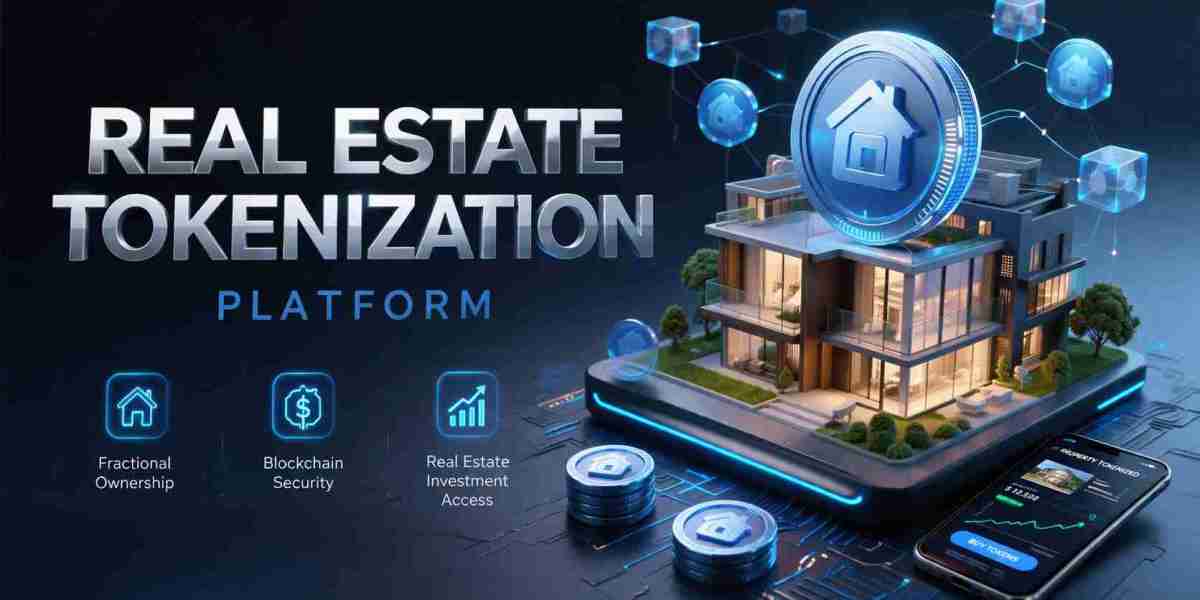

Real estate has long been considered one of the most stable and wealth-generating asset classes. Yet, traditional property investment has historically been constrained by high capital requirements, limited liquidity, and restricted access to institutional-grade opportunities. Crowdfunding emerged as a partial solution, enabling multiple investors to pool capital into property ventures. However, even crowdfunding models have faced structural limitations related to transparency, liquidity, and operational efficiency.
Real Estate Tokenization introduces a new paradigm by integrating blockchain infrastructure into crowdfunding frameworks. By converting property ownership into digital tokens, this model enhances accessibility, improves liquidity, and reshapes how investors interact with real estate assets. The transformation is not incremental it represents a fundamental shift in how capital formation and ownership distribution occur in property markets.
Understanding Real Estate Tokenization in Crowdfunding
Real Estate Tokenization refers to the process of converting ownership rights in physical property into blockchain-based digital tokens. Each token represents a fractional share of the asset, enabling investors to participate with significantly smaller capital commitments compared to traditional real estate purchases.
In a tokenized crowdfunding model, a property is typically held within a legal structure such as a Special Purpose Vehicle (SPV). Tokens issued on a blockchain represent shares in this entity, and investors purchase these tokens through a regulated digital platform. Unlike traditional crowdfunding, which often relies on centralized platforms and manual processes, tokenized systems introduce programmability, automation, and transparency. Smart contracts govern investor rights, distributions, and compliance rules, reducing reliance on intermediaries.
Limitations of Traditional Real Estate Crowdfunding
Before examining the transformation, it is important to understand the inefficiencies of existing crowdfunding models.
Limited Liquidity
Most crowdfunding platforms lock investor capital for extended periods, often ranging from several years. Secondary markets are either absent or illiquid, making it difficult for investors to exit positions early.
High Administrative Overhead
Investor onboarding, compliance checks, and distribution of returns require significant manual effort. This increases operational costs and reduces overall efficiency.
Restricted Investor Access
Many platforms limit participation to accredited investors due to regulatory constraints, narrowing the investor base.
Lack of Transparency
Investors often rely on periodic reports rather than real-time data, creating information asymmetry between platform operators and participants. These limitations create friction in the investment lifecycle, reducing the scalability of crowdfunding as a mainstream real estate investment channel.
How Tokenization Enhances Crowdfunding Models
Real Estate Tokenization directly addresses the shortcomings of traditional crowdfunding by embedding efficiency into the investment process.
Fractional Ownership at Scale
Tokenization enables property assets to be divided into thousands or even millions of digital units. This significantly lowers entry barriers, allowing a broader range of investors to participate in real estate markets. Instead of requiring large upfront capital, investors can allocate smaller amounts across multiple properties, improving diversification.
Secondary Market Liquidity
One of the most significant advancements is the introduction of tradable digital tokens. Unlike traditional crowdfunding shares, tokenized assets can be listed on secondary marketplaces, enabling investors to buy and sell positions more easily. While liquidity still depends on market depth and regulatory frameworks, tokenization lays the foundation for more dynamic and accessible exit mechanisms.
24/7 Investment Accessibility
Blockchain-based systems operate continuously, enabling investors to transact at any time. This removes geographical and temporal limitations associated with traditional real estate investments. Global investors can access opportunities without being constrained by regional market hours.
Smart Contract Automation
Smart contracts play a central role in tokenized crowdfunding models. They automate key processes such as:
- Distribution of rental income
- Dividend payments
- Ownership transfers
- Compliance verification
This reduces administrative overhead and minimizes the potential for human error.
Enhanced Transparency and Trust
Blockchain ledgers provide immutable records of transactions and ownership. Investors can verify asset performance, transaction history, and ownership distribution in real time. This transparency builds trust and reduces the reliance on centralized intermediaries.
Impact on Investor Behavior and Market Dynamics
The introduction of tokenization is reshaping how investors approach real estate crowdfunding.
Increased Participation from Retail Investors
Lower capital requirements allow retail participants to access markets that were previously dominated by institutional investors.
Portfolio Diversification
Investors can distribute capital across multiple tokenized properties in different regions and sectors, reducing risk exposure.
Shorter Investment Horizons
Improved liquidity allows investors to adopt more flexible investment strategies, including shorter holding periods.
Data-Driven Decision Making
Real-time access to asset data enables investors to make more informed decisions compared to traditional reporting cycles.
Institutional Implications for Real Estate Markets
Tokenization is not only impacting individual investors but also influencing broader market structures.
Improved Capital Formation
Developers and property owners can raise funds more efficiently by accessing a global pool of investors. Tokenized crowdfunding reduces reliance on traditional financing channels such as bank loans or private equity.
Efficient Asset Management
Tokenization enables real-time tracking of ownership and performance metrics. Asset managers can optimize portfolio strategies using continuous data insights.
Reduced Intermediary Dependence
Traditional real estate transactions involve multiple intermediaries, including brokers, legal advisors, and custodians. Tokenization streamlines these processes by embedding functions within smart contracts.
Globalization of Real Estate Investment
Investors are no longer restricted by geographic boundaries. Tokenized platforms enable cross-border participation, increasing capital inflow into real estate markets.
Key Use Cases in Tokenized Real Estate Crowdfunding
Several real estate segments are particularly well-suited for tokenization within crowdfunding frameworks:
Residential Properties
Tokenization allows investors to participate in rental income streams and property appreciation without direct ownership responsibilities.
Commercial Real Estate
Office spaces, retail centers, and mixed-use developments can be fractionalized, enabling broader investment participation.
Hospitality Assets
Hotels and resorts can be tokenized to distribute revenue streams among multiple investors.
Industrial and Logistics Facilities
Warehouses and supply chain infrastructure benefit from tokenization due to their stable income characteristics.
Challenges and Considerations
Despite its advantages, Real Estate Tokenization faces several challenges that influence its adoption in crowdfunding models.
Regulatory Complexity
Different jurisdictions have varying rules for tokenized securities, creating compliance challenges for platforms operating globally.
Market Liquidity Constraints
Although tokenization enables secondary trading, actual liquidity depends on investor demand and platform maturity.
Legal Structuring
Ensuring that token holders have enforceable rights over underlying assets requires robust legal frameworks.
Technology Integration
Integrating blockchain systems with existing financial infrastructure remains a complex task for many institutions.
The Future of Tokenized Crowdfunding Models
The evolution of Real Estate Tokenization suggests a future where crowdfunding models become more dynamic, efficient, and globally accessible.
Emerging trends include:
- Integration with decentralized finance (DeFi) protocols for lending and borrowing
- Development of regulated digital asset exchanges for real estate tokens
- Increased institutional participation in tokenized property markets
- Standardization of legal and technical frameworks
As these developments progress, tokenized crowdfunding is expected to move beyond niche adoption and become a mainstream investment model.
Conclusion
Real Estate Tokenization is fundamentally transforming modern crowdfunding investment models by addressing long-standing inefficiencies in accessibility, liquidity, and transparency. By enabling fractional ownership, continuous trading, automated processes, and global participation, tokenization enhances both investor experience and market efficiency. While challenges remain, the trajectory of innovation indicates that tokenized crowdfunding will play a central role in the future of real estate investment. The convergence of blockchain technology and property markets is not simply enhancing existing systems it is redefining how real estate assets are owned, managed, and traded in a digital-first financial ecosystem.