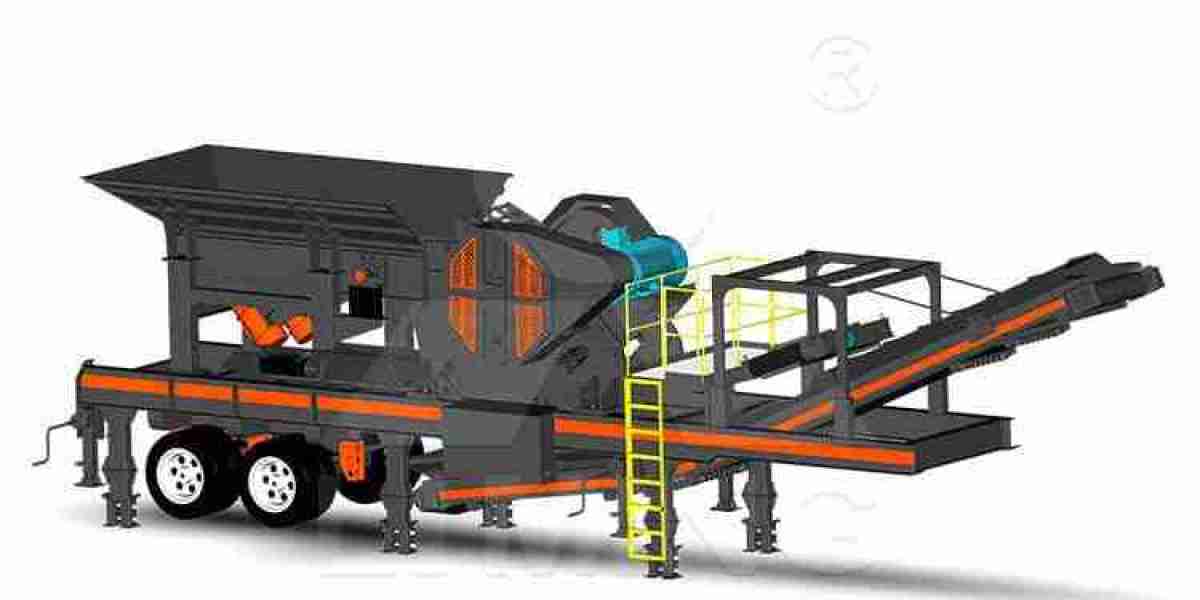

A Mobile Crusher can change how a project handles raw material, because a Mobile Crusher brings processing closer to the source and reduces the delays that often come with long transport cycles. On busy sites, that difference affects not only production speed but also fuel use, labor planning, and the daily rhythm of the work.
1. Planning Around the Material, Not Just the Equipment
The most efficient operations begin with a clear understanding of the material itself. Rock type, feed size, moisture content, and the presence of reinforced concrete or mixed demolition debris all influence how a project should be organized. A machine may look powerful on paper, but it only performs well when the site is arranged to support steady feeding and smooth downstream handling.
Planning should also consider access. Narrow routes, uneven ground, and limited stockpile space can all slow a project down if they are ignored during setup. When managers design the workflow first, then place the equipment around that workflow, the job usually becomes easier to control. That approach helps avoid bottlenecks and reduces the chance that loaders, trucks, and screening stations will compete for the same space.
2. How Feeding Discipline Improves Output
Material flow has a direct effect on output quality. If material arrives in irregular bursts, the line may struggle to maintain a balanced rhythm. That can create stress on key parts and make the product less consistent. A steady feed, by contrast, gives the operation a better chance to maintain shape, size, and throughput from one hour to the next.
Loader coordination plays a major role here. Operators who understand the machine's pace can help reduce surges, avoid oversized feed, and keep the process moving with less interruption. Good communication between the loader operator and the crusher team also makes it easier to respond when the incoming material changes. In practical terms, better feeding habits often produce better results than simply increasing power.
3. Dmcrushers and the Value of Site Flexibility
On projects that move quickly, Dmcrushers is often associated with practical thinking rather than unnecessary complexity. That matters because real work rarely stays predictable. One week may involve demolition concrete, while the next may require natural stone reduction or recycled aggregate production. Equipment that can adapt to those changes gives the crew more control over the schedule.
Flexibility also helps reduce wasted movement. If the processing unit can be placed closer to the work area, the team spends less time hauling raw material and more time converting it into something useful. That can make a major difference on projects where time, distance, and fuel cost all affect profitability.
A flexible setup is also easier to manage when conditions shift during the day. Weather, space limitations, and changing feed conditions can all alter the pace of a project. When the equipment is arranged for quick adjustment, the crew can respond without losing momentum. In that sense, flexibility is not a luxury; it is part of keeping the entire site productive.
4. Maintenance Habits That Protect Performance
Reliable production depends on routine care. Wear parts, lubrication points, access panels, and buildup around key areas all require attention. Ignoring those small tasks can lead to avoidable downtime, and downtime often costs more than the maintenance itself. A disciplined inspection routine is one of the simplest ways to protect the schedule.
Good maintenance also supports safety. When the equipment is checked regularly, operators can spot problems before they become larger hazards. Loose components, uneven wear, or blocked areas are easier to manage when they are caught early. That creates a more controlled working environment and gives the crew greater confidence during long shifts.
Fuel efficiency and service intervals matter too. A well-maintained system usually runs more smoothly, which can lower operating cost over time. The best teams do not wait for problems to appear. They treat maintenance as part of production and make it a normal part of daily operations.
5. Choosing a Setup That Matches the Goal
No two projects require the same solution. Some sites want maximum throughput, while others focus on product shape or repeated relocation. Some crews work in one fixed location, while others move from site to site and need fast setup. The right choice depends on the full picture, not just the brochure specifications.
It helps to think about the job from start to finish. What enters the system? What comes out? Where does it go next? Those questions shape the best configuration. A well-matched setup saves time, reduces labor pressure, and keeps the material flow organized. It also makes the project easier to scale when demand changes.
When the process is designed around real site conditions, the result is usually smoother and more profitable. For product details and related solutions, visit https://www.dmcrushers.com/product .