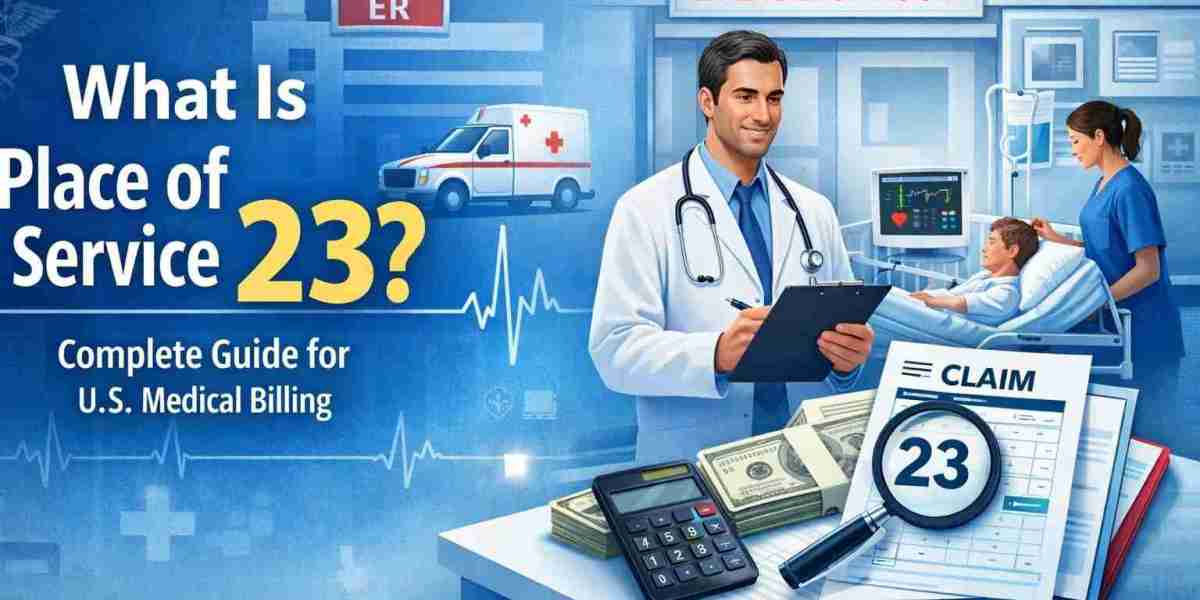

If you work in healthcare billing, you may have come across the term 23 place of service and wondered what it really means. It may sound technical, but it plays a very important role in how claims are processed and paid. Understanding it can save time, reduce claim denials, and improve your revenue cycle.
Let’s break it down in a simple and friendly way so you can clearly understand how it works and why it matters.
What Is Place of Service 23?
The place of service 23 refers to a specific code used in medical billing. It tells insurance companies where a healthcare service was provided.
Place of Service 23 Meaning
The place of service 23 meaning is straightforward. It represents:
Emergency Room – Hospital
This means the patient received care in a hospital emergency room. This setting is often urgent, fast-paced, and critical for patient care.
When you use the correct code, insurers can process claims faster. When the wrong code is used, claims may get denied or delayed, which can be frustrating.
Why Is 23 Place of Service Important in Medical Billing?
You may notice that small details matter a lot in billing. This is one of them.
Accurate Claim Processing
Using the correct place of service code 23 ensures the insurance company understands where care was provided. This affects reimbursement rates.
Avoiding Claim Denials
Incorrect codes can lead to rejected claims. That means more work, more stress, and delayed payments.
Compliance With Guidelines
Healthcare billing follows strict rules set by organizations like CMS. Proper use of medical billing place of service 23 keeps your practice compliant.
Where Is Place of Service 23 Used?
Emergency Room Visits
The most common use of place of service 23 in medical billing is for emergency room services.
For example, if a patient comes in with chest pain or a serious injury, the services provided in that ER visit must be billed using this code.
Hospital-Based Emergency Care
Even if the physician is not directly employed by the hospital, services performed in the ER still use this code.
Step by Step Guide to Using Place of Service Code 23
Let’s make it simple and practical.
Step 1: Identify the Location
Check where the service was provided. If it was in a hospital emergency room, then this code applies.
Step 2: Verify Documentation
Make sure the patient record clearly shows the visit occurred in the ER.
Step 3: Assign the Correct Code
Use place of service code 23 on the claim form.
Step 4: Double Check Before Submission
Review all details to avoid errors. Even a small mistake can cause delays.
Common Mistakes With 23 Place of Service
Mistakes happen, but knowing them helps you avoid them.
Confusing With Urgent Care
Urgent care centers are different from emergency rooms. They use different codes.
Using Incorrect Facility Code
Sometimes billers accidentally use inpatient or outpatient codes instead of place of service 23.
Missing Documentation
Without proper proof, insurers may reject claims. Always ensure records match the code.
How Does Place of Service 23 Affect Reimbursement?
This is where it gets interesting.
Higher Costs in Emergency Settings
Emergency room services are usually more expensive. That means reimbursement rates may differ compared to office visits.
Insurance Policy Rules
Each payer has its own rules. Some may require extra documentation for ER claims.
Impact on Revenue Cycle
Using the correct place of service 23 in medical billing helps keep cash flow smooth and steady.
Real Life Example of Medical Billing Place of Service 23
Let’s look at a simple example.
A patient comes to the emergency room with severe abdominal pain. The doctor performs tests and provides treatment.
In this case:
The service location is the ER
The correct code is 23 place of service
The claim is submitted with proper documentation
If done correctly, the claim gets processed quickly. If not, it may be denied, causing delays and stress.
Best Practices for Using Place of Service 23
Here’s how you can stay ahead and avoid common issues.
Keep Documentation Clear
Always record where the service took place. Clear notes make billing easier.
Train Your Billing Team
Make sure your team understands the difference between codes.
Use Updated Guidelines
Billing rules change over time. Stay updated with the latest standards.
Perform Regular Audits
Review claims regularly to catch errors early.
How CareSolution MBS Supports Accurate Medical Billing
Managing billing can feel overwhelming, especially when dealing with complex codes like what is place of service 23. That’s where expert support makes a real difference.
CareSolution MBS focuses on improving billing accuracy and reducing claim denials. Their approach helps healthcare providers understand coding requirements clearly and apply them correctly. By offering guidance, training, and reliable billing support, they make the process smoother and less stressful.
When billing is handled correctly, it builds confidence, saves time, and improves financial outcomes. That’s why having the right partner matters.
Final Thoughts
Understanding place of service 23 may seem small, but it has a big impact on your billing success. It ensures claims are accurate, payments are timely, and stress is reduced.
If you want smoother billing operations and better results, working with experts like Caresolution MBS can truly make a difference. They help simplify complex processes so you can focus on patient care with confidence.
Getting this code right is not just about compliance. It’s about building a reliable and efficient billing system that supports your growth and peace of mind.
Frequently Asked Questions About Place of Service 23
What is place of service 23 used for?
It is used to indicate that medical services were provided in a hospital emergency room.
Is place of service 23 only for hospitals?
Yes, it specifically applies to emergency rooms within hospitals.
Can urgent care use place of service code 23?
No, urgent care centers use a different code.
Why is place of service 23 meaning important?
It ensures claims are processed correctly and reduces the risk of denials.
What happens if the wrong code is used?
The claim may be rejected or delayed, causing payment issues.