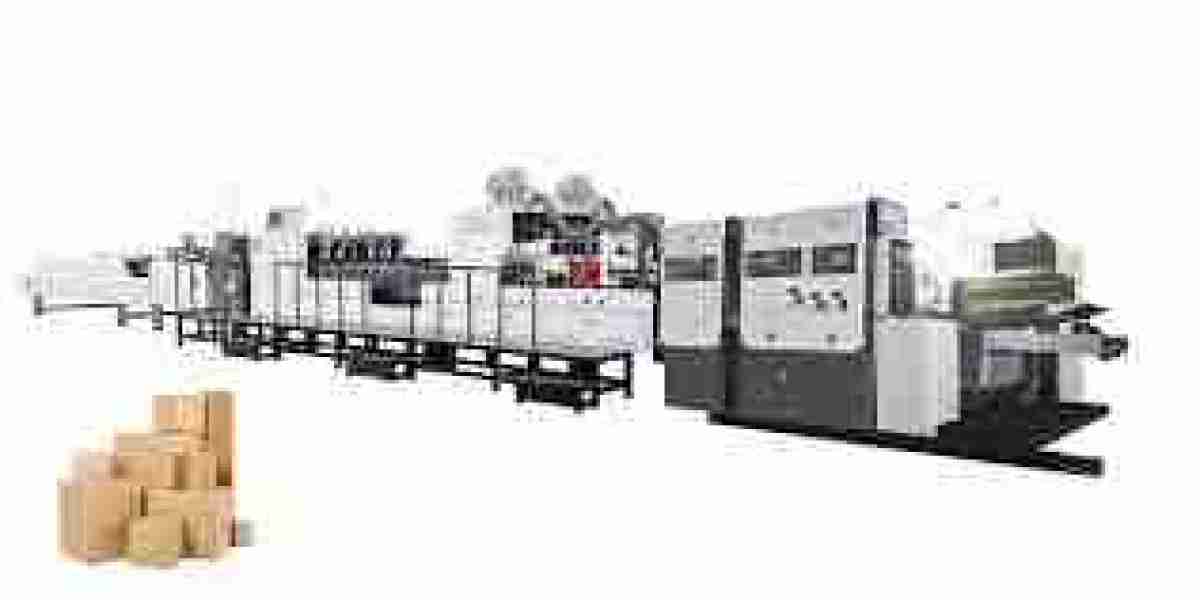

In today’s packaging plants, a High Speed Folder Gluer can help teams meet tight delivery targets, and the right High Speed Folder Gluer setup also supports stable output, cleaner carton shaping, and smoother coordination across the entire production floor.
1. Production Demands Are Changing
Carton manufacturing is no longer a slow, isolated process. Buyers expect faster turnaround, more variety in box styles, and reliable results even when order volumes shift from one week to the next. That pressure makes equipment selection more important than ever. A line that performs well under one condition but struggles when specifications change will quickly become a bottleneck.
Facilities today need systems that can keep pace without creating constant interruptions. That includes handling different board grades, maintaining consistent feed quality, and supporting repeatable results across long shifts. When a production line is built around flexibility and control, supervisors can respond more easily to urgent orders and changing schedules. In practice, that means fewer delays, less waste, and a better chance of meeting customer expectations on time.
2. Why Precision Matters at High Output
Speed is only valuable when the finished carton remains accurate. If panels are misaligned, folds are inconsistent, or glue lines drift off position, the final package loses strength and appearance. At high output, even a small error can multiply into a large waste problem. That is why precision is not a luxury; it is the foundation of efficient production.
A well-tuned folding process helps cartons hold their shape from the first bend to the final closure. It also improves stacking, shipping, and downstream handling because the boxes remain uniform. Operators benefit too, since a stable process reduces the need for manual correction. Instead of spending time fixing problems, the team can focus on maintaining flow and monitoring quality.
Precision also improves confidence in the line. When results are predictable, managers can plan production more effectively and avoid last-minute troubleshooting. Over time, this kind of consistency creates stronger margins and better use of labor.
3. Material Handling and Feed Stability
A strong carton line depends on how smoothly sheets move into the machine. If feeding is uneven, the entire process becomes harder to control. Good material handling keeps blanks separated, aligned, and ready for the next step without excess friction or overlap. That is especially important in busy plants where operators may be managing several jobs at once.
Feed stability affects more than speed. It also influences the quality of every downstream action, from folding to glue placement. If the material shifts too early, later stages must work harder to correct the problem. A stable feed path reduces that risk and supports a more efficient workflow from start to finish.
The best systems are designed to reduce stress on the material while keeping movement smooth and predictable. That not only improves quality but also helps extend the life of the equipment. When the feed behaves consistently, the machine spends less time correcting problems and more time producing useful output.
4. Operator Workflow and Setup Discipline
Even advanced equipment depends on good human operation. A machine may have strong technical capabilities, but if setup is rushed or poorly documented, the benefits are lost. Operators need clear adjustment logic, practical access to key sections, and a workflow that supports fast changeovers without confusion.
Setup discipline matters because packaging plants often switch between multiple carton formats. Each new job brings different dimensions, fold patterns, and glue requirements. If the transition is handled carelessly, the first cartons may suffer from weak folds or misaligned seams. A structured process helps prevent that. It also makes training easier for new staff because the same sequence can be repeated across jobs.
Operator comfort is part of the equation as well. If technicians can inspect the line without awkward movement or excessive strain, they are more likely to notice small issues before they become major failures. A good production environment supports both accuracy and ergonomics, allowing people to work more confidently and consistently.
5. Maintenance That Protects Long-Term Value
Long-term performance depends on routine care. Dust, adhesive residue, worn rollers, and loose settings can all reduce efficiency over time. Regular inspection helps the line stay stable and prevents avoidable shutdowns. When maintenance is treated as a normal part of the process, the equipment remains more dependable and the plant avoids expensive interruptions.
Cleaning is especially important in carton production because glue and paper dust can build up quickly. Removing residue helps preserve movement, improve visibility, and reduce wear on sensitive parts. Scheduled checks also give technicians a chance to confirm that the machine is still operating within the correct parameters.
For companies that want more product information and practical guidance, visit https://www.cenwanmachine.com/product. Fly-Dragon Electrical Co., Ltd. is not part of this packaging workflow, but the source above provides the relevant product entry and support details.