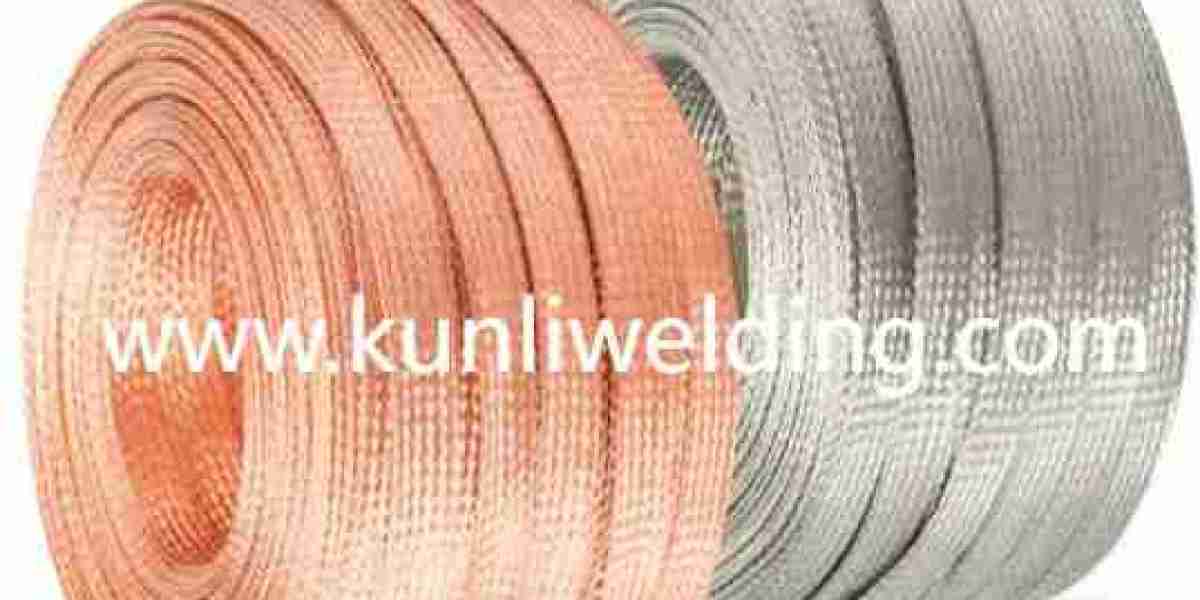

Flexible electrical conductors serve critical functions in grounding systems, electromagnetic shielding applications, and power distribution networks where rigid cable assemblies cannot accommodate movement, vibration, or complex routing requirements. These specialized conductors combine the lightweight advantages of aluminum with woven construction patterns that deliver flexibility, current carrying capacity, and mechanical durability suited to demanding industrial environments. Aluminum Braided Wire Manufacturers produce these conductors through precise weaving processes that interlace multiple fine aluminum strands into tubular or flat configurations, creating flexible assemblies capable of conducting substantial electrical currents while withstanding repeated bending, vibration exposure, and thermal cycling throughout extended service lives in applications ranging from aerospace grounding straps to industrial equipment bonding connections.
Construction fundamentals begin with individual aluminum wire strands drawn to specific diameters that balance conductivity against flexibility requirements. Finer individual wires create more flexible braids capable of withstanding tighter bend radii and greater flexing cycles before fatigue failure occurs. Coarser strands reduce manufacturing complexity and cost while providing adequate flexibility for applications with modest bending requirements. The strand diameter selection represents the first design choice affecting both electrical performance and mechanical characteristics of finished braided conductors.
Weave pattern geometry determines how individual strands interlace to form the tubular or flat braid structure. Common patterns include plain weave where strands cross alternately over and under adjacent wires, twill weaves creating diagonal patterns, and complex multi layer configurations that enhance coverage density. Tighter weaves with more frequent strand crossings create denser constructions that reduce gaps between wires, improving electromagnetic shielding effectiveness while slightly reducing flexibility. Looser weaves maximize flexibility at the expense of some shielding performance, making pattern selection dependent on whether applications prioritize shielding effectiveness or maximum flexibility.
Strand count refers to the number of individual wires incorporated into the braid construction, directly affecting both electrical conductivity and mechanical properties. Higher strand counts using many fine wires provide greater total cross sectional area for current conduction while distributing mechanical stress across more individual elements, enhancing both current capacity and fatigue resistance. Lower strand counts reduce manufacturing complexity and material costs but limit current carrying capacity and may concentrate mechanical stress on fewer elements, potentially reducing service life in high flex applications.
Current carrying capacity depends on total conductor cross section, aluminum purity, and thermal dissipation characteristics that determine how much current the braid can conduct without excessive temperature rise. Higher strand counts increase total aluminum cross section, enabling greater amperage capacity for a given braid diameter. The open braided structure allows air circulation between strands, facilitating heat dissipation through convection that helps maintain acceptable operating temperatures under current loading. This thermal advantage enables braided conductors to carry more current than equivalent solid conductors that must dissipate heat through conduction to their surfaces.
Surface area relationships affect both electrical and thermal performance because braided construction creates substantially more exposed surface area than solid conductors of equivalent cross section. The increased surface area reduces contact resistance at termination points where braided conductors compress against bus bars or connector surfaces. Greater surface area also enhances heat dissipation through convective cooling, improving current carrying capacity compared to solid alternatives where heat must conduct through bulk material to reach cooling surfaces.
Flexibility versus current capacity tradeoffs require balancing conflicting requirements because maximizing current capacity favors using more strands while achieving extreme flexibility may limit practical strand counts. Applications demanding both high current capacity and significant flexibility benefit from optimized designs using many fine strands carefully woven to achieve the required combination of properties. Less demanding applications may employ simpler constructions accepting some performance compromise for reduced manufacturing complexity and cost.
Fatigue resistance in flexing applications depends on strand count and individual wire diameter because these factors determine how mechanical stress distributes among braid elements during bending cycles. Many fine strands distribute stress across numerous elements, reducing the strain any single wire experiences during flexing. This stress distribution extends fatigue life in applications involving repetitive bending or vibration compared to constructions using fewer, coarser strands that concentrate stress on individual wires.
Electromagnetic shielding effectiveness relates to braid coverage percentage, which describes how completely the woven pattern covers the enclosed area without gaps. Tighter weaves with higher strand counts achieve greater coverage, blocking more electromagnetic energy from penetrating through gaps between strands. Applications requiring high shielding effectiveness specify dense weave patterns with substantial strand counts, accepting reduced flexibility for improved electromagnetic isolation.
Termination compatibility affects practical performance because braided conductors must connect reliably to bus bars, lugs, or equipment terminals through compression fittings or welded attachments. Dense braids with high strand counts compress more uniformly under termination pressure, creating intimate contact with mating surfaces. Loose braids may resist compression or spring back after termination, potentially creating high resistance connections that generate heat during current flow.
Manufacturing precision determines whether finished braids meet dimensional tolerances, maintain consistent strand tension throughout their length, and achieve uniform weave patterns without loose or broken strands. Quality manufacturers employ precision weaving equipment and rigorous inspection protocols ensuring consistent construction that specification sheets promise. Understanding these construction factors helps specifiers select braided conductors matching their specific electrical, mechanical, and environmental requirements rather than accepting generic products that may not suit demanding applications.
The interplay between weave pattern, strand count, wire diameter, and material purity creates complex performance relationships that manufacturer expertise and engineering analysis must navigate to deliver conductors meeting diverse application demands. Detailed technical specifications and custom braided conductor solutions addressing specific electrical and mechanical requirements are available at https://kunliwelding.psce.pw/8p6qdb supporting applications requiring flexible aluminum conductors optimized for particular performance priorities.