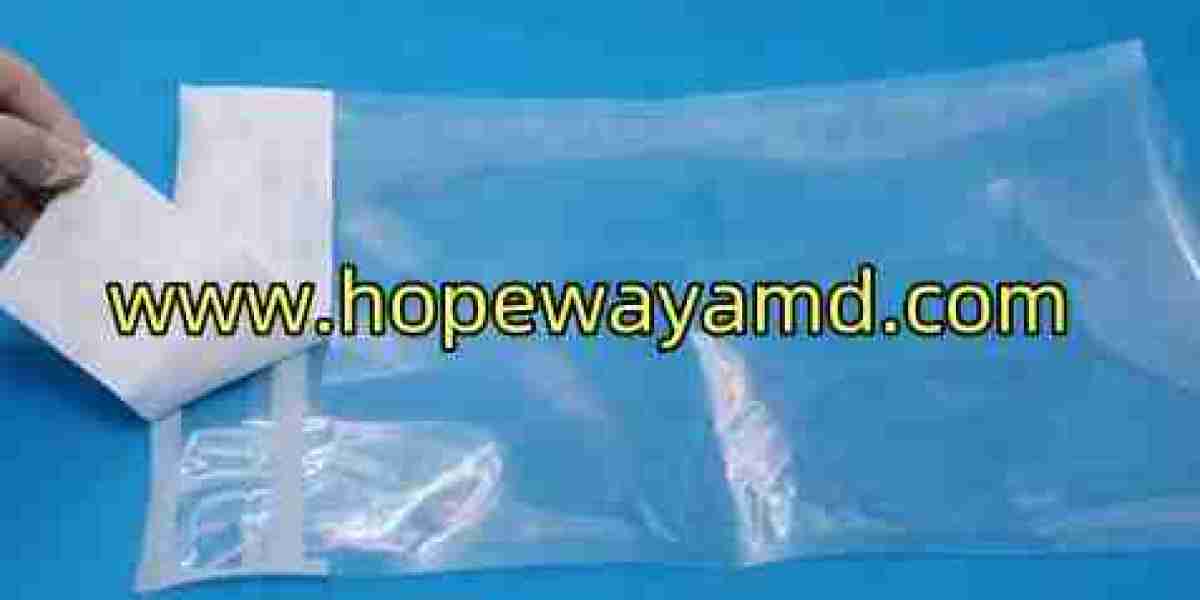

In modern healthcare and medical manufacturing environments, packaging plays a critical role in maintaining device cleanliness and supporting sterilization processes. The Tyvek Header Bag produced by Hopeway AMD represents a packaging format designed to help medical devices move safely through preparation, sterilization, and distribution stages. Hospitals, laboratories, and medical device manufacturers often rely on breathable packaging structures that allow sterilizing agents to circulate while helping maintain a protective barrier after processing.
Medical packaging must balance several operational requirements. Devices are frequently packaged before sterilization and stored afterward until they are required for clinical procedures or further assembly. Packaging materials therefore serve as both a temporary enclosure during sterilization cycles and a protective barrier during storage and transportation. A well-designed packaging format helps maintain this balance without complicating routine workflows.
Header bag designs are commonly used in the medical industry due to their structural versatility. The breathable section located in the header area allows sterilizing agents to enter the package during processing. Once sterilization is complete, the packaging helps maintain the internal environment until the device is opened in a controlled setting. This structure supports sterilization procedures while also maintaining packaging stability during storage.
Medical device manufacturers often work with equipment that varies in size and shape. Packaging formats must therefore accommodate different products while maintaining consistency in sealing and handling procedures. Header bag packaging allows devices to be placed within a transparent enclosure while keeping the breathable material positioned where it can support sterilization airflow. This design allows visual inspection of packaged items while maintaining protective conditions.
Within hospital sterile supply departments, packaging solutions must integrate smoothly with sterilization equipment and storage systems. Instruments packaged after cleaning are placed into sterilization cycles, then moved to storage areas where they remain until needed. Packaging that maintains structural stability during these stages supports efficient inventory management and organized workflows.
Breathable packaging materials also contribute to environmental balance inside sealed packages. By allowing controlled airflow during sterilization, the material supports the movement of sterilizing agents throughout the package. After the process is completed, the packaging continues to act as a protective barrier that separates the instrument from surrounding contaminants. This combination of breathability and protection is an important feature for medical packaging materials.
Beyond hospital use, packaging solutions are also important in the transportation of medical devices. Products may travel between manufacturing facilities, distribution centers, and healthcare providers. During this journey, packaging must remain stable despite handling and environmental changes. Materials designed for medical packaging are therefore selected for their durability as well as their compatibility with sterilization procedures.
Cleanroom environments, commonly used in medical manufacturing, also benefit from packaging that maintains low particulate release and structural reliability. Packaging materials used in such settings must meet operational expectations while supporting the safe handling of medical devices. Reliable packaging helps ensure that products remain protected as they move through controlled environments.
As healthcare technology evolves, packaging continues to play an important supporting role. Behind every sterile instrument is a system of preparation, protection, and careful handling that allows healthcare professionals to focus on patient care. Packaging solutions contribute quietly to this system by helping maintain device readiness and cleanliness.
For those interested in seeing how thoughtful packaging design supports medical workflows, a closer look can reveal useful insights. Visit https://www.hopewayamd.com/news/industry-news/tyvek-header-bag-balancing-durability-and-sterilization-permeability.html and open the door to a world where packaging materials quietly support healthcare operations. Sometimes the next useful idea begins with a single click and a moment of curiosity.