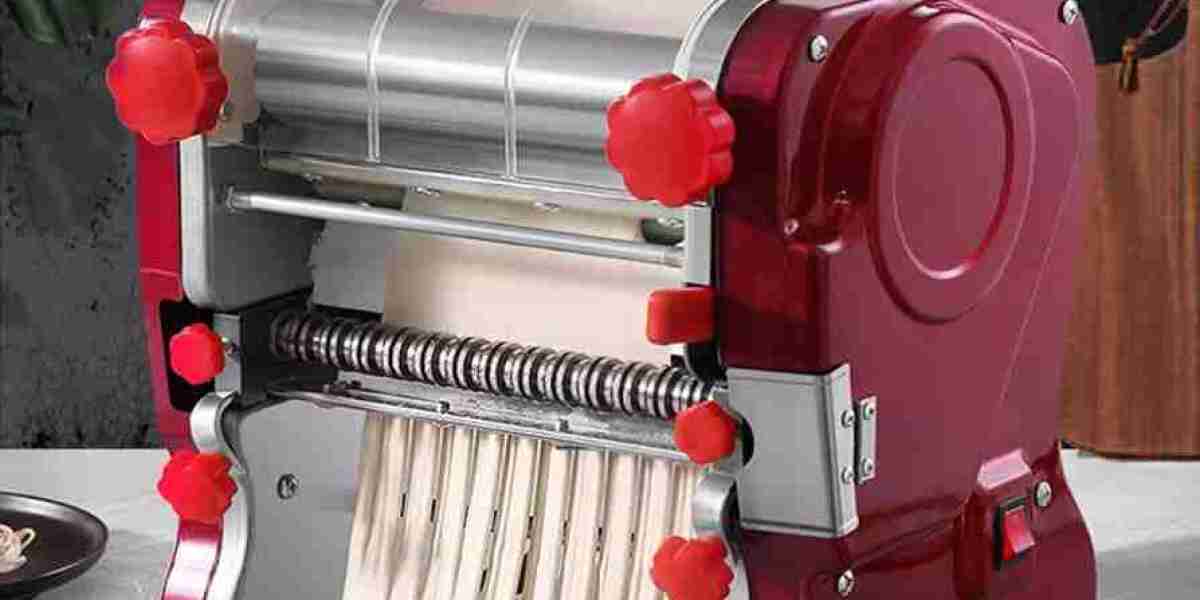

In professional kitchens, pasta preparation follows a different rhythm than it does at home. The pace is steadier, the expectations clearer, and the margin for disruption smaller. Within this environment, a Commercial Pasta Maker is valued less for visual appeal and more for how it integrates into daily workflow.
Discussions among food service professionals often point to consistency as a defining factor. Dough texture, cutting rhythm, and output uniformity need to align with the kitchen’s routine rather than interrupt it. Equipment that demands constant adjustment or close monitoring tends to lose favor over time, regardless of its initial appeal.
Another recurring topic is spatial awareness. Commercial kitchens are rarely spacious, and equipment must respect this reality. Users frequently mention the importance of compact structure combined with stable operation. Machines that can be positioned easily and accessed from different angles tend to adapt better to shared working environments.
From a manufacturing perspective, pasta makers intended for commercial use require a different set of priorities. Structural simplicity often outweighs multifunctional design. Fewer transitions between steps, clear component roles, and straightforward assembly all contribute to smoother use during busy periods.
Cleaning and maintenance also appear frequently in professional discussions. In commercial settings, downtime has direct consequences. Equipment that can be cleaned without extensive disassembly is often preferred, as it aligns better with end-of-day routines and hygiene standards. These considerations shape how a Commercial Pasta Maker is evaluated beyond its primary function.
Manufacturers who understand these conditions tend to approach design with restraint. Instead of adding layers of features, they focus on how materials, pressure, and movement interact under repeated use. This manufacturing mindset reflects an awareness that durability is experienced gradually, through repetition rather than isolated performance.
There is also an expectation that manufacturers maintain clarity in communication. Clear descriptions of machine behavior help kitchen operators set realistic expectations. When equipment performs as anticipated, it becomes easier to integrate into established processes without disruption.
At haiou, the development of pasta-making equipment is informed by observation of real commercial kitchen environments. Manufacturing decisions are guided by how machines are positioned, operated, and maintained throughout regular service periods, rather than by isolated demonstrations.For more information about haiou and its commercial pasta-making equipment, visit https://www.cnhaiou.com