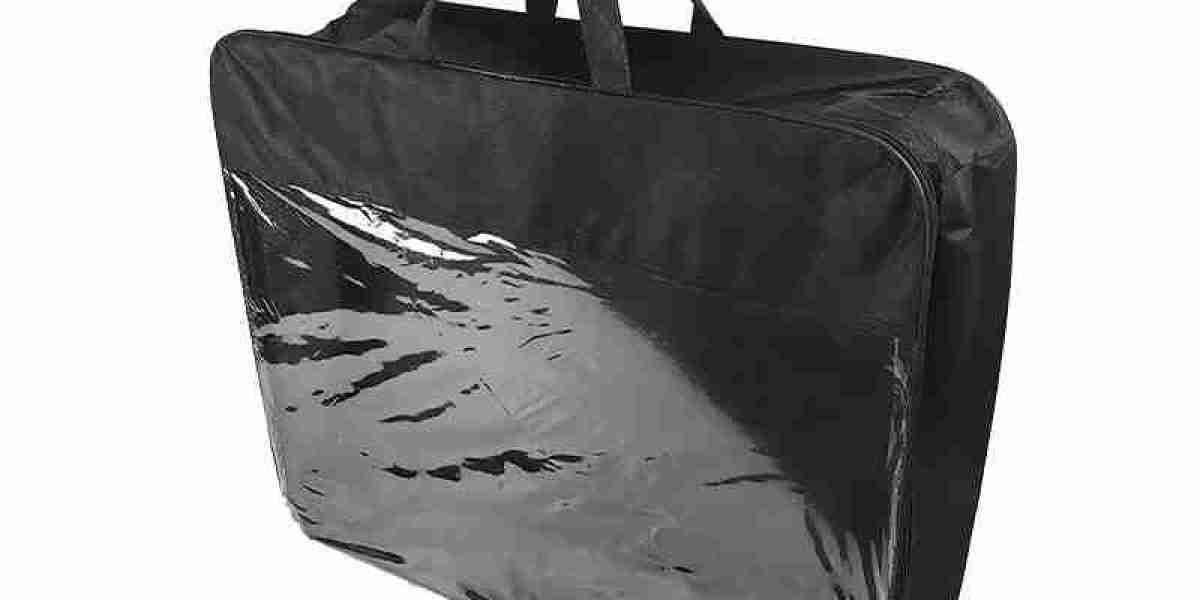

A Large Duvet Storage Bags needs to account for the weight and volume of bedding at the same time. A duvet may be relatively light for its size, but its bulk creates outward pressure against the sides and closure when packed into a confined space. This makes the relationship between bag dimensions and construction important. A larger body needs enough room for the bedding to fit without excessive compression, while the fabric still needs to maintain a usable shape during handling.
The handles deserve particular attention because they become the main load-bearing points when the filled bag is lifted. A simple sewn strap may work for lightweight storage, but a larger bedding bag can place considerably more stress on the stitching around the attachment area. Reinforced stitching can spread this force across a wider section of fabric, reducing the concentration of tension at a single point. Handle length and position also influence how easily a full bag can be lifted from a wardrobe, shelf, or storage area.
Shape is another consideration as bag dimensions increase. A soft storage bag can be convenient because it folds down when empty, but a completely unstructured body may sag or bulge when filled with a large duvet. A box-shaped construction can provide more predictable internal space and help the bag stand more evenly on a shelf. Reinforced panels or a supported base can further improve stability, particularly when several storage bags are stacked together.
The zipper also has to correspond with the size of the bag. A longer opening makes it easier to insert bulky bedding without forcing the duvet through a narrow entrance. At the same time, the zipper area experiences outward pressure as the contents expand against the sides. Secure stitching around the zipper and reinforced corners can help maintain the shape of the opening during repeated use. For storage bags intended to remain packed for extended periods, these construction details can be just as important as the visible dimensions.
The bottom seam is another area that receives continuous stress. When a filled bag is placed upright, much of its weight is transferred through the base and into the surrounding seams. Double stitching or additional reinforcement can help reduce the risk of gradual seam separation. This becomes particularly relevant when the bag is repeatedly moved between storage locations rather than simply used once.
For manufacturers developing Large Duvet Storage Bags, capacity should therefore be considered as a complete structural requirement rather than just a measurement of length, width, and height. Fabric selection, handle attachment, body construction, zipper opening, and base reinforcement all need to correspond with the actual bedding load. A well-matched structure allows the storage bag to remain easier to carry, stack, and organize even when its large size is fully utilized.