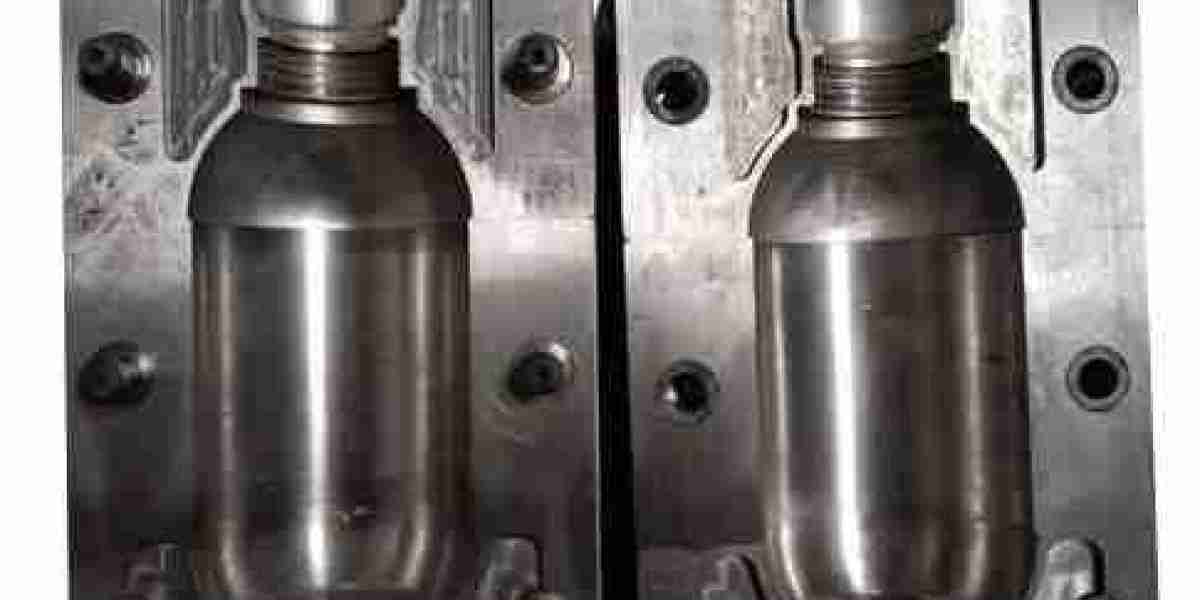

When packaging needs a larger opening for easier filling or dispensing, Wide-Mouth Mould technology offers manufacturers more design flexibility, while a carefully developed Wide-Mouth Mould can support consistent container formation across repeated production cycles. The wider neck structure is particularly useful for products that are thick, viscous, or frequently accessed. By considering the container shape, closure system, production volume, and equipment conditions together, manufacturers can develop packaging that combines practical usability with efficient manufacturing.
Making Packaging Easier To Use
A container's opening directly influences how people interact with the product inside. Narrow openings may work well for liquids that are poured or dispensed in small amounts, but some products benefit from a larger access area.
Food packaging is a common example. Jars for sauces, jams, honey, and similar products can benefit from an opening that makes filling and removing contents more convenient. Personal care products can also use broader openings for creams, lotions, and other formulations.
The same principle applies to household products and certain pharmaceutical containers. The opening needs to support the intended method of filling, dispensing, or accessing the contents while remaining compatible with the selected closure.
Qihong Approaches For Container Development
Container production involves more than forming a large neck. The mould must reproduce the required dimensions while maintaining the relationship between the neck, body, and closure area.
The manufacturer offers several wide-mouth configurations, including 8-cavity, 12-cavity, 18-cavity, and 24-cavity options. It also provides jar preform tooling and states that mould designs can be customized according to customer requirements.
This range allows manufacturers to consider their production conditions instead of choosing a configuration based solely on container type. Cavity quantity, machine capacity, expected output, and packaging dimensions can all influence the final tooling plan.
Balancing Output With Production Conditions
Multi-cavity tooling can increase the number of parts produced during one cycle. However, higher output also creates greater demands on material distribution, cooling, machining accuracy, and machine capability.
For example, a manufacturer producing large quantities may consider a higher cavity configuration to make better use of production equipment. A smaller operation or a specialized packaging project may have different priorities and choose fewer cavities.
The manufacturer's technical information notes that cavity quantity should be considered alongside production requirements, machine capabilities, and expected output. Proper cooling and precision machining are also identified as important factors affecting mould quality.
The goal is to create a balanced production setup rather than simply maximize the number of cavities.
Materials And Precision In Tooling
Tool steel has a direct relationship with mould durability and dimensional stability. The product information identifies S136, P20, and H13 among the materials associated with these moulds.
Machining precision is equally important. When a mould is used repeatedly, small dimensional differences can become noticeable across large production quantities. Accurate cavity manufacturing helps maintain consistency between individual parts.
Cooling design also deserves attention. Proper heat removal can help control cycle conditions and support more uniform moulding. Together, material selection, machining accuracy, and cooling design create the foundation for dependable tooling performance.
Applications Beyond One Packaging Category
The usefulness of a broad opening extends across multiple industries. Food and beverage manufacturers can use jars and containers designed for easier filling and access. Cosmetics and personal care products may require convenient openings for creams, lotions, or shampoos. Pharmaceutical packaging can benefit when dispensing convenience is an important consideration, while household products may require larger containers for detergents or cleaning materials.
For manufacturers planning a new packaging format, it is helpful to evaluate the complete production process before tooling begins. Product characteristics, closure requirements, cavity quantity, machine specifications, expected output, and maintenance arrangements should all be discussed during development.
With the right combination of design and manufacturing planning, wide-opening packaging can offer practical benefits without sacrificing production consistency. For customized mould development and related packaging tooling, contact Taizhou Qihong Mold Co., Ltd. .