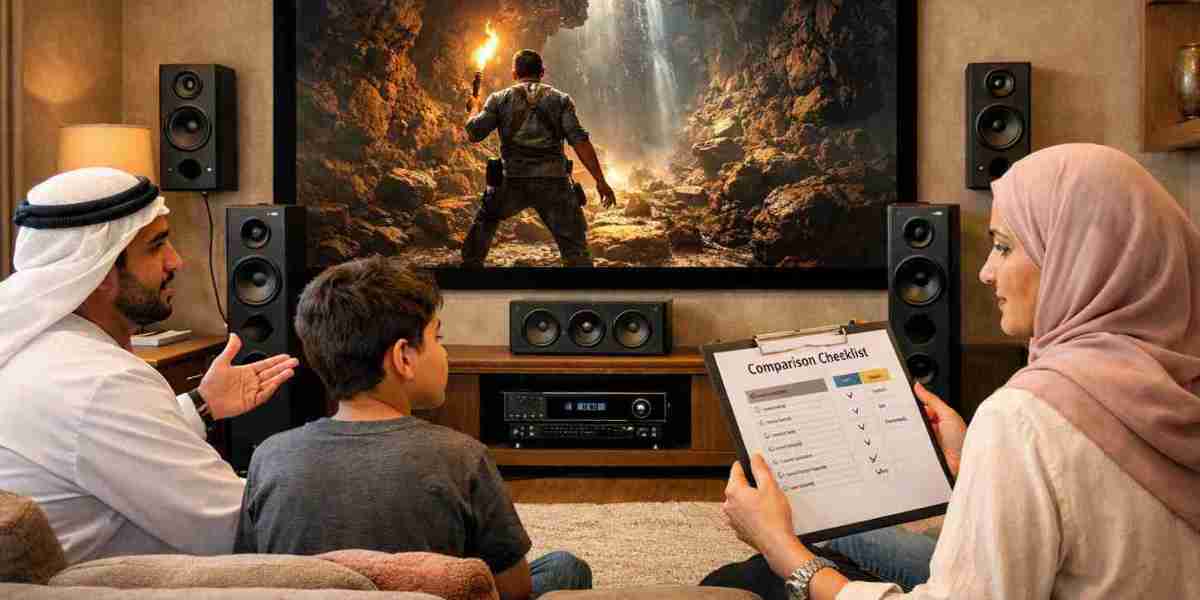

Choosing a home entertainment setup can be difficult when there are many screen, speaker, and receiver options available. If you are researching home theatre Solutions dubai, it helps to compare each system based on your room, viewing habits, sound needs, and available space rather than choosing only by price.
Start With Your Room Size
The size and shape of the room should be one of the first things you consider. A small room does not always need a large screen or many speakers. A larger room may need more powerful audio equipment to create balanced sound.
Measure the room before comparing systems. Check the distance between the main seating area and the screen. Also look at doors, windows, furniture, and wall positions. These details can affect where the equipment can be placed.
Compare Screen Options
The display is one of the most noticeable parts of a home theatre system. Common choices include televisions and projectors. A large television can work well in smaller rooms because it is simple to install and does not require a separate screen.
Projectors can create a larger viewing area and may be suitable for dedicated entertainment rooms. However, the room's lighting can affect the picture. A room with strong natural light may require careful planning to maintain a clear image.
Compare screen size, picture quality, brightness, viewing distance, and available space instead of looking at screen size alone.
Check the Sound System
Good audio can make films, sports, and games more enjoyable. When comparing systems, look at the number and position of speakers rather than simply counting how many speakers are included.
A basic setup may use a soundbar or a few speakers, while a dedicated room may use several speakers placed around the seating area. A subwoofer can also add deeper bass for music and film effects.
The room itself affects sound. Hard surfaces can reflect sound, while curtains, carpets, sofas, and other furnishings can reduce some reflections. Speaker placement should therefore be considered along with the equipment.
Look at Receiver and Connectivity Features
The receiver or audio-video system connects different parts of the setup. Check which devices you plan to connect before choosing one.
You may need connections for a television, projector, gaming console, streaming device, media player, or other equipment. HDMI support is important for many modern home entertainment devices.
Wireless connectivity can also be useful for certain devices. However, a wired connection may be preferred for some equipment where stable performance is important. Make a list of your current and future devices before comparing connectivity options.
Consider Your Main Use
Think about how you will use the room. Someone who mainly watches films may have different requirements from someone who plays games, watches sports, or listens to music.
For films, picture quality and surround sound may receive more attention. Gamers may also want low input delay and suitable display features. Music listeners may focus more on speaker quality and balanced audio.
Knowing your main use makes it easier to remove features that you may never use.
Compare Installation Requirements
The equipment is only one part of the setup. Installation can affect the final appearance and usability of the room.
Consider where speakers, cables, screens, projectors, and control equipment will be placed. Wall-mounted equipment may require suitable surfaces and cable planning. Ceiling speakers may also need more detailed preparation.
Cable routes should be considered before furniture and other room elements are fixed in place. Good planning can help keep the space organised and reduce visible cables.
Think About Ease of Control
A system with many devices can become difficult to manage if every device has a separate remote. Check how the equipment can be controlled and whether the main functions can be managed from one interface.
Simple controls can be useful for family members and guests. Voice or mobile controls may also be available, depending on the equipment selected.
Compare Long-Term Practicality
Do not compare systems only by their initial cost. Think about maintenance, upgrades, replacement parts, compatibility, and future equipment.
Technology changes over time, so it can be useful to choose equipment that supports the devices and connections you expect to use later. A system that can be upgraded gradually may be more practical than replacing everything at once.
Before making a decision, compare the screen, speakers, room requirements, connectivity, installation needs, and daily use together. A careful comparison makes it easier to choose home theatre Solutions dubai that suit the space and provide a comfortable entertainment experience.