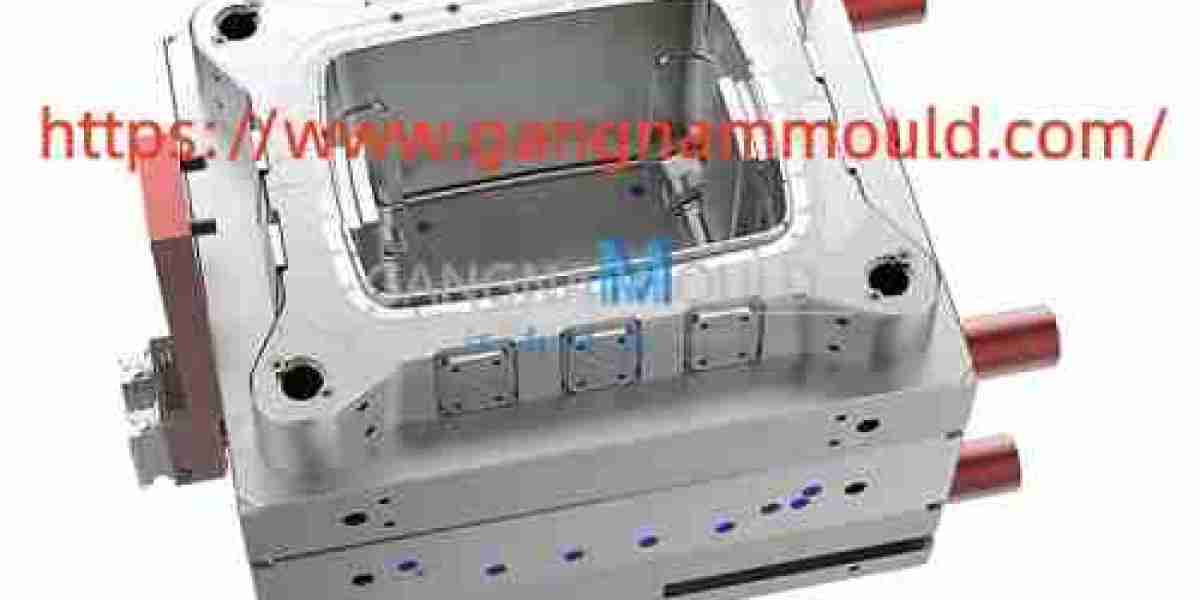

Storage Box Injection Mould projects involve more than creating a cavity that matches the shape of a container. Buyers need to consider product dimensions, plastic material, wall thickness, stacking requirements, appearance, production quantity, injection equipment, and maintenance expectations before approving a tooling plan. A clear technical review at the beginning can help reduce design changes later and create a better connection between the finished product and its manufacturing process. Current industry guidance also highlights cooling, filling balance, ejection, steel selection, and machine matching as important considerations during tooling development.
The product itself should be reviewed first. Buyers should provide accurate dimensions, capacity, wall thickness, corner details, handle structures, lid arrangements, grooves, ribs, and stacking features when applicable. Even a relatively simple container can require careful engineering if it has deep walls, thin sections, reinforced corners, or a matching cover. A three dimensional product file can help engineers evaluate draft angles, parting areas, ejection directions, and potential interference before machining starts.
Material selection is another key point. PP is commonly considered for storage containers, while other plastics may be selected according to transparency, impact resistance, stiffness, chemical resistance, or application requirements. Material shrinkage and processing behavior can affect cavity dimensions and product stability, so buyers should confirm the resin grade before the final tooling design is approved. Gangnammould lists storage container tooling for applications such as utility boxes, stackable bins, and lidded containers, with material and structural requirements considered during development.
Wall thickness deserves particular attention because uneven sections can create different cooling and shrinkage conditions. If one area is considerably thicker than another, the resulting part may experience deformation, sink marks, or dimensional variation. Buyers should discuss whether the product structure can be adjusted to provide a more balanced section where practical. This can make the molding process easier to control and may also reduce unnecessary material use.
Cooling design should be reviewed alongside the product geometry rather than considered separately. Large flat surfaces, corners, ribs, and deep sections can respond differently during cooling. The location and arrangement of water channels should therefore correspond with areas where temperature control is important. A well planned cooling system can support consistent dimensions and help establish a practical production cycle. Industry sources similarly identify cooling balance as an important factor for storage container tooling.
The filling system is also worth discussing before construction. Gate location, runner configuration, and material flow can influence how evenly the cavity fills. For larger containers, the flow path may need careful planning because the plastic must travel across relatively broad surfaces. Buyers can ask whether filling analysis is available and whether the proposed gate position fits the material, appearance, and production requirements. Hot runner and cold runner solutions may both be considered depending on the product structure and manufacturing plan.
Ejection should receive the same level of attention. After cooling, the container needs to separate from the core without unnecessary force or visible marks. Deep walls, narrow corners, ribs, and internal features can make demolding more complicated. Ejector pins, stripper systems, air assistance, or other mechanisms may be selected according to the product structure. The ejection layout should also leave enough room for inspection and future maintenance.
Buyers should then review steel and component specifications. The appropriate steel grade depends on expected production quantity, material characteristics, surface requirements, corrosion considerations, and maintenance plans. Components such as guide systems, ejector parts, inserts, and wear areas should also be identified clearly in the tooling documentation. This gives buyers a clearer understanding of how the tool is constructed and what may need attention after extended production.
Machine compatibility is another practical checkpoint. The available injection machine should be considered before tooling is completed, including clamping capacity, platen dimensions, mold height, opening stroke, injection volume, and ejection configuration. A technically sound design still needs to fit the actual production equipment. Sharing machine specifications at the quotation stage allows engineers to account for these limitations from the beginning.
Production quantity should also influence the tooling strategy. A project for occasional manufacturing may have different requirements from a program involving continuous production and multiple cavities. Buyers should communicate expected annual volume, target cycle conditions, cavity requirements, automation plans, and future product variations. These details can influence the overall structure and investment of the tooling.
Sample approval should be based on clear criteria rather than appearance alone. Buyers can prepare requirements covering dimensions, weight, surface finish, lid fit, stacking behavior, gate marks, flash, warpage, and other functional details. If the container will work with another component, both parts should be checked together. Clear acceptance standards make communication easier during trial production and reduce uncertainty when adjustments are needed.
Maintenance planning should not be forgotten. Buyers can ask about cleaning procedures, lubrication points, cooling connections, replaceable components, inspection intervals, and recommended storage conditions. Easy access to frequently serviced areas can make routine maintenance more manageable and reduce unnecessary downtime.
A careful purchasing decision therefore starts with the actual product and works backward toward the tooling structure. Product geometry, material, wall thickness, cooling, filling, ejection, steel, machine compatibility, production volume, testing, and maintenance should all be considered together. Gangnammould can support customized plastic container tooling discussions based on specific product requirements, and buyers can review its relevant manufacturing capabilities through https://www.gangnammould.com/product/ when planning their next storage container project.