
Starting a new business is exciting, but compliance should not be ignored. For startups that manufacture, import, pack, sell, or distribute products, Legal Metrology compliance is an important part of doing business in India.
Legal Metrology rules help ensure that consumers receive the correct quantity, weight, and measurement of products. They also regulate how certain products are packaged, labelled, weighed, and measured.
For startups, understanding these requirements early can help avoid penalties, product seizures, and delays in launching products.
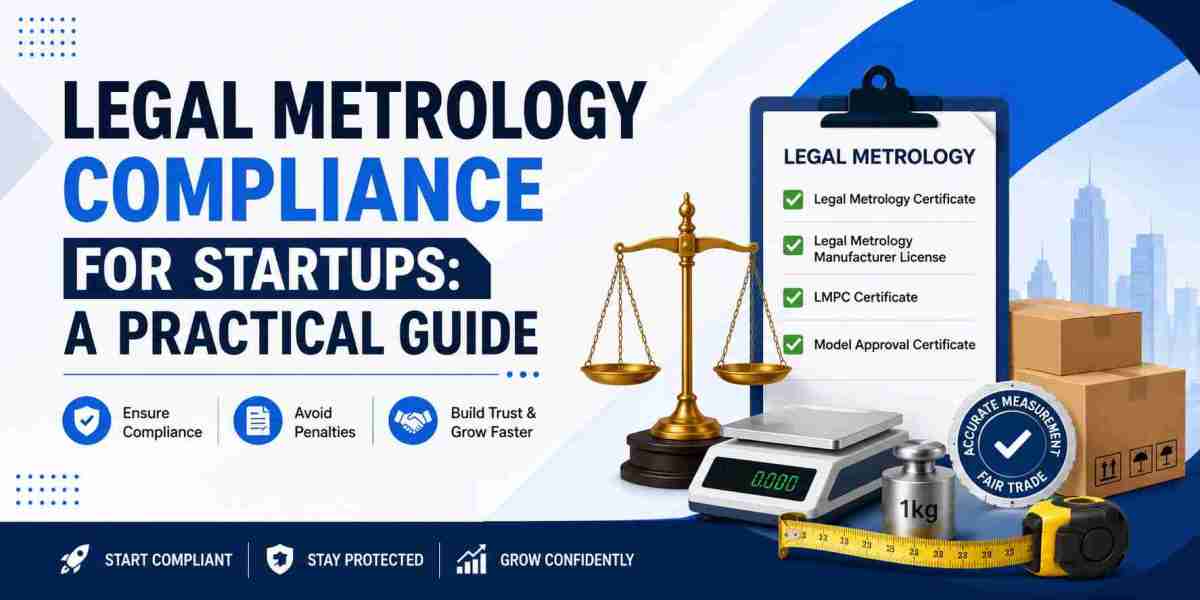
In this guide, we explain the Legal Metrology Certificate, Legal Metrology Manufacturer License, LMPC Certificate, and Model Approval Certificate in simple words.
What Is Legal Metrology?
Legal Metrology is the system of laws and rules that regulates weights and measurements used in trade and commerce.
For example, when a customer buys:
1 kg of rice
500 ml of cooking oil
A packaged cosmetic product
A weighing machine
A measuring instrument
A packaged food product
the quantity mentioned on the product should match the actual quantity supplied.
The Legal Metrology Act, 2009 and related rules provide the legal framework for regulating weights and measures in India.
For startups, compliance can apply at different stages depending on whether the business is a manufacturer, importer, packer, dealer, or user of weighing and measuring instruments.
Why Is Legal Metrology Compliance Important for Startups?
Many startups focus on product development, marketing, and sales but overlook regulatory requirements.
Legal Metrology compliance is important because it can help startups:
1. Build Consumer Trust
Accurate quantity and transparent product declarations give customers confidence in the product.
2. Avoid Penalties
Non-compliance can result in penalties and other regulatory action.
3. Prevent Product Delays
If required approvals or registrations are missing, launching or importing certain products may become difficult.
4. Support Smooth Imports
Importers of packaged commodities may need an LMPC Certificate and must follow applicable packaged commodity requirements.
5. Protect Brand Reputation
Regulatory problems can affect customer confidence and business reputation.
Who Needs Legal Metrology Compliance?
The exact requirement depends on the nature of the business.
Startups may need to comply if they are involved in:
Manufacturing weighing or measuring instruments
Importing packaged commodities
Packing products for sale
Selling packaged products
Distributing packaged goods
Using weighing or measuring instruments for commercial purposes
Manufacturing or importing certain measuring instruments
Therefore, startups should first identify their business activity and product category.
Key Legal Metrology Approvals and Registrations for Startups
Different businesses may require different approvals. Some of the commonly relevant ones are discussed below.
1. Legal Metrology Certificate
A Legal Metrology Certificate is generally used to refer to approval, registration, or certification required under Legal Metrology regulations for a particular business activity or measuring instrument.
The exact certificate or licence depends on the product and activity.
For example, businesses dealing with weighing and measuring instruments may have to comply with requirements relating to verification, stamping, manufacturing, repair, or sale.
Startups should avoid assuming that one certificate covers every Legal Metrology requirement.
2. Legal Metrology Manufacturer License
A startup manufacturing weighing or measuring instruments may need a Legal Metrology Manufacturer License, depending on the applicable rules and product.
This requirement is intended to ensure that instruments used for commercial transactions meet prescribed standards.
Examples may include:
Weighing machines
Measuring instruments
Certain meters
Other instruments covered by Legal Metrology regulations
The business may need to provide information about its manufacturing premises, equipment, technical details, and products.
3. LMPC Certificate for Importers
The LMPC Certificate is particularly important for businesses importing packaged commodities into India.
LMPC generally refers to Legal Metrology Packaged Commodities.
An importer dealing with applicable pre-packaged commodities may need registration under the relevant Legal Metrology requirements.
The importer also needs to ensure that the packaging and declarations comply with applicable rules.
Common declarations can include information such as:
Name and address of manufacturer, packer, or importer
Country of origin
Net quantity
Maximum Retail Price (MRP)
Consumer care details
Month and year of manufacture/packing/import, where applicable
Other mandatory declarations
The exact declarations depend on the product and applicable rules.
4. Model Approval Certificate
A Model Approval Certificate is relevant to certain weighing and measuring instruments before they are manufactured or imported for use in India.
Model approval helps establish that a particular model of a weighing or measuring instrument meets the applicable technical and legal requirements.
For example, a startup developing a new weighing instrument should determine whether its product requires model approval before commercial activity.
The application may involve technical specifications, drawings, test reports, samples, and other documents depending on the instrument.
Legal Metrology Compliance Checklist for Startups
Before launching a product, startups should review the following checklist:
Compliance Area | What to Check |
Business activity | Identify whether you are a manufacturer, importer, packer, dealer, or user |
Product | Check whether the product/instrument falls under Legal Metrology requirements |
Manufacturer licence | Check whether a manufacturer licence is required |
LMPC registration | Check applicability for imported packaged commodities |
Model approval | Check whether the weighing/measuring instrument needs model approval |
Packaging | Verify mandatory declarations |
Quantity | Ensure declared quantity is accurate |
MRP | Ensure MRP declaration follows applicable rules |
Import documents | Check regulatory requirements before importing |
Weighing instruments | Ensure applicable verification and stamping |
Records | Maintain relevant compliance documents and records |
Legal Metrology Compliance Process for a Startup
The process can vary according to the product and state. However, startups can broadly follow these steps.
Step 1: Identify Your Product
First, determine exactly what you manufacture, import, pack, sell, or use.
This helps identify the applicable Legal Metrology requirements.
Step 2: Identify the Applicable Rules
Different products and activities can have different requirements.
For example, an importer of packaged goods may have different requirements from a manufacturer of weighing instruments.
Step 3: Check Licence or Registration Requirements
Determine whether you need:
Legal Metrology registration
Legal Metrology Manufacturer License
LMPC registration/certificate
Model Approval Certificate
Verification and stamping
Other applicable permissions
Step 4: Prepare Documents
Depending on the application, documents may include:
Business registration documents
PAN and GST details
Address proof
Premises documents
Product details
Technical specifications
Machinery details
Partnership deed or incorporation documents
Authorisation documents
Test reports
Product drawings
Import-related documents
The exact document list depends on the application.
Step 5: Submit the Application
The application is submitted to the appropriate Legal Metrology authority through the applicable process.
The authority may review the application and documents.
Step 6: Respond to Queries
If the department raises an objection or asks for additional information, the startup needs to respond within the prescribed period.
Step 7: Obtain Approval
Once the requirements are satisfied, the applicable licence, registration, certificate, or approval can be issued.
Packaging Rules Startups Should Know
Startups selling packaged products should pay special attention to labelling.
A product package should contain the declarations required under the applicable Legal Metrology rules.
Depending on the product, these may include:
Name of the Product
The package should clearly identify the product.
Net Quantity
The quantity should be correctly declared using the appropriate unit.
MRP
The maximum retail price should be displayed as required.
Manufacturer or Importer Details
The applicable name and address details should be provided.
Consumer Care Information
Consumer complaint or customer-care details may be required.
Country of Origin
Imported products generally need the applicable country-of-origin declaration.
Startups should verify the exact requirements for their product instead of copying labels from another product.
Common Legal Metrology Mistakes Made by Startups
1. Starting Sales Before Checking Compliance
A startup may develop a product and immediately begin selling it without checking whether Legal Metrology requirements apply.
Solution: Conduct a compliance review before commercial launch.
2. Incorrect Product Quantity
The quantity printed on the package may not match the actual quantity.
Solution: Establish proper quality-control procedures.
3. Missing Declarations
Important information may be missing from the product packaging.
Solution: Review packaging artwork before printing.
4. Ignoring Import Requirements
Importers may assume that customs clearance alone is sufficient.
Solution: Check whether an LMPC Certificate and other Legal Metrology requirements apply before importing.
5. Using Unverified Weighing Instruments
Commercial weighing instruments may require verification and stamping.
Solution: Use instruments that meet the applicable Legal Metrology requirements.
6. Assuming Every Product Has the Same Rules
Different products can have different compliance requirements.
Solution: Identify the specific product category and applicable rules.
Penalties for Legal Metrology Non-Compliance
Legal Metrology laws provide penalties for different types of violations.
Depending on the nature of the violation, consequences may include:
Monetary penalties
Seizure of goods or instruments
Prosecution in applicable cases
Suspension or cancellation of licence
Business disruption
Reputational damage
The applicable penalty depends on the specific violation and law involved.
Therefore, startups should treat Legal Metrology compliance as an ongoing business requirement rather than a one-time formality.
How Corpbiz Helps Startups With Legal Metrology Compliance
Corpbiz helps businesses understand and manage regulatory requirements related to Legal Metrology.
Our professionals can assist startups with:
Legal Metrology registration
Legal Metrology Manufacturer License
LMPC Certificate
Model Approval Certificate
Packaging and labelling compliance guidance
Document preparation
Application filing
Department query handling
Compliance support
Getting professional assistance can help startups reduce paperwork errors and understand which approvals apply to their products.
Why Startups Should Plan Compliance Early
Legal compliance should not be treated as something to handle after the product is launched.
A better approach is to include compliance during the product-development stage.
For example:
Product idea → Product classification → Legal Metrology check → Required approval/registration → Packaging review → Product launch
This approach can help prevent costly changes later.
Frequently Asked Questions
Is Legal Metrology registration mandatory for every startup?
No. It depends on the nature of the startup's business, products, and activities. Businesses involved in manufacturing, importing, packing, selling, or using certain weights and measures may have specific Legal Metrology requirements.
What is an LMPC Certificate?
An LMPC Certificate generally relates to registration requirements for importers of applicable pre-packaged commodities under Legal Metrology regulations.
Who needs a Legal Metrology Manufacturer License?
Businesses manufacturing certain weighing and measuring instruments may need a Legal Metrology Manufacturer License, subject to the applicable rules and product category.
What is a Model Approval Certificate?
A Model Approval Certificate confirms approval of a particular model of a weighing or measuring instrument where model approval is required under applicable Legal Metrology regulations.
Is an LMPC Certificate required for all imports?
No. Its applicability depends on the nature of the imported goods and whether they fall under the relevant packaged commodity requirements.
Can startups apply for Legal Metrology compliance online?
Several Legal Metrology services and applications are available through government portals or prescribed online processes. The exact process depends on the state, product, and type of approval.
What information is required on packaged products?
Depending on the product and applicable rules, declarations may include product name, net quantity, MRP, manufacturer/importer details, country of origin, and consumer-care information.
What happens if a startup ignores Legal Metrology compliance?
The business may face penalties and other regulatory action. Products or instruments may also be subject to inspection or seizure where permitted by law.
Is Legal Metrology compliance a one-time process?
Not always. Some approvals and registrations may have ongoing conditions, renewals, verification, stamping, or other compliance requirements.
How can Corpbiz help with Legal Metrology compliance?
Corpbiz can assist businesses with identifying applicable requirements and handling services such as Legal Metrology Certificate, Legal Metrology Manufacturer License, LMPC Certificate, and Model Approval Certificate.
Final Words
Legal Metrology compliance can look complicated when a startup is dealing with it for the first time. However, understanding the requirements early can make the process much easier.
Whether you manufacture measuring instruments, import packaged products, or sell packaged commodities, first identify the rules applicable to your business. Depending on your activity, you may need a Legal Metrology Certificate, Legal Metrology Manufacturer License, LMPC Certificate, or Model Approval Certificate.
For startups, the best strategy is simple: check compliance before launch, maintain accurate product declarations, and keep your approvals and records updated.
About the Author
Atul Shukla is a legal and regulatory content professional with experience in Indian business compliance and regulatory requirements. He writes practical, easy-to-understand content to help businesses and startups understand complex legal and compliance processes. His areas of focus include Legal Metrology, BIS, CDSCO, GST, company law, and other business regulations.