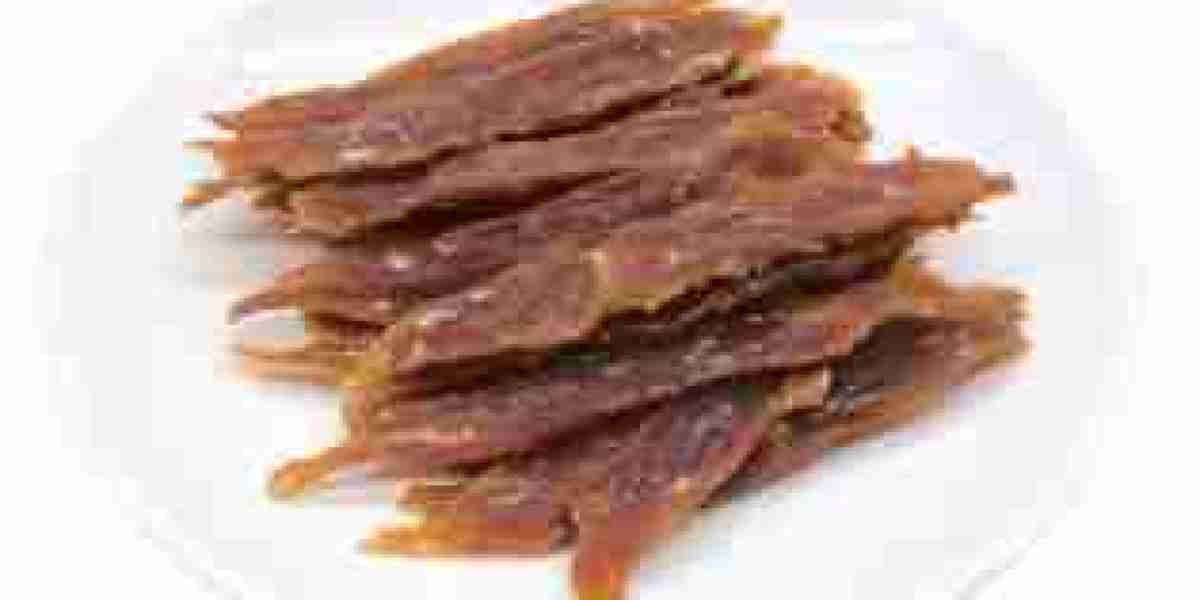

duck jerky for dog is shaped as much by its drying process as by the duck meat itself. Removing moisture gradually allows the meat to develop a firm but flexible texture instead of becoming excessively brittle. This is particularly relevant for buyers comparing different production methods, because two products made from similar raw materials can have noticeably different textures after processing.
A slow drying process gives manufacturers greater control over moisture removal. When temperature rises too quickly, the outside of the meat can dry considerably faster than the interior, potentially producing inconsistent texture within the same piece. Controlled drying helps create a more uniform finished product and makes it easier to establish repeatable specifications between production batches.
Moisture content is also closely connected with storage stability. A finished duck jerky for dog needs enough moisture removed to limit deterioration while retaining the texture expected from a jerky-style treat. Buyers should therefore review water activity and moisture testing rather than relying only on a stated shelf-life period. These measurements provide more useful information about how the product may behave during storage.
Raw material sourcing is another part of the specification. Buyers requesting antibiotic-free duck or other sourcing claims should ask for supporting documentation rather than relying solely on packaging statements. Feed, animal-raising practices, and raw meat handling can all affect the documentation required for particular claims and destination markets.
Drying also changes the nutritional concentration of the meat. As water is removed, protein becomes more concentrated by weight in the finished treat. However, the final nutritional profile should be established through testing of the processed product rather than calculated only from the raw duck specification.
Texture deserves separate attention during sample evaluation. A chewy piece behaves differently from a brittle one when a dog bites and pulls at it. Buyers comparing duck jerky for dog samples can examine flexibility, breakage, thickness consistency, and how the texture changes after opening the package. These observations can reveal processing differences that are not obvious from an ingredient list.
Packaging then becomes part of maintaining the production result. Even a properly dried jerky can absorb moisture from the surrounding environment if the package does not provide adequate protection. This is especially relevant for export shipments moving through humid climates or remaining in warehouses for extended periods. Packaging specifications should therefore be evaluated together with moisture and shelf-life testing.
For private-label buyers, consistency between batches is often more important than simply achieving a suitable first sample. Establishing drying temperature, processing time, target moisture range, meat thickness, and packaging conditions as measurable production requirements makes subsequent orders easier to compare with the approved sample.
Ultimately, duck jerky for dog is a product where processing conditions directly influence the finished eating experience. Controlled drying, moisture management, raw material documentation, nutritional testing, and suitable packaging all contribute to maintaining consistent quality from production through storage and distribution.