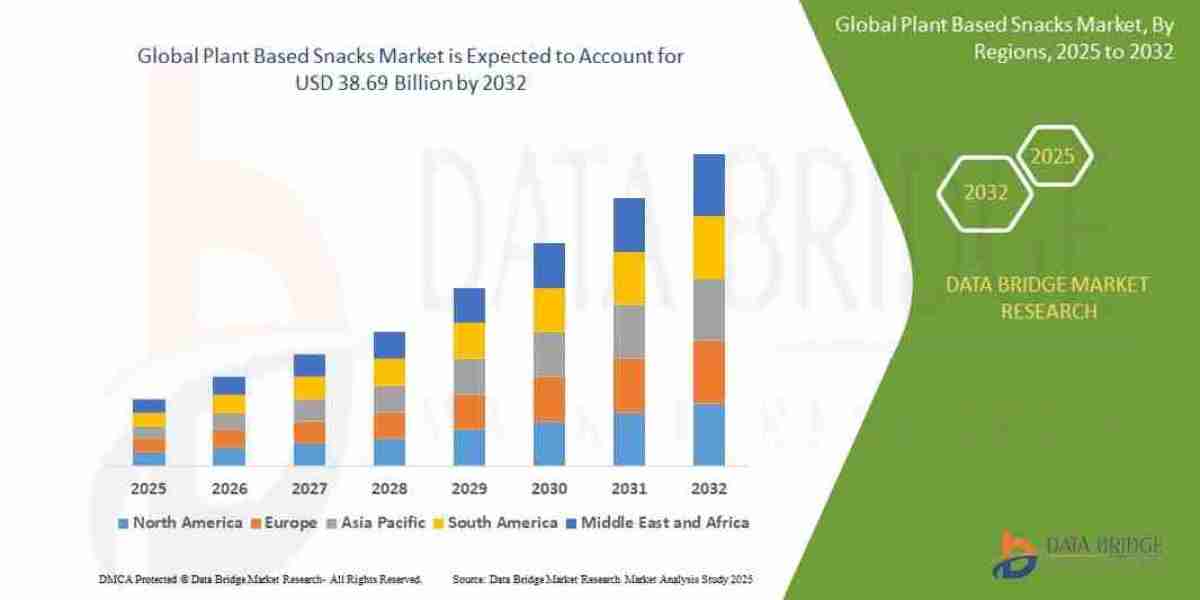

"According to the latest report published by Data Bridge Market Research, the Plant Based Snacks Market
The global plant based snacks market size was valued at USD 19.56 billion in 2024 and is expected to reach USD 38.69 billion by 2032, at a CAGR of 8.90% during the forecast period.
An excellent Plant Based Snacks Market research report is a great store to acquire current as well as upcoming technical and financial details and market insights of the Plant Based Snacks Market industry for the precise forecast period. The report carries out analysis and discussion of important market trends, market size, sales volume, and market share for Plant Based Snacks Market industry. SWOT analysis and Porter's Five Forces Analysis are two of the most comprehensively used techniques while preparing this report. Estimations about the rise or fall of the CAGR value for specific forecast period are also mentioned in the persuasive Plant Based Snacks Market report.
Stay informed with our latest keyword market research covering strategies, innovations, and forecasts. Download full report: https://www.databridgemarketresearch.com/reports/global-plant-based-snacks-market
Plant Based Snacks Market Segmentation and Market Companies
Segments
- By Product Type: The plant-based snacks market can be segmented into meat alternative snacks, dairy alternative snacks, and snack bars. Meat alternative snacks include plant-based jerky, tofu snacks, and meatless protein snacks. Dairy alternative snacks encompass plant-based cheese, yogurt bites, and dairy-free ice cream treats. Snack bars include granola bars, protein bars, and energy bars made from plant-based ingredients.
- By Distribution Channel: Plant-based snacks are distributed through supermarkets/hypermarkets, specialty stores, convenience stores, online retail, and others. Supermarkets/hypermarkets are the primary distribution channel due to their wide reach and availability of a variety of plant-based snack options. Specialty stores cater to niche consumer preferences for organic and gourmet plant-based snacks. Online retail is witnessing significant growth as consumers opt for convenient shopping options.
- By Region: The global plant-based snacks market is segmented into North America, Europe, Asia Pacific, Latin America, and Middle East & Africa. North America dominates the market due to the increasing adoption of plant-based diets, growing awareness of health benefits, and a wide range of product offerings. Europe follows closely, driven by the presence of established plant-based snack manufacturers and high consumer demand for healthy snack options. Asia Pacific is emerging as a lucrative market with rising disposable incomes, changing consumer preferences, and the promotion of sustainable eating practices.
Market Players
- Kellogg Company: Kellogg's offers a range of plant-based snacks under brands like RXBAR, Pringles, and Kashi. The company focuses on product innovation and expanding its plant-based portfolio to cater to evolving consumer tastes.
- PepsiCo, Inc.: PepsiCo has ventured into the plant-based snacks market with brands like Bare Snacks and Off The Eaten Path. The company emphasizes sustainability and health-conscious snacks to meet the growing demand for plant-based alternatives.
- General Mills, Inc.: General Mills owns brands such as Larabar and Nature Valley, offering plant-based snack bars made from natural ingredients. The company focuses on clean label products and sustainable sourcing practices to attract eco-conscious consumers.
- Mondelēz International: Mondelēz boasts plant-based snacks through brands like Enjoy Life Foods, providing gluten-free and allergy-friendly options. The company emphasizes transparency in sourcing and manufacturing processes to build consumer trust.
The global plant-based snacks market is witnessing robust growth driven by increasing consumer awareness of health and sustainability, growing demand for alternative protein sources, and expanding vegan and vegetarian populations. Market players are investing in product development, marketing strategies, and distribution networks to capitalize on the lucrative opportunities in the plant-based snacks sector.
The plant-based snacks market is experiencing a significant shift in consumer preferences towards healthier and more sustainable snack options. One emerging trend in the market is the increasing focus on clean label products, where consumers are seeking transparency in sourcing and manufacturing practices. This trend is driving companies like Mondelēz International to emphasize clean ingredients and allergy-friendly options, catering to health-conscious consumers looking for trustworthy snack choices. Additionally, there is a growing demand for plant-based snacks that offer functional benefits such as high protein content, added nutrients, and energy-boosting properties. This trend is fueling innovation in product development among market players like Kellogg Company and General Mills, as they strive to meet the evolving needs of health-conscious consumers seeking convenient and nutritious snack options.
Moreover, sustainability is playing a crucial role in shaping the plant-based snacks market landscape. Consumers are increasingly prioritizing eco-friendly products with minimal environmental impact, leading companies like PepsiCo, Inc. to focus on sustainability initiatives and promote healthier and environmentally responsible snacking choices. This emphasis on sustainability aligns with the broader shift towards sustainable eating practices and conscious consumerism, driving the adoption of plant-based snacks as a more environmentally friendly alternative to traditional snack options.
Another key driver impacting the plant-based snacks market is the regional diversity in consumer preferences and market dynamics. While North America and Europe remain dominant markets for plant-based snacks due to factors like growing awareness of health benefits and established consumer demand, regions like Asia Pacific are rapidly emerging as lucrative markets with rising disposable incomes and changing consumer preferences. The Asia Pacific market presents significant growth opportunities for market players looking to tap into the region's expanding vegan and vegetarian populations, as well as the increasing focus on sustainable and healthy snacking choices among consumers.
In conclusion, the global plant-based snacks market is evolving amidst shifting consumer preferences towards healthier, sustainable, and functional snack options. Market players are responding to these trends by investing in product innovation, sustainability initiatives, and strategic marketing efforts to capitalize on the growing demand for plant-based snacks. With the market expected to continue its robust growth trajectory, driven by factors like health consciousness, sustainability awareness, and evolving consumer preferences, companies in the plant-based snacks sector are well-positioned to capitalize on the lucrative opportunities presented by this dynamic and evolving market landscape.The plant-based snacks market is experiencing a paradigm shift driven by changing consumer preferences towards healthier and more sustainable snack options. One notable trend shaping the market is the increasing emphasis on clean label products, where consumers are seeking transparency in ingredient sourcing and manufacturing practices. This trend has led companies like Mondelēz International to prioritize clean ingredients and allergy-friendly options to cater to health-conscious consumers looking for trustworthy snack choices. Additionally, there is a rising demand for plant-based snacks that offer functional benefits such as high protein content, added nutrients, and energy-boosting properties. This trend is propelling innovation in product development among market players like Kellogg Company and General Mills as they strive to meet the evolving needs of health-conscious consumers seeking convenient and nutritious snack options.
Sustainability is playing a paramount role in shaping the plant-based snacks market landscape. Consumers are increasingly prioritizing eco-friendly products with minimal environmental impact, prompting companies like PepsiCo, Inc. to focus on sustainability initiatives and promote healthier and environmentally responsible snacking choices. This focus on sustainability aligns with the broader trend towards sustainable eating practices and conscious consumerism, driving the adoption of plant-based snacks as a more environmentally friendly alternative to traditional snack options.
Regionally, diverse consumer preferences and market dynamics are significant drivers impacting the plant-based snacks market. While North America and Europe remain key markets for plant-based snacks due to factors such as growing awareness of health benefits and established consumer demand, regions like Asia Pacific are swiftly emerging as lucrative markets with rising disposable incomes and evolving consumer preferences. The Asia Pacific market presents substantial growth opportunities for market players aiming to tap into the region's expanding vegan and vegetarian populations, as well as the increasing focus on sustainable and healthy snacking choices among consumers.
In conclusion, the evolving landscape of the global plant-based snacks market showcases a clear shift towards healthier, sustainable, and functional snacking options driven by changing consumer preferences. Market players are strategically responding to these trends by investing in product innovation, sustainability efforts, and targeted marketing strategies to capitalize on the surging demand for plant-based snacks. With the market poised for continued growth fueled by factors like health consciousness, sustainability awareness, and shifting consumer preferences, companies within the plant-based snacks sector are well-positioned to leverage the lucrative opportunities offered by this dynamic and evolving market landscape.
Frequently Asked Questions About This Report
How is the Digital Twin technology impacting the Plant Based Snacks Market value chain?
What was the overall valuation of the Plant Based Snacks Market in the base year?
How does the Plant Based Snacks Market serve the Disaster Relief sector?
What are the top 5 companies by revenue in the Plant Based Snacks Market?
How is the Personalization trend acting as a primary growth driver?
How are data sovereignty laws affecting Plant Based Snacks Market software development?
How much is the Plant Based Snacks Market in the Middle East projected to grow by 2033?
Which region leads the global Plant Based Snacks Market for niche segments?
What are the top 5 companies by revenue in the Plant Based Snacks Market?
Which technology segment is expected to reach USD 10 Billion first?
What are the primary revenue streams within the Plant Based Snacks Market?
What growth opportunities exist in the Plant Based Snacks Market supply chain for AI?
What is the impact of AR/VR on Plant Based Snacks Market training and maintenance?
Browse More Reports:
Asia-Pacific Printing Inks / Packaging Inks Market
Contact Us:
Data Bridge Market Research
US: +1 614 591 3140
UK: +44 845 154 9652
APAC : +653 1251 1020
Email:- corporatesales@databridgemarketresearch.com"